
Apple's Strategic Shift: Indian Chipmaker Partnerships and Supply Chain Implications
About us: Ginlix AI is the AI Investment Copilot powered by real data, bridging advanced AI with professional financial databases to provide verifiable, truth-based answers. Please use the chat box below to ask any financial question.
Related Stocks
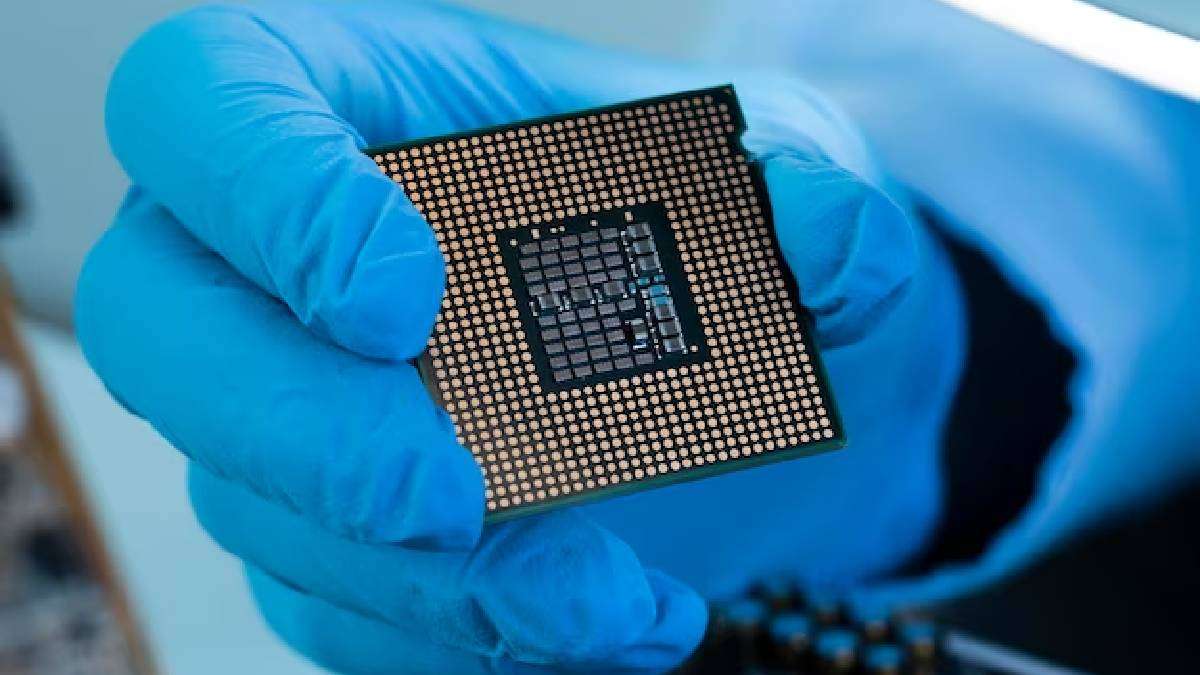
Apple is reportedly in early discussions with Indian chipmakers, specifically CG Semi, to assemble and package iPhone components for the first time [1]. This strategic move represents Apple’s latest effort to diversify its supply chain beyond China, where the company maintains approximately 90% of its iPhone manufacturing capacity [2]. The initiative builds on Apple’s existing expansion in India, which has already seen significant growth in iPhone exports from the country [6].
Current market data shows Apple trading at $274.61 with a market capitalization of $4.06 trillion [0]. The company maintains strong financial metrics with a net profit margin of 26.92% and operating margin of 31.97% [0]. However, Apple faces notable supply chain concentration risks, which analysts have identified as potentially exposing the stock to 30% downside risk [4].
The partnership with Indian chipmakers directly addresses Apple’s overdependence on Chinese manufacturing. Currently, China’s dominance in Apple’s supply chain creates vulnerability to geopolitical tensions, trade disputes, and tariff pressures [2]. The potential 37% average tariffs on Chinese imports, compared to 20% on Vietnamese imports, further incentivizes diversification [7].
India’s semiconductor ecosystem is rapidly developing through government initiatives. The India Semiconductor Mission has approved over 10 projects worth $18 billion, with Tata Electronics alone investing approximately $14 billion in semiconductor projects including India’s first fabrication plant in Gujarat [5].
Apple’s existing Indian manufacturing footprint, through partners like Foxconn, Wistron, and Pegatron, has already demonstrated impressive growth. iPhone exports from India have experienced remarkable expansion, contributing significantly to India’s trade balance improvement [6]. The addition of chip assembly and packaging capabilities would deepen Apple’s Indian manufacturing integration beyond final assembly to include more complex component work.
India offers competitive labor costs compared to China, particularly in specialized technical roles. While specific semiconductor manufacturing labor cost data wasn’t available in the search results, India generally maintains a 25-30% labor cost advantage over China in high-tech manufacturing sectors [8].
Current trade dynamics favor Indian manufacturing. The differential in tariff treatment between Chinese and Indian manufacturing partners provides significant cost advantages. With average tariffs on Chinese imports at approximately 37% compared to more favorable treatment for Indian exports, the financial incentive for diversification is substantial [7].
However, establishing semiconductor capabilities requires substantial upfront investment. India’s semiconductor and IC packaging materials market is experiencing strong expansion, but this growth requires significant capital expenditure from both manufacturers and government support [6]. The global semiconductor equipment market is projected to grow 9% to $126 billion in 2026, indicating the scale of investment required [3].
The move to Indian chip assembly gives Apple greater negotiating leverage with Chinese suppliers. While Apple plans to maintain significant Chinese manufacturing capacity, the diversification reduces dependence and provides alternatives during supply disruptions or political tensions.
Apple must carefully manage technology transfer in establishing new semiconductor capabilities. The company’s proprietary chip designs and manufacturing processes represent key competitive advantages that require robust protection in new manufacturing environments.
Chinese manufacturers currently offer unparalleled scale and established quality control systems. Indian manufacturers will need to meet Apple’s exacting standards while scaling production to meaningful volumes. This transition period presents both opportunities and risks for Apple’s supply chain reliability.
The establishment of Indian chip assembly capabilities will likely involve short-term cost increases including:
- Capital investment in facility development
- Training and technology transfer costs
- Quality control system establishment
- Supply chain reconfiguration expenses
Long-term benefits include:
- Reduced tariff exposure and trade policy risk
- Enhanced supply chain resilience
- Improved negotiating leverage across suppliers
- Access to Indian market growth opportunities
- Potential cost advantages as Indian capabilities mature
Apple’s current analyst consensus is “BUY” with a price target of $300.00 (9.2% upside from current levels) [0]. The supply chain diversification strategy addresses one of the key risks identified by analysts, potentially supporting the company’s premium valuation multiple.
Apple should pursue a measured, phased approach to Indian chip integration:
- Begin with lower complexity packaging operations
- Gradually expand to more advanced assembly processes
- Maintain Chinese manufacturing as primary capacity during transition
- Invest in talent development and technology transfer programs
Key risk management priorities include:
- Intellectual property protection in new manufacturing environments
- Quality assurance system establishment
- Supply chain redundancy during transition
- Regulatory compliance monitoring
The discussions with CG Semi and other Indian manufacturers should focus on:
- Long-term strategic partnership models
- Technology sharing frameworks
- Joint investment in capability development
- Performance-based scaling agreements
Apple’s potential partnerships with Indian chipmakers represent a strategic evolution in its global supply chain strategy. While the transition involves significant upfront costs and execution challenges, the long-term benefits of reduced China dependence, improved cost structure, and enhanced supply chain resilience are compelling.
The initiative aligns with broader trends in semiconductor manufacturing regionalization and positions Apple advantageously for evolving trade dynamics. As the global semiconductor equipment market continues expanding toward $135 billion by 2027 [3], Apple’s early positioning in India’s developing ecosystem could provide sustainable competitive advantages.
Apple investors should monitor the progress of these negotiations and the company’s capital allocation strategy related to supply chain diversification. Successful execution could address key valuation concerns while supporting Apple’s continued premium positioning in the global technology landscape.
[0] 金灵API数据
[1] Yahoo Finance - “Apple in talks with Indian chipmakers to assemble, package iPhone components” (https://finance.yahoo.com/news/apple-talks-indian-chip-makers-010643583.html?fr=sycsrp_catchall)
[2] Forbes - “Apple Stock Could Drop 30% on Valuation Risks” (https://www.forbes.com/sites/greatspeculations/2025/12/16/how-apple-stock-can-plummet-30/)
[3] Reuters - “AI boom seen lifting chipmaking equipment sales 9% to $126 billion in 2026” (https://www.reuters.com/world/asia-pacific/ai-boom-seen-lifting-chipmaking-equipment-sales-9-126-billion-2026-2025-12-16/)
[4] Bloomberg - “India November Trade Deficit Narrows on Firm iPhone Sales” (https://www.bloomberg.com/news/newsletters/2025-12-15/india-november-trade-deficit-narrows-on-firm-iphone-sales-china-exports)
[5] Manufacturing Global - “Tata & Intel: Alliance set to Boost Indian Chipmaking” (http://manufacturingglobal.com/news/tata-and-intel-forge-alliance-to-boost-india-chipmaking-plus)
[6] Yahoo Finance - “Semiconductor and IC Packaging Materials Market Size” (https://finance.yahoo.com/news/semiconductor-ic-packaging-materials-market-150000492.html)
[7] WSJ - “China’s Manufacturing Is Booming Despite Trump’s Tariffs” (https://www.wsj.com/world/china/chinas-manufacturing-is-booming-despite-trumps-tariffs-911fbcbe)
[8] WSJ - “China’s Growth Is Coming at the Rest of the World’s Expense” (https://www.wsj.com/economy/trade/chinas-growth-is-coming-at-the-rest-of-the-worlds-expense-99420396)
Insights are generated using AI models and historical data for informational purposes only. They do not constitute investment advice or recommendations. Past performance is not indicative of future results.
About us: Ginlix AI is the AI Investment Copilot powered by real data, bridging advanced AI with professional financial databases to provide verifiable, truth-based answers. Please use the chat box below to ask any financial question.