
Analysis of the Impact of Chevron's Hungary LNG Agreement on Investment Value
Related Stocks
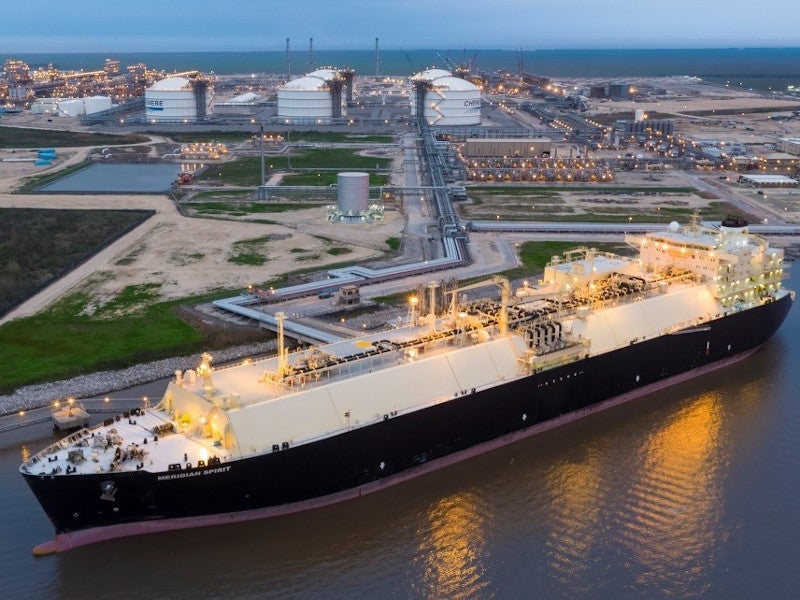
Hungary’s power company (MVM) and U.S.-based Chevron Corporation signed a 5-year liquefied natural gas (LNG) procurement agreement on December 16, 2025, with a total procurement volume of 2 billion cubic meters, of which Chevron will supply 400 million cubic meters of LNG to Hungary annually [1]. This marks the first time U.S. LNG has been included in Hungary’s energy supply structure, signifying an important milestone in U.S.-Hungary energy cooperation.
From the perspective of the global LNG market, U.S. LNG exports reached a record 11.9 billion cubic feet per day in 2024, and are expected to grow to 14.9 billion cubic feet per day in 2025 [2]. As a central European country, Hungary previously relied heavily on Russia for energy supply; this shift to U.S. LNG reflects the trend of energy diversification in Europe.
As of December 16, 2025, Chevron’s stock closed at $146.72, down 2.06% on the day, with a market capitalization of $293.35 billion [0]. The company’s current P/E ratio is 20.68 times, lower than the industry median, indicating a relative valuation advantage [0]. Analysts’ consensus target price is $169, representing a 15.2% upside from the current price [0].
In terms of revenue structure, downstream operations accounted for 75.7% of Chevron’s 2024 fiscal year revenue, while upstream operations accounted for 24.2% [0]. The international market contributed 55.8% of revenue, and the U.S. domestic market accounted for 44.1% [0], indicating the company has good geographic diversification.
Over the past three months, Chevron’s stock price has performed relatively weakly, falling 8.04%, but has been basically flat (+0.01%) so far this year [0]. Technical indicators show that the stock price is currently below the 50-day moving average ($152.61) and the 20-day moving average ($150.35), in a short-term adjustment trend [0]. However, the 52-week price range is $132.04-$168.96, and the current stock price is at a relatively reasonable level [0].
-
Market Diversification:This agreement marks Chevron’s successful entry into the Central European LNG market, reducing reliance on traditional markets and aligning with the changing trends of the global energy trade pattern [3].
-
Geopolitical Advantage:Against the backdrop of strengthened U.S.-Europe energy cooperation, Chevron, as a U.S. energy giant, has policy and diplomatic support for its expansion in the European market [1].
-
First-Mover Advantage:Hungary is the first country in which U.S. LNG has entered the market, laying the foundation for Chevron’s further expansion in the entire Central European region.
The global LNG market is expected to grow from $190 million in 2024 to $210 million in 2025, and reach $390 million by 2034, with a compound annual growth rate of 7.13% [3]. The Asia-Pacific region accounts for more than 70% of global LNG imports, and North America contributes more than 40% of export capacity [3].
Currently, U.S. natural gas prices are relatively low ($4.6 per million British thermal units), while European prices are higher ($9.6 per million British thermal units) [2], providing favorable arbitrage opportunities for U.S. LNG exporters. It is expected that U.S. natural gas prices may continue to rise in December 2025, while European prices will be relatively weak, and this price difference may persist [2].
-
Valuation Advantage:The current P/E ratio of 20.68 times is lower than the industry average, and analysts are unanimously bullish [0].
-
Stable Dividends:As a large energy company, Chevron has a stable dividend policy and cash flow.
-
Market Expansion:The Hungary agreement opens up the Central European market, aligning with the global growth trend of LNG.
-
Price Volatility:Natural gas prices are highly volatile, which may affect the actual revenue from contracts.
-
Geopolitics:Changes in U.S.-Europe relations may affect energy cooperation.
-
Increased Competition:Global LNG capacity expansion may lead to intensified market competition.
Based on Chevron’s valuation advantage, stable financial performance, strategic layout in the LNG market, and the new market opportunities brought by the Hungary agreement, we maintain a “Buy” rating. The target price is $169, representing an approximately 15% upside from the current price [0].
[0] Jinling API Data - Chevron Corporation (CVX) Real-Time Quotes, Financial Data and Analysis Report
[1] Xinhua News Agency - “Hungary and the U.S. Sign Liquefied Natural Gas Procurement Agreement” (December 17, 2025)
[2] Sina Finance - “U.S. and European Natural Gas Markets: Climate Differences Lead to Volatility; December Prices May Continue U.S. Rise and European Fall” (December 10, 2025)
[3] Global Growth Insights - “2025-2034 Liquefied Natural Gas Market Growth Forecast”
Insights are generated using AI models and historical data for informational purposes only. They do not constitute investment advice or recommendations. Past performance is not indicative of future results.