
Tesla Robotaxi Expansion Plan: In-depth Analysis of Commercial Feasibility and Valuation Impact
Related Stocks
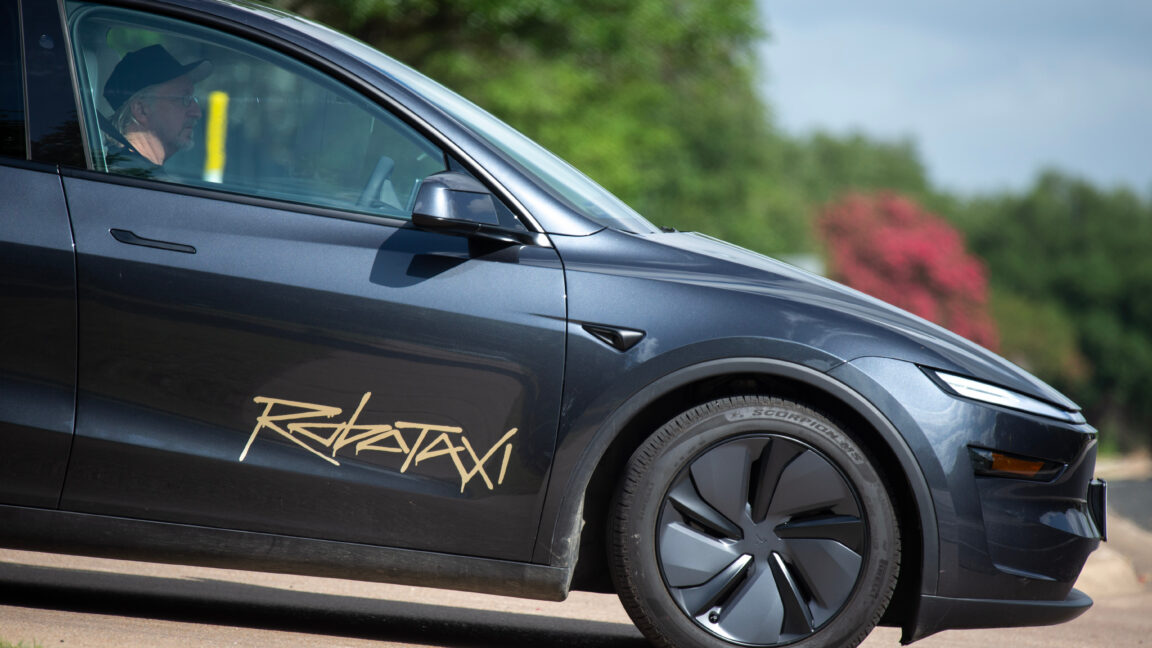
Based on Morgan Stanley’s forecasts and our comprehensive analysis, Tesla’s plan to expand its Robotaxi fleet from a few vehicles currently to 1000 by 2026 is technically feasible, but commercial success still faces significant challenges. This business will contribute limitedly to Tesla’s overall valuation in the short term but may become a key valuation driver in the long term.
Tesla’s current stock price is $489.88, with a market capitalization of $1.58 trillion [0]. The company’s financial status shows conservative accounting policies, low debt risk rating, but its current valuation is significantly higher than the valuation results of traditional DCF models ($140.97-$187.97) [0]. The analyst consensus target price is $458.50, with a rating of “Hold” [0].
-
No Safety Driver Testing Validation: Tesla has started Robotaxi testing without safety drivers in Austin [1], indicating that its Full Self-Driving (FSD) system has reached a new level of maturity.
-
Continuous Improvement of Safety Metrics: The latest version of the FSD system shows significant improvements, with smoother driving and drastically reduced manual interventions [1].
-
Scale Effect: Tesla has a large fleet as a “mobile lab”, training its FSD system on billions of miles of real-world data every day [2].
-
Regulatory Barriers: European regulators have not yet approved Tesla’s FSD system, showing the complexity of regulatory approval [3].
-
Safety Standardization: Despite improvements, standardized safety metrics and reporting mechanisms still need to be established.
Based on our scenario analysis model, assuming $150 daily revenue per Robotaxi and 350 operating days per year:

- Cybercab manufacturing cost: Approximately $30,000
- Annual maintenance cost: $5,000
- Insurance cost: $3,000
- Software support: $2,000
- 2026: Expected to remain in loss phase (technology verification and infrastructure investment)
- 2027-2028: May achieve break-even
- Post 2029: Start generating significant profits as scale effects emerge
-
Data Advantage: Tesla has the world’s largest autonomous driving fleet, with obvious data accumulation advantages [2].
-
Vertical Integration: Full-stack self-development from hardware to software reduces reliance on external parties.
-
Brand Effect: Tesla’s leading position in the EV and AI fields.
-
Catch-up by Traditional Automakers: Multiple traditional automakers are developing their own autonomous driving technologies.
-
Technology Licensing Potential: Some analysts believe that traditional automakers may eventually choose to license Tesla’s FSD system [2], which is both an opportunity and a threat.
Under Morgan Stanley’s forecast of 1000 Robotaxis:
- Revenue Contribution: Approximately $368 million (only 0.38% of Tesla’s 2024 revenue)
- Valuation Contribution: Based on a 5x revenue multiple, approximately $1.84 billion (1.2% of current market capitalization)
- Limited Impact: Minimal impact on overall valuation in the short term
According to our optimistic scenario analysis:
- Fleet Size: May reach 200,000 Robotaxis
- Annual Revenue Contribution: Over $18 billion
- Valuation Contribution: Based on an 8x revenue multiple, up to $71.4 billion (4.5% of current market capitalization)
- Network Effect: As fleet size expands, unit costs decrease and profitability improves
- Data Flywheel: More vehicles generate more data, enhancing FSD system performance
- Ecosystem Expansion: May include software licensing, insurance, charging services, etc.
- Safety Incidents: Any major safety accident could seriously affect business progress
- Technical Bottlenecks: The technical difficulty of L5 autonomous driving may exceed expectations
- Regulatory Delays: Uncertainty in regulatory approval progress across regions
- Increased Competition: Rapid development of competitors like Waymo and Cruise
- Economic Cycles: Economic downturns may affect travel demand
- Capital Needs: Large-scale fleet expansion requires huge capital investment
- Over-expectations: Current stock price already includes high growth expectations
- Execution Risks: Actual execution may fall short of expectations
- Timeline Delays: Commercialization timeline may be longer than expected
Tesla’s Robotaxi business represents the company’s strategic transformation from an automaker to an AI/robotics company. Although its contribution is limited in the short term, it is one of the key factors supporting its high valuation.
- Short-term (6-12 months): Focus on Austin testing progress and Cybercab production startup
- Mid-term (1-2 years): Observe fleet expansion speed and business model validation
- Long-term (3+ years): Evaluate the actual realization of network effects and profitability
- Technical Metrics: Number of human interventions per 10,000 miles, safety records
- Commercial Metrics: Fleet utilization rate, daily revenue, operating costs
- Financial Metrics: Separate profitability of the Robotaxi business, return on invested capital
Tesla’s Robotaxi expansion plan is technically reasonable, but commercial success still requires time to verify. The 2026 target of 1000 vehicles is relatively conservative and risk-controllable. This business cannot support the current high valuation in the short term but provides important imagination space for long-term growth. Investors should focus on execution progress rather than short-term stock price fluctuations.
Real valuation revaluation will occur after the fleet reaches tens of thousands of vehicles and achieves stable profitability, which may take until the 2028-2030 time window.
[0] Jinling API Data - Tesla Financial Data and Real-time Market Information
[1] Yahoo Finance - “Tesla stock pops as Robotaxi testing with no safety driver confirmed” (https://finance.yahoo.com/news/tesla-stock-pops-as-robotaxi-testing-with-no-safety-driver-confirmed-164047565.html)
[2] Forbes - “Why automakers may soon rent Tesla’s AI brain for autonomy” (https://www.forbes.com/sites/jimosman/2025/11/30/why-carmakers-will-end-up-renting-teslas-brain/)
[3] Bloomberg - “Tesla’s EU Regulator Denies the Carmaker’s Claim FSD to Be Approved” (https://www.bloomberg.com/news/articles/2025-11-24/tesla-s-eu-regulator-denies-that-it-s-agreed-to-approve-fsd)
Insights are generated using AI models and historical data for informational purposes only. They do not constitute investment advice or recommendations. Past performance is not indicative of future results.