
Mapping of Didi Drivers' 'Only Accept Big Orders' Strategy to Value Investing Stock Selection and Position Management
#价值投资 #选股策略 #仓位管理 #投资纪律 #耐心投资 #交易成本控制
Neutral
A-Share
December 15, 2025
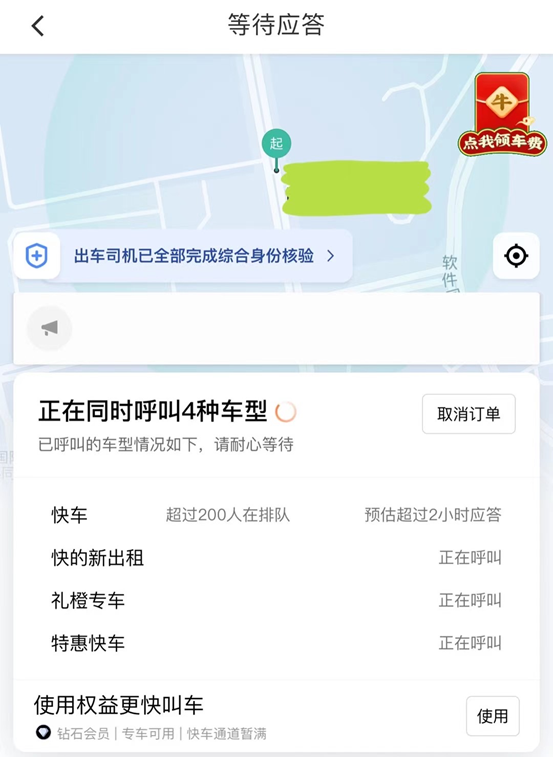
Mapping of Didi Drivers’ “Only Accept Big Orders” Strategy to Value Investing Stock Selection and Position Management
Didi drivers achieve lower work intensity without reducing income by “only accepting big orders and patiently waiting for high-quality orders”. This reflects principles of
focus on quality, patience in waiting, and efficient resource allocation
. Translating this strategy to the value investing system yields the following key insights:
-
Treat “high-quality companies” as the sole standard to avoid distraction from “ordinary” listed companies.
Drivers accepting only big orders means setting clear quality thresholds for each trip opportunity—corresponding to establishing and adhering to aclear set of criteria for judging high-quality companies(e.g., sustained high ROIC, sustainable competitive moat, clear growth path, credible management team, etc.). Instead of frequenting numerous ordinary companies, it’s better to deeply research and hold a few targets that truly meet the criteria, thereby improving the efficiency of unit research input and final returns. -
Patiently wait for opportunities within the “circle of competence” and reduce “impulsive trips”.
Didi drivers don’t accept orders randomly or “refresh” quickly; instead, they wait for orders matching their preferences. In value investing, this meansstrictly defining the boundaries of one’s circle of competence (industry/model/financial quality, etc.), deeply exploring opportunities within the circle and waiting for valuation pullbacks or confirmation, avoiding blind pursuit of companies outside of organic expansion. Patience also means holding cash when positions don’t meet standards, reducing irrational transactions. -
Avoid frequent “small orders” to reduce unnecessary transaction costs.
“Small orders” may bring short-term income but come with high frequency and energy consumption. In investing, this corresponds to avoiding frequent position adjustments, chasing short-term signals or hotspots—unless there’s a very certain fundamental judgment, don’t engage in “arbitrage-style” transactions. Maintaining low turnover reduces transaction costs, taxes, and behavioral biases, enabling compound accumulation. -
Streamline the portfolio, maintain concentration, and optimize position management.
Drivers only serve selected big orders, meaning they don’t try to “cast a wide net” for every order. Similarly, investment portfolios shouldmaintain a limited number of high-conviction positions, ensuring each fund is invested in the most confident opportunities. For position management, acore + satellitestructure can be used: core positions go to the most certain high-quality companies, satellite positions for a limited number of high-potential opportunities—avoid over-diversification leading to too small positions that can’t make an impact. -
The strategy must have clear rules and discipline.
Didi drivers judge whether to accept an order based on rule-based standards (unit price, location, mileage, etc.). Value investing also needs to predefine entry/addition/take-profit/stop-loss standards and maintain discipline during market sentiment fluctuations. This way, even if the market offers many opportunities, subjective impulses are avoided, truly achieving “value-driven” rather than “opportunity-driven”. -
Balance between stable income (return rate) and work intensity (risk/position adjustment frequency).
“Only accepting big orders” allows drivers to reduce intensity while maintaining income. Value investors should also pursueusing the highest-quality opportunities to gain relatively stable long-term returns, rather than increasing psychological and transaction costs from frequent adjustments. This concept supports long-term holding and full use of compound effects.
In conclusion, the core of the “only accept big orders” mindset in stock investing is
concentration, patience, discipline, and efficiency
. Building a trinity framework of “quality thresholds + circle of competence + streamlined portfolio” to guide stock selection and position management can reduce ineffective labor while maintaining the necessary return potential. If needed, I can further help build specific high-quality company screening templates and position allocation models, or even conduct alternative company matching analysis combined with current market data.
Ask based on this news for deep analysis...
Insights are generated using AI models and historical data for informational purposes only. They do not constitute investment advice or recommendations. Past performance is not indicative of future results.
Related Stocks
No related stocks