
Analysis of Rental Yield-Loan Rate Relationship and Impact on Bank & Real Estate Stocks
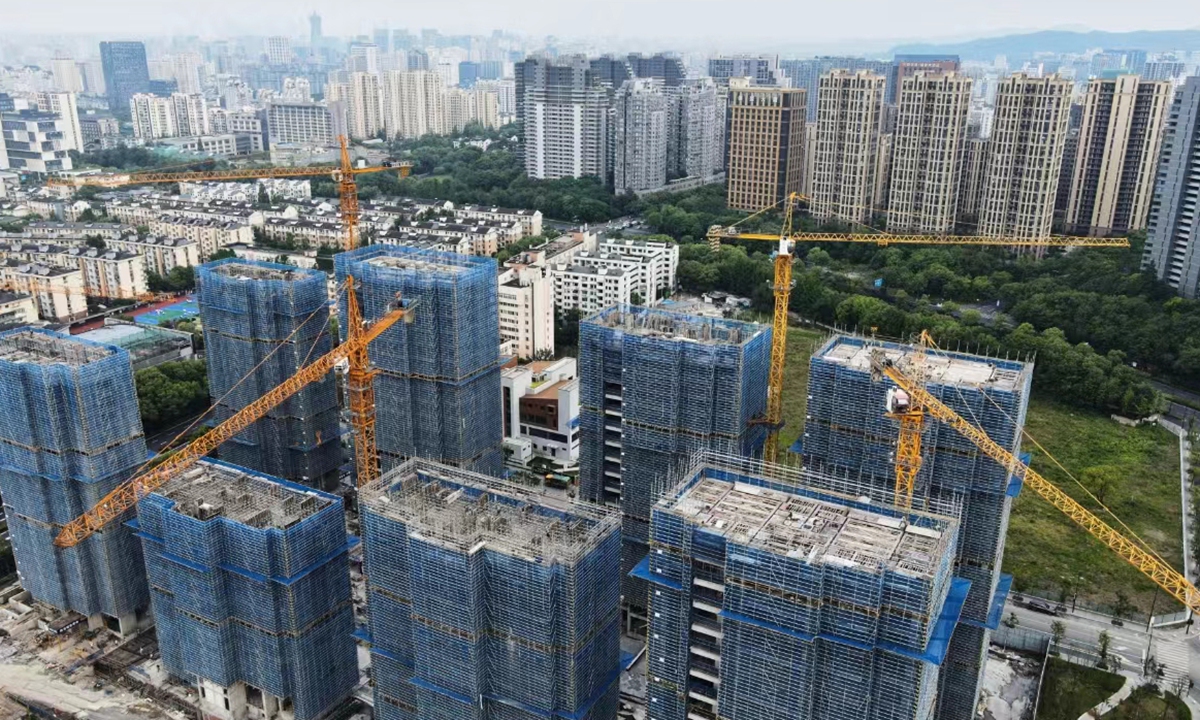
Based on available information analysis, the rental yield approaching mortgage rates is indeed one of the key indicators for judging the bottom of housing prices, but its effectiveness needs to be evaluated in combination with multi-dimensional factors, as well as its impact on bank stocks and real estate stocks.
Rental yield (annual rental income/housing price) is a core indicator for measuring the investment value of real estate. Theoretically, when the rental yield approaches or exceeds the mortgage rate:
- Investment costs and returns tend to balance: The financing cost of buying a house basically matches the rental income
- Speculative value declines: There is limited room for further housing price drops, as rent provides value support
- Investment substitution effect emerges: The opportunity cost of holding real estate is relatively reasonable
According to search results [1][2], China’s real estate market is in a phase of deep adjustment:
- Sustained downturn: The real estate market has been declining for four consecutive years with no obvious signs of stopping the drop
- Policy support: The government has promised to step up efforts to stabilize the real estate market, but the measures are relatively cautious
- Developer predicament: Even leading enterprises like Vanke are facing liquidity pressure
- Asset quality pressure: The quality of real estate-related loans continues to be under pressure
- Increased provisions: Banks need to set aside more provisions for potential losses
- Profitability pressure: Narrowing net interest margins combined with rising credit costs
- Decline in risk premium: If the real estate market stabilizes, the valuation of bank stocks is expected to recover
- Policy support: A loose monetary policy environment is conducive to improving bank profitability
- Low valuation: Bank stocks are at a relatively low historical valuation, with a margin of safety
According to search results [2][3], real estate stocks are facing severe challenges:
- Vanke case: As one of China’s most stable developers, Vanke still faces pressure to extend bonds, and its stock price has recorded the largest single-quarter drop in history
- Industry overall: China’s real estate crisis continues to deepen, and developers generally face debt pressure
Although the rental yield approaching the mortgage rate theoretically indicates the bottom of housing prices, there are special circumstances in the current environment:
- Structural issues: Slowing population growth and urbanization rate approaching its peak
- Policy regulation: The long-term existence of the “housing is for living, not for speculation” policy limits speculative demand
- Oversupply: Some cities have inventory backlog problems
- Focus points: Improvement in asset quality, stabilization of net interest margins, valuation repair
- Strategy: Focus on banks with strong risk control capabilities and moderate real estate exposure
- Timing: Wait for clear signals of stabilization in the real estate market before increasing allocation
- Differentiated pattern: State-owned enterprise developers are relatively stable, while private enterprise risks remain high
- Focus points: Cash flow status, debt structure, and government support intensity
- Strategy: Be cautious and wait, focusing on industry consolidation opportunities
The rental yield approaching the mortgage rate does provide an important reference for judging the bottom of housing prices, but under the background of structural adjustment in China’s real estate market, the effectiveness of this signal is limited. For the valuation repair of bank stocks and real estate stocks, investors are advised to:
- Be patient: It takes time for the real estate market to stabilize
- Choose carefully: Focus on enterprises with solid fundamentals and strong risk resistance capabilities
- Control positions: Remain cautious in an environment with high uncertainty
[1] Bloomberg - “China Vows to Stabilize Property Market as Crisis Deepens” (https://www.bloomberg.com/news/articles/2025-12-11/china-vows-to-stabilize-home-market-as-property-crisis-deepens)
[2] Bloomberg - “China Property Crisis: Why Market Is a Mess? What Stimulus Measures Are Planned” (https://www.bloomberg.com/news/articles/2025-11-24/china-property-crisis-why-market-is-a-mess-what-stimulus-measures-are-planned)
[3] WSJ - “Vanke Seeks Extension for a Domestic Bond, Triggering a Sell-Off in Chinese Real Estate Stocks” (https://cn.wsj.com/articles/万科一笔境内债券寻求展期-引发中国地产股抛售潮-847d9f8e)
Insights are generated using AI models and historical data for informational purposes only. They do not constitute investment advice or recommendations. Past performance is not indicative of future results.