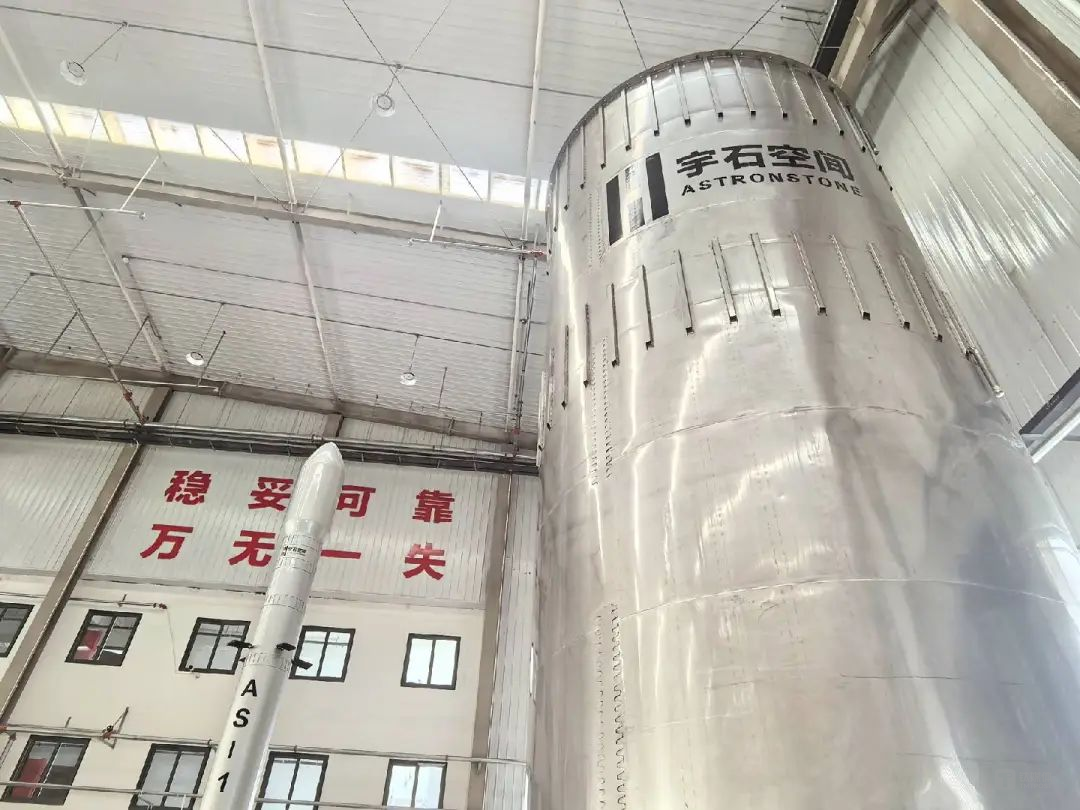
Analysis of Technical Route of Stainless Steel Rocket + Capture Arm Recovery for Yushi Space
Feasibility Analysis of Technical Route
Core Technical Advantages
The technical route of ‘stainless steel + liquid oxygen methane + capture arm recovery’ adopted by Yushi Space does have significant advantages:
Stainless steel rocket body
has lower cost, simpler manufacturing, and better heat resistance compared to traditional aluminum alloy. SpaceX Starship’s success has verified the feasibility of stainless steel in large-diameter rockets, and its manufacturing cost can be reduced by more than 70% compared to carbon fiber [2]. Stainless steel also has better high-temperature resistance, which can greatly reduce the complexity and cost of the thermal protection system.
Liquid oxygen methane propulsion
is an ideal choice for reusable rockets:
- Low cost: The price of methane is about 90% lower than that of liquid hydrogen and more economical than traditional kerosene fuel [5]
- Clean combustion: Produces almost no carbon deposits, making engine maintenance simpler and more suitable for high-frequency reuse [5]
- Excellent performance: High theoretical specific impulse and good cooling performance, suitable as the main power for reusable launch vehicles [5]
Capture arm recovery technology
represents the cutting-edge solution for rocket recovery. Compared to traditional vertical landing, capture arm recovery does not require landing支架, saving weight and fuel, but has extremely high requirements for ground control precision [2]. SpaceX has verified the feasibility of this technology multiple times, which is considered the ultimate technical route [1].
Technical Challenges and Risks
Despite the advanced technical route, Yushi Space still faces major technical challenges:
Four Precision Requirements
: Rocket recovery requires precise guidance, precise control, precise deceleration, and precise anti-disturbance—no deviation is allowed in any step [2]. In particular, real-time trajectory calculation at hypersonic speeds, attitude control in the atmosphere, and millisecond-level engine thrust adjustment all require strong technical accumulation.
Reuse Times Target
: To achieve the annual launch capacity of 30 rockets, the first-stage rocket needs to have at least 20-30 reuse capabilities. This puts extremely high requirements on the rocket body structure, engine life, and thermal protection system.
System Integration Complexity
: The technical integration of stainless steel manufacturing, liquid oxygen methane engine, and capture arm recovery is extremely difficult, requiring breakthroughs in multiple technical fields simultaneously.
Market Demand and Commercial Feasibility Analysis
Strong Market Demand
China’s commercial aerospace is in a period of explosive growth:
Huge Industry Scale
: It is predicted that by 2030, China’s commercial aerospace industry is expected to reach a scale of 7-10 trillion RMB, and will maintain a high annual compound growth rate of 35% in the next few years [3]. The China National Space Administration has specially established the Commercial Aerospace Department and released the “Action Plan for Promoting High-Quality and Safe Development of Commercial Aerospace (2025-2027)”, incorporating commercial aerospace into the national strategic layout [3].
Urgent Launch Demand
: China currently has three 10,000-satellite constellation plans: China Satellite Network’s GW Constellation (12,992 satellites), Shanghai Yuanxin’s G60 Qianfan Constellation (15,000 satellites), and Landspace Hongqing Technology’s Honghu-3 Constellation (12,000 satellites) [3]. As of October 2025, China Satellite Network has launched a total of 116 satellites, and Qianfan has launched 108 networking satellites, with the launch frequency becoming “routine” [3].
Obvious Cost Advantage
: Currently, domestic rocket launch quotes are about 60,000 to 80,000 RMB per kilogram, while Yushi Space claims to reduce the launch cost to 10,000 RMB/kg, which will be a disruptive cost advantage [4]. If successful, it will significantly reduce the proportion of launch service costs for satellite companies by about 30%-40% [4].
Feasibility of Business Model
Clear Target Customers
: Medium and low-orbit satellite constellation operators are the main target customers, including government-led satellite network projects and commercial constellation projects.
Clear Profit Model
: Revenue is obtained through low-cost launch services; as launch frequency increases and reuse technology matures, marginal costs will drop significantly, and profitability will be significantly enhanced.
Outstanding Competitive Advantage
: Compared with traditional rockets, if the launch cost of 10,000 RMB/kg is achieved, it will have international competitiveness. Even considering technical maturity factors, if it can reach 20,000-30,000 RMB/kg, it still has a significant advantage over current domestic prices.
Analysis of Annual Launch Capacity Target of 30 Rockets
Rationality of Capacity Planning
Timeline
: The first flight verification is planned to be completed by the end of 2026, assuming commercial operation in 2027; to reach the annual launch capacity of 30 rockets within 3-4 years, the pace is relatively tight but not impossible.
Infrastructure Support
: The company is building a production base in Zhuzhou, Hunan, with a target annual output of 8 rockets [1]. To reach the annual launch capacity of 30 rockets, at least 3-4 rockets are needed for reuse turnover (calculated based on 8-10 reuses per rocket).
Technical Maturity Requirements
: To achieve 30 annual launches, the following are needed:
- Rocket reuse times reach 15-20 times
- Single launch preparation cycle shortened to 10-15 days
- Launch sites and ground support facilities are matched
Competitive Landscape Analysis
Domestic Competitors
: Multiple reusable rockets such as Zhuque-3 (Landspace), Tianlong-3, Gravity-2, Hyperbola-3, and Zhishenxing-1 are scheduled to make their first flights by the end of 2025 [3]. Competition will become increasingly fierce.
Comparison of Technical Routes
: Zhuque-3: Also adopts stainless steel + liquid oxygen methane, with a target launch cost of 20,000 RMB/kg [4]
Other manufacturers: Mostly adopt traditional aluminum alloy + kerosene/liquid hydrogen routes.
Time Window
: 2025-2027 is a critical period for technical verification and commercialization; whoever can take the lead in achieving stable reuse and low-cost launches will seize the market opportunity.
Investment Risk Assessment
Technical Risk (High)
- Uncertainty in first flight success rate and recovery technology maturity
- System integration risk of multiple cutting-edge technologies
- Obvious gap in technical accumulation and engineering experience compared with SpaceX
Market Risk (Medium)
- Satellite constellation construction progress may affect launch demand
- Policy changes and regulatory requirements
- Intensified international competition, especially the impact after SpaceX Starship matures
Financial Risk (Medium-High)
- Huge R&D investment and long commercialization cycle
- Increased cash flow pressure if the annual launch target of 30 rockets is delayed
- Risk of changes in financing environment
Conclusions and Recommendations
Overall Assessment
Yushi Space’s technical route selection is correct; stainless steel + liquid oxygen methane + capture arm recovery is indeed the ultimate route for reusable rockets, which is in line with the technical development trend. If the launch cost target of 10,000 RMB/kg is achieved, it will have a disruptive competitive advantage.
The annual launch capacity target of 30 rockets is achievable under the premise of technical maturity, but the timeline is relatively optimistic and may need to be adjusted appropriately according to the progress of technical verification.
Key Success Factors
Successful First Flight in 2026
: This is a key node for technical route verification and must be ensuredBreakthrough in Recovery Technology
: The engineering implementation of capture arm recovery technology is the core bottleneckReuse Times
: Need to reach more than 10 reuses as soon as possible to achieve commercial closureCost Control
: Must control the actual launch cost within 20,000 RMB/kg
Investment Recommendations
For investors, Yushi Space represents a high-risk, high-return investment opportunity in the commercial aerospace field:
Positive Factors
:
- Advanced technical route, in line with the ultimate direction
- Huge market demand and strong policy support
- Obvious cost advantage and huge commercial potential
- Completed multiple rounds of financing, with high capital recognition
Risk Warnings
:
- High difficulty in technical implementation, with large uncertainty
- Long commercialization cycle, requiring continuous large capital investment
- Increasingly fierce competition, first-mover advantage may be diluted
It is recommended that investors adopt a “phased investment” strategy, focusing on the results of the 2026 first flight and the progress of recovery technology verification, and then increase investment after successful technical verification.
References
[1] 36Kr - “The second-stage rocket has completed assembly and testing; Yushi Space has completed a Pre-A round of financing exceeding 100 million yuan” (https://m.36kr.com/p/3596669851238407)
[2] Beijing Science and Technology News - “Zhuque-3 recovery test failed; how difficult is rocket recovery?” (http://www.bkweek.com/Index/detail?id=837304738071588864)
[3] Wall Street CN - “10 trillion industry scale! The starry sea of China’s commercial aerospace behind Zhuque-3” (https://wallstreetcn.com/articles/3760647)
[4] People’s Daily Online - “China’s commercial aerospace ‘talks business’ to cultivate ecology” (http://finance.people.com.cn/n1/2025/1207/c1004-40618951.html)
[5] SciOpen - “Research Progress of High-Thrust Liquid Oxygen Methane Rocket Engine Technology” (https://www.sciopen.com/article_pdf/1849630503665815554.pdf)
[6] Securities Times - “Big move in commercial aerospace! SpaceX is reportedly launching IPO investment bank selection; Musk may become the world’s…” (https://www.stcn.com/article/detail/3540484.html)