
Analysis of the In-depth Impact of OpenAI Appointing Osborne to Lead Stargate's Global Expansion on the AI Industry
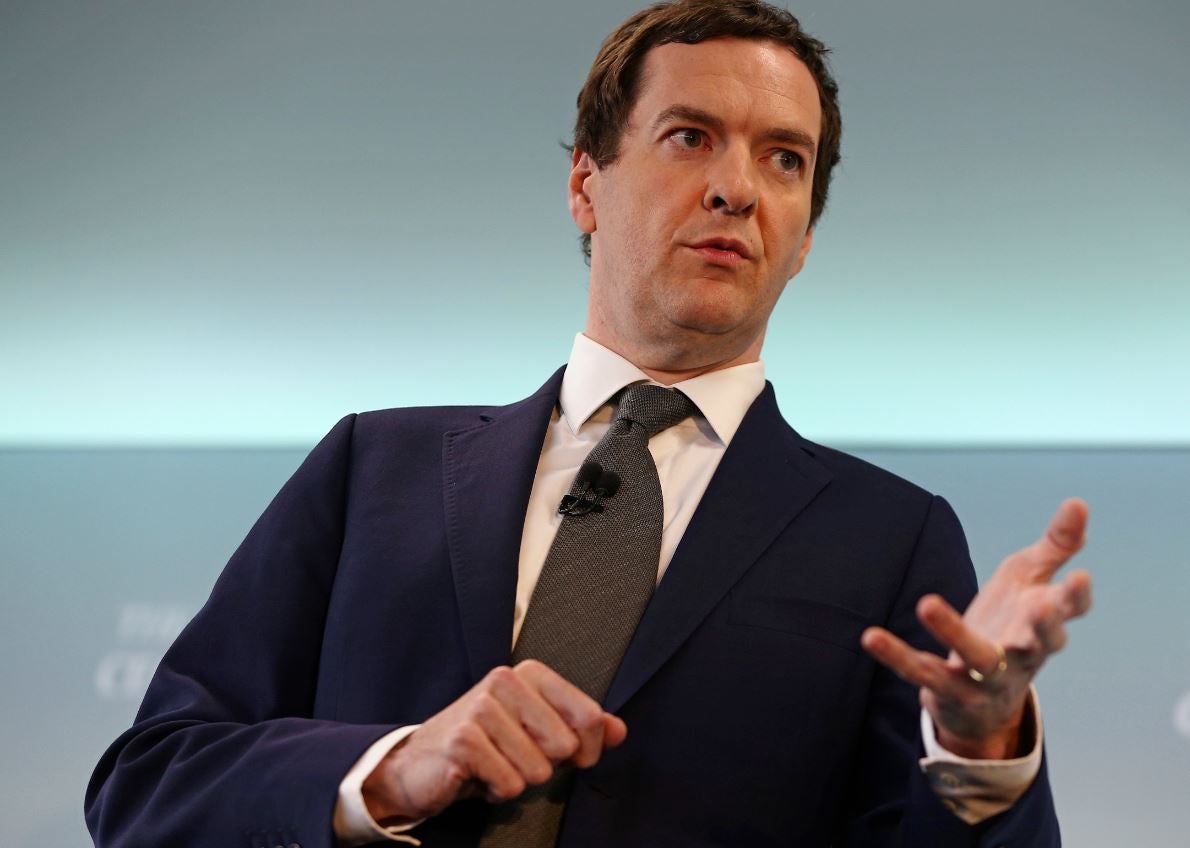
On December 16, 2025, OpenAI officially appointed former UK Chancellor of the Exchequer George Osborne as Managing Director and Head of the ‘OpenAI for Countries’ initiative, responsible for leading the global expansion of the $500 billion Stargate project [1]. Osborne will take office in January 2025 and is expected to attend the World Economic Forum event in Davos next month [1].
This appointment has far-reaching strategic significance, reflecting OpenAI’s major considerations in global layout and political-business relationship building:
As former UK Chancellor of the Exchequer (2010-2016), Osborne has rich international political experience and a global government network [1]. His addition will help OpenAI better cooperate with governments around the world to promote the formulation and implementation of national AI strategies.
The core mission of the ‘OpenAI for Countries’ initiative is to ensure that AI systems are built on democratic values while supporting local innovation ecosystems, education, and infrastructure development [1]. This reflects OpenAI’s ideological positioning in the global AI governance landscape.
The Stargate project is the largest AI infrastructure investment project to date, with a total investment scale of $500 billion [1]. The project initially builds data centers in the United States, aiming to reach 10 gigawatts of power capacity by the end of 2025 [1].

The project brings together several top technology and investment institutions:
- SoftBank: Chaired by Masayoshi Son [1]
- Oracle: Provides a $300 billion computing capacity procurement agreement [3]
- Nvidia: Commits $100 billion in investment [3]
- Amazon AWS: $38 billion cloud service partnership [3]
- CoreWeave: Expands to $22.4 billion in cloud infrastructure services [3]
The massive scale of the Stargate project marks a new era in AI infrastructure investment. In 2025, the total global AI-related investment has exceeded $96 billion, with OpenAI alone accounting for more than 50% of the share [3]. This concentration will force other AI companies to increase infrastructure investment, forming a new round of arms race.
Traditional SaaS valuation models face challenges in the AI infrastructure field. OpenAI faces the reality that it needs approximately $1.4 trillion in investment commitments over the next 8 years [3]. This capital-intensive development model is reshaping investors’ valuation logic for AI companies:
- Reassessment of Infrastructure Value: Data centers and computing power networks become core assets
- Questions About Long-term Profitability: High capital expenditures may extend the profit cycle
- Higher Threshold for Scale Effect: Only players with huge capital strength can participate in the competition
AI infrastructure has become a new battlefield for geopolitical competition. The U.S. government regards AI as ‘core national infrastructure’, and the geopolitical risks of its governance methods are increasingly prominent [1]. Osborne’s appointment is to some extent a strategic response by OpenAI to this geopolitical challenge.
Osborne’s political background and global network have strengthened market confidence in OpenAI’s global expansion capabilities. This political capital can be converted into commercial value to some extent, especially in the field of AI infrastructure construction that requires government approval and regulatory cooperation.
With Osborne’s influence in the political arena, OpenAI is expected to:
- Accelerate landing in key markets such as Europe and Asia
- Obtain more government contracts and preferential policies
- Reduce regulatory risks and compliance costs
Through the ‘OpenAI for Countries’ initiative, OpenAI attempts to shape AI governance standards globally. This standard-setting capability will become an important source of the company’s long-term competitive advantage, thereby supporting a higher valuation level.
The $500 billion investment scale will significantly raise the entry threshold for the AI industry. OpenAI and its partners are building an unshakable ecosystem, and small and medium-sized AI companies face the risk of being marginalized.
The traditional AI value chain is being restructured:
- Hardware Suppliers: Chip companies like Nvidia have enhanced their status
- Cloud Service Providers: Platforms like AWS and Oracle have increased their value
- Model Developers: Leading companies like OpenAI have gained more say
The Stargate project is initially concentrated in the United States, which may lead to regional imbalances in global AI development. Osborne’s global expansion task is to some extent to alleviate this imbalance, but the actual effect remains to be seen.
Such a large-scale infrastructure investment faces huge capital efficiency pressure. Analysts point out that by the end of 2026, market pressure may force OpenAI to scale back its record-breaking AI data center construction plan [3].
Rapid AI technology iteration may render current infrastructure investments obsolete in the short term. Balancing current needs with future technological development is a major challenge.
Although Osborne’s political background helps mitigate regulatory risks, AI regulatory policies in various countries are still evolving, and policy uncertainty remains an important risk factor.
OpenAI’s appointment of Osborne to lead Stargate’s global expansion is a landmark strategic move, reflecting that the AI industry is entering a new stage centered on infrastructure competition. This development has a profound impact on the AI industry’s investment landscape and valuation system:
- Significantly Higher Investment Threshold: The $500 billion investment scale pushes the AI industry to a new height of capital-intensive competition
- Reconstructed Valuation Logic: Infrastructure assets and political-business relationship networks become important supporting factors for valuation
- Strengthened Geopolitical Attributes: AI infrastructure has become an important area of geopolitical competition
- Discourse Power in Industry Standards: Shaping AI governance standards through government cooperation has become a new competitive dimension
In the future, competition in the AI industry will not only be about technology and talent but also about infrastructure, capital, and political influence. Osborne’s appointment marks OpenAI’s transformation from a technology company to a global infrastructure operator, which will profoundly affect the development trajectory and investment logic of the entire AI industry.
[1] Jinling API Data
[2] Reuters - “OpenAI taps former UK finance minister Osborne to lead global Stargate expansion” (https://www.reuters.com/business/openai-taps-former-uk-finance-minister-osborne-lead-global-stargate-expansion-2025-12-16/)
[3] Forbes - “Disney’s $1 Billion OpenAI Investment Makes 2025’s Top AI Deals (Full List, Ranked)” (https://www.forbes.com/sites/tylerroush/2025/12/11/disneys-1-billion-openai-investment-makes-2025s-top-ai-deals-full-list-ranked/)
[4] Forbes - “Why OpenAI’s AI Data Center Buildout Faces A 2026 Reality Check” (https://www.forbes.com/sites/paulocarvao/2025/12/06/why-openais-ai-data-center-buildout-faces-a-2026-reality-check/)
[5] Global Banking and Finance - “OpenAI taps former UK finance minister Osborne to lead global…” (https://www.globalbankingandfinance.com/openai-executives/)
[6] TechMeme - “OpenAI hires former UK chancellor George Osborne to lead OpenAI for Countries” (http://www.techmeme.com/251216/p25#a251216p25)
Insights are generated using AI models and historical data for informational purposes only. They do not constitute investment advice or recommendations. Past performance is not indicative of future results.