
Mercedes-Benz Closure of Mexico COMPAS Factory: Impact on Global Auto Manufacturing
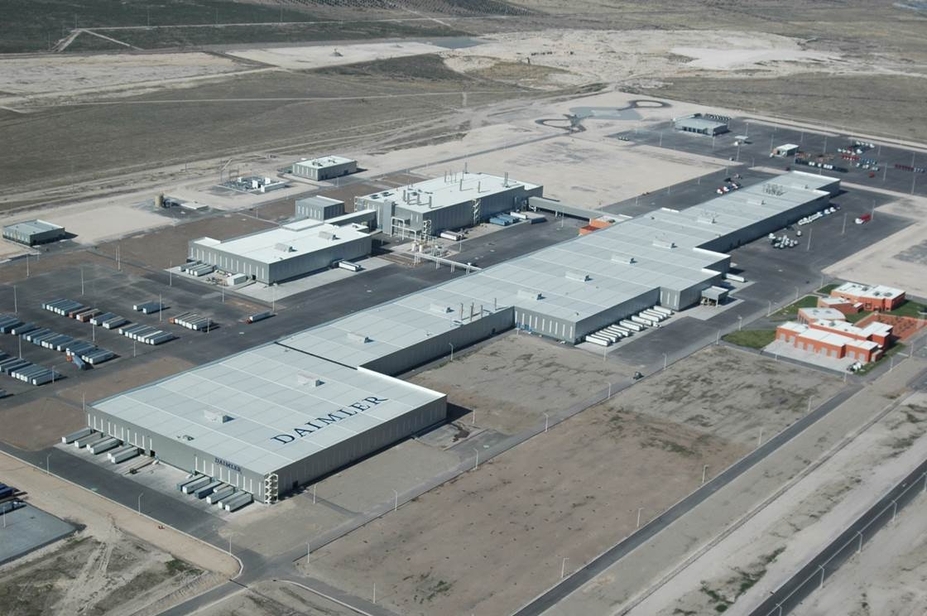
Based on the latest information gathered, I will provide a comprehensive analysis of the impact of Mercedes-Benz’s closure of the Mexico COMPAS factory on the global auto manufacturing investment landscape and supply chain.
Mercedes-Benz and Nissan announced the closure of their COMPAS (Cooperation Manufacturing Plant Aguascalientes) joint venture factory in Aguascalientes, Mexico [1]. The factory, which started production in 2017 and focuses on luxury vehicle manufacturing, will complete its closure by May 2026 [2]. This is one of seven factories Nissan plans to close, reflecting the in-depth adjustments underway in the global auto manufacturing industry [1].
- Global Capacity Reassessment: According to a study by AlixPartners, the transformation of the European auto industry may lead to the closure of up to eight auto factories in the coming years [3].
- Shift in Investment Strategy: Automakers are moving from large-scale expansion to more precise investment strategies. By 2025, major investments by companies like General Motors and Hyundai in the U.S. have shifted focus from EV production line transformation to more balanced capacity allocation [4].
- Slowdown in EV Investment: Data shows that the number of canceled clean technology investments exceeded new investments in the third quarter of 2025 [5]. Europe’s investment in electric vehicles and battery manufacturing dropped by nearly 40% in July-September 2025 compared to the same period last year [5].
- Diversified Technology Routes: Ford announced it will abandon production of the F-150 Lightning electric pickup and instead invest $20 billion to pivot back to gasoline and hybrid models [6], reflecting a diversified investment strategy.
- Adjustment of North American Layout: Nissan has launched the expansion of its A1 factory in Aguascalientes, focusing on pickup assembly with an investment of over 120,000 square meters [7], indicating a shift of resources from luxury vehicles to more niche market segments.
- European Localized Production: Europe has invested €82 billion in gigafactories, with battery capacity expected to reach 1.2 TWh by 2030 [8], reflecting a focus on local supply chain security.
- Cooling of Joint Venture Models: The closure of the COMPAS factory marks challenges for joint venture production models among automakers. Companies prefer to independently control core capacity to respond to market changes.
- Building Supply Chain Resilience: Automakers and suppliers are promoting deeper collaboration to build more resilient supply chain systems [9]. This collaboration is no longer simply about cost optimization but focuses on long-term supply chain stability.
- Acceleration of Regional Production: Hyundai Motor Group plans to invest $21 billion in the U.S. from 2025 to 2028, reflecting the trend of manufacturing concentration in major consumer markets [4].
- China’s Overcapacity Issue: Experts warn that China’s auto overcapacity poses a threat to U.S. and global automakers, requiring multi-country collaborative responses [10]. This overcapacity pressure is driving the reconfiguration of global supply chains.
- Focus on High-Value Segments: Bosch invested $221.2 million to expand its factory in Aguascalientes, focusing on advanced technology integration and process improvement [11], indicating that component suppliers are upgrading to higher-value segments.
- Integration of Sustainable Development: Mercedes-Benz is advancing ‘urban mining’ and circular economy models, including innovative technologies like ‘mono-sandwich’ door panels [12], reflecting the transformation of supply chains toward sustainable development.
Automakers’ investment decisions will pay more attention to:
- Demand Matching: Avoid resource waste caused by overcapacity
- Technological Flexibility: Production lines need the ability to quickly switch between different powertrain systems
- Cost-Effectiveness: Find a balance between long-term electrification goals and short-term profit needs
Future auto supply chains will exhibit:
- Strategic Partnerships: Instead of simple buyer-seller relationships
- Risk-Sharing Mechanisms: Bind interests through joint ventures, cross-shareholdings, etc.
- Transparent Information Sharing: Achieve end-to-end supply chain visibility
Global auto manufacturing will form:
- Localization in Core Markets: Establish complete localized production capabilities in major consumer markets
- International Specialization: Different regions focus on niche segments where they have competitive advantages
- Redundancy Backup Mechanisms: Establish multi-regional backup production systems for key components
The closure of Mercedes-Benz’s Mexico COMPAS factory is not an isolated event but a microcosm of in-depth adjustments in the global auto manufacturing industry. This event reflects three fundamental transformations the industry is undergoing: from scale expansion to quality improvement, from global layout to regional focus, and from cost-driven to resilience-driven. During the critical period of electrification transition, automakers need to find a new balance between investment efficiency, technology routes, and supply chain security, which will continue to reshape the global auto manufacturing investment landscape and supply chain system.
[1] “Mercedes to exit Mexico plant as Nissan partnership ends”, Automotive News, December 16, 2025. https://www.autonews.com/mercedes-benz/ane-mercedes-nissan-jv-production-mexico-1216/
[2] “Nissan, Mercedes-Benz will shutter joint manufacturing plant in Mexico”, WardsAuto, November 4, 2025. https://www.wardsauto.com/topic/operations/
[3] “European logistics providers brace for industry overcapacity”, Automotive Logistics Media. https://www.automotivelogistics.media/supply-chain/european-logistics-providers-brace-for-industry-overcapacity/2334056
[4] “US Manufacturers Make Big Plans in 2025”, Assembly Magazine. https://www.assemblymag.com/articles/99692-us-manufacturers-make-big-plans-in-2025
[5] “Europe has a solid basis for battery and electric vehicle manufacturing growth”, Bruegel. https://www.bruegel.org/analysis/europe-has-solid-basis-battery-and-electric-vehicle-manufacturing-growth
[6] “Ford dropping F-150 EV in $20 billion pivot back to gasoline, hybrids”, Automotive News, December 2025. https://www.autonews.com/mercedes-benz/ane-mercedes-circular-economy-1216/
[7] “Arranca la ampliación de Nissan A1 para el ensamble de pickups”, Alianza Flotillera. https://alianzaflotillera.com/arranca-la-ampliacion-de-nissan-a1-para-el-ensamble-de-pickups/
[8] “Europe invested €82 billion in gigafactories”, EV Infrastructure News. https://www.evinfrastructurenews.com/ev-battery/europe-invested-82-billion-in-gigafactories-capacity-to-reach-1-2twh-by-2030
[9] “Automakers, suppliers push deeper collaboration to build resilient supply chains”, Automotive News, November 25, 2025. https://www.autonews.com/manufacturing/suppliers/an-suppliers-automakers-work-to-build-resiliency-collaboration-1125/
[10] “China’s Auto Overcapacity Demands a Response, Experts Tell …”, American Manufacturing. https://www.americanmanufacturing.org/blog/chinas-auto-overcapacity-demands-a-response-experts-tell-select-committee/
[11] “Bosch invests $221.2 million to expand production in Aguascalientes plant”, Mexico Now, October 17, 2024. https://autotechinsight.spglobal.com/news?fs_tags[8][]=41040
[12] “‘Urban mining’ and ‘mono-sandwich’ door pockets: How Mercedes is scaling up circular economy efforts”, Automotive News, December 16, 2025. https://www.autonews.com/mercedes-benz/ane-mercedes-circular-economy-1216/
Insights are generated using AI models and historical data for informational purposes only. They do not constitute investment advice or recommendations. Past performance is not indicative of future results.