
Analysis of Pop Mart's 'Content-Free IP' Business Model and Long-Term Investment Value
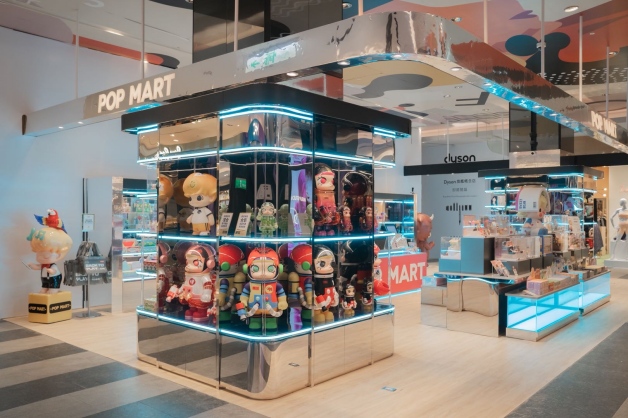
Based on an in-depth analysis of Pop Mart’s ‘content-free IP’ business model, I will evaluate its long-term investment value from multiple dimensions including IP lifecycle, user stickiness, and valuation support.
Pop Mart’s business model has fundamental differences from Disney:
- Establishes emotional connections through century-old story content and worldviews [2]
- IP derivative licensing revenue reaches $8.5 billion with almost no independent costs and extremely high gross margins [3]
- Three sectors (entertainment, experience, sports) collaborate to form a complete ecological closed loop [3]
- Relies on trendy visual design rather than in-depth story content [2]
- Core capabilities are “IP screening” and “IP industrialization” instead of IP creation [1]
- Owns IP rights and does not need to pay licensing fees to third parties [3]
Pop Mart drives consumption through “aesthetics + fast decision-making”, similar to Zara’s fast fashion model:
- Rapid iteration capability: 2024 handcrafted figure revenue was 6.94 billion yuan, up 44.7% YoY; plush toys saw explosive growth with revenue of 2.83 billion yuan, up 1289% YoY [3]
- Diversified IP matrix: From a single Molly to a matrix of multiple IPs like SKULLPANDA, THE MONSTERS, LABUBU [1]
- Global replication capability: 2024 overseas revenue surged 375%, successfully entering European and American markets [1]
- IPs without story content support are more likely to be forgotten by consumers
- Products with strong trend attributes have relatively short lifecycles
- The risk of artists leaving the platform, similar to Taylor Swift’s situation, does exist [1]
Lai Yang, an expert from the China General Chamber of Commerce, pointed out: “Whether Pop Mart can transition from ‘design-driven’ to ‘content-driven’ is the key to its long-term value.” [2]
Pop Mart’s user stickiness is mainly built on:
- Collection psychology: Blind box mechanism stimulates repeat purchases
- Social attributes: Social media topic linkage drives phenomenal spread [2]
- Aesthetic recognition: High-quality design achieves “art equality” [2]
Compared with Disney, the deep support for Pop Mart’s user stickiness is weaker:
- Disney establishes long-term emotional connections through movies, animations, etc.
- Pop Mart relies more on trendy visual appeal [2]
According to the latest financial data [0]:
- 2024 net profit attributable to parent company was 11.03 billion yuan, with a net profit margin of 29.96%
- Net profit growth rate was 31.32%, revenue growth rate was 24.88%
- ROE reached 61.41%, return on assets was 34.51%
- Pop Mart’s net profit margin is over 26%, far exceeding Disney’s net profit margin of less than 6% [3]
- Relying on China’s supply chain advantages, the production outsourcing model enables asset-light operation [3]
- Unlike Lego, which needs to pay licensing fees, Pop Mart owns complete IP rights [3]
- Gains the ability to capture value across the entire industrial chain
Since 2025, Pop Mart’s stock price has fluctuated sharply:
- Since the August high of HK$339.8 per share, the cumulative decline has been about 40% [1]
- Total market value evaporated by more than HK$200 billion [1]
Company management is aware of the problem and proposed “adhere to IP operation long-termism” [1], but:
- Movies and animations are high-risk, high-return industries that require professional industrialization precipitation [3]
- A complete transformation from a product company to a content creative company faces huge challenges [2]
The sustainability of LABUBU’s hit product phenomenon is questionable [1], and issues like the unprofitable operation of specialty stores observed by experts are worth vigilance [2]
Pop Mart’s “content-free IP” model still has strong competitiveness in the short to medium term:
- Excellent financial indicators and strong profitability
- Global expansion strategy has achieved initial results
- Asset-light operation model has cost advantages
- Diversified IP matrix reduces single-dependency risk
Long-term valuation support depends on successful key transformations:
- Contentization Transformation: The transition from “design-driven” to “content-driven” is key [2]
- Artist Control: Establish a stronger artist cooperation mechanism to avoid core talent loss
- Globalization Depth: Upgrade from product export to cultural export
- Industrial Chain Extension: Build operational capabilities for heavy asset projects like theme parks
Based on the current situation, Pop Mart’s “content-free IP” model can support short to medium-term valuation, but long-term valuation support depends on:
- Successful contentization transformation
- Sustained IP innovation capability
- In-depth development of global markets
As Pop Mart CEO Wang Ning said, the company’s goal has shifted from “China’s Disney” to “the world’s Pop Mart” [3], which reflects its awareness of the differentiation of its own business model. Whether this vision can be realized depends on whether it can build a deeper IP value moat while maintaining the advantages of the fast-moving consumer goods model.
[1] 证券时报 - “泡泡玛特四个月市值蒸发2000亿港元,Labubu市场溢价在消退” (2025-12-12)
[2] 观察者网 - “泡泡玛特的’新故事’,能否撑起比肩迪士尼的野心?” (2025-06-17)
[3] 21经济网 - “泡泡玛特成也’泡泡’,败也’泡泡’” (2025-06-19)
[0] 金灵AI财务数据
Insights are generated using AI models and historical data for informational purposes only. They do not constitute investment advice or recommendations. Past performance is not indicative of future results.