
Identification of Investment Targets with 'Sustained Growth of Endogenous Value' and Strategy Analysis in an Uncertain Environment
Related Stocks
- Over the past 60 trading days, U.S. stock indices such as the S&P 500, Nasdaq, and Dow Jones have collectively experienced mild volatility. The Dow Jones led in gains and had lower volatility than the Nasdaq, reflecting that investment styles centered on “low volatility” and “high certainty” remain favored [0].
- In sectoral capital allocation, consumer, technology, and utilities sectors strengthened against the trend, while energy and defensive sectors weakened, indicating that risk preferences still lean toward high-quality growth targets [0].
- Global macro perspective: The recent U.S. job market has shown a cooling trend, further strengthening market concerns about economic downturn and policy uncertainty (see news source), providing a relatively safe valuation window for “endogenous value” enterprises [1].
| Feature | Identification Points |
|---|---|
High Value |
Sound asset-liability structure, ROE at the upper end of the industry, high net profit margin (e.g., Apple’s net profit margin 26.9%, Microsoft’s 35.7%) [0]. |
Strong Dependence |
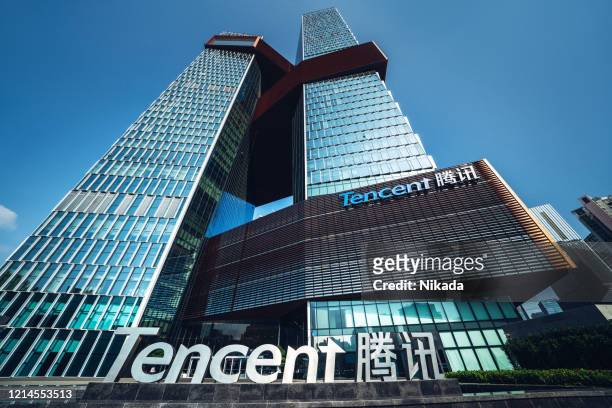
Strong user/customer stickiness, ecological closed loop, sustainable brand and channel barriers (Tencent’s social and content ecology, Alibaba’s e-commerce + cloud + local life) [0]. |
Large Growth Potential |
Long-term compound revenue/profit growth rate higher than the market (Tencent’s 5-year revenue CAGR 8.2%, Apple’s CAGR 3.3%) with visible continuation of the S-curve in the future [0]. |
- Cash Flow Resilience: Prioritize enterprises with abundant free cash flow and controllable capital expenditures (e.g., Apple’s free cash flow is $98.77 billion, Tencent’s is $181.76 billion [0]). Even if revenue is affected by short-term headwinds, they can still maintain business development and capital returns.
- Valuation Safety Cushion: Use multi-scenario DCF valuation to capture the gap between “market pricing vs. intrinsic value”. Apple’s current market price is higher than the valuation in all scenarios, but Tencent still has a +6.3% upside in the baseline scenario and even higher in the optimistic scenario (+66.3%) [0].
- Sustained Return Ability: Measure long-term holding returns and volatility (as shown in the chart, Apple and Microsoft maintained annualized returns of 19%-24% from 2020 to 2025, with volatility controlled at 25%-32% and Sharpe ratio ≈0.7), indicating that the “endogenous value” strategy still has excellent risk-adjusted returns in volatile markets [0].
- Adopt a “core + satellite” approach: Core holdings focus on leaders with definite cash flow (Apple, Microsoft, Tencent, Alibaba), while satellite positions allocate to small and medium-sized growth stocks with accelerating industry trends.
- Establish “timing and batch buying”: When market pullbacks or evidence of macroeconomic downturn strengthens (e.g., job market cooling), increase positions in the above high-quality targets in batches, with “price discount + growth certainty” as dual conditions.
- Regularly review the characteristics of “good business”: Use financial report cycles (quarterly/semiannual) to verify whether the growth logic remains intact (YoY revenue growth/MAU/cloud service gross profit) to avoid the trap of weak growth.
- Tencent: Stable profitability and cash flow, ROE>20%, low leverage (financial analysis shows low risk rating), plus its diversified ecology of social + advertising + games + cloud, gives it “multiple growth points” in an uncertain environment. Both baseline and optimistic scenarios from DCF valuation are higher than the current stock price, meaning long-term holding can share endogenous growth [0].
- Alibaba: Although its stock price has adjusted short-term recently, its valuation is still reasonable based on a P/E ratio of 19.6x. Platform-based retail + cloud + local life “second entrepreneurship” supports its growth logic (see news background on domestic demand and platform regulation; if corresponding favorable policies emerge—can leverage information updates).
- Apple: High gross profit, high cash flow, continuous expansion of product/service ecology (iPhone + services + wearables + cloud). Even with short-term App Store disputes and market demand fluctuations, the long-term characteristics of “high value + strong dependence” remain clear.
- Microsoft: Cloud business and productivity services have long-term high stickiness, and financial ratios are stable. DCF discounted at 12.2% cost of capital shows it is still attractive at current valuations (especially defensive attributes are more prominent during economic uncertainty) [0].
- The chart “Comparison of Cumulative Returns of Long-Term Value Investment (2020-2025)” shows the returns, annualized volatility, and Sharpe ratio of AAPL/MSFT vs. the market (SPY/QQQ), highlighting that selecting targets based on four dimensions (return, volatility, Sharpe, valuation) in an uncertain environment can outperform the index [0].

- In the chart, the X-axis is date (Jan 1, 2020 to Dec 31, 2025), Y-axis is cumulative return (%); an additional bar chart shows annualized volatility. Apple and Microsoft have a Sharpe ratio ≈0.7, which is better than SPY.
In an environment of increasing uncertainty, prioritize “endogenous value sustained growth” targets—those with the three characteristics of good business (high value, strong dependence, large growth potential), and confirm their long-term moat using multi-scenario DCF, cash flow, and volatility indicators. Hong Kong stocks (Tencent/Alibaba) and U.S. stocks (Apple/Microsoft) all fit this framework: on one hand, they maintain high-quality finance and ecology; on the other hand, they provide relatively certain intrinsic value support during pullbacks. Through phased timing and valuation discipline, long-term capital appreciation can be effectively achieved in volatile markets.
[0] Jinling API Data (including market indices, sector performance, company profiles, financial analysis and DCF valuation, Python-generated charts)
[1] QZ - “The jobs market slowdown is here — and it’s real” (https://qz.com/jobs-report-november-december-delayed-unemployment-layoffs-bls)
Insights are generated using AI models and historical data for informational purposes only. They do not constitute investment advice or recommendations. Past performance is not indicative of future results.