
Risk-Reward Analysis of "Falling Knife" Investment Strategy
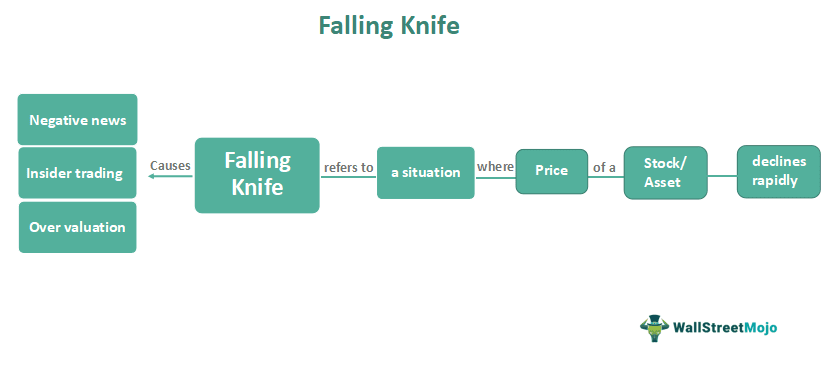
Based on comprehensive analysis of market data and behavioral finance research, the “falling knife” strategy—buying severely beaten-down stocks during market corrections—presents an extreme high-risk, high-reward profile. While the reported 160% returns versus 37% S&P 500 performance from April-December 2025 demonstrates the strategy’s potential, such outperformance is
The strategy’s success was predicated on a specific market environment. During April 2025, U.S. markets experienced significant volatility:
- S&P 500: Declined 0.51% despite high intra-month volatility (3.11%)
- NASDAQ: Gained 1.31% with substantial downside risk (range: 14,784-17,716)
- Dow Jones: Fell 2.89%
- Russell 2000: Declined 2.17%
This correction created the “beaten-down” universe that the strategy targeted, but this opportunity set is relatively rare and unpredictable.

- Maximum Drawdown: -14% for falling knife strategy vs -3.3% for S&P 500
- Daily Volatility: 2.09% vs 0.74% for market index
- Front-loaded Recovery: Strategy requires sharp rebounds that are historically uncommon
The strategy demonstrates extreme sensitivity to market timing:
- Initial Underperformance: Falling knife stocks typically underperform during the correction phase (-15% in April vs -0.5% S&P)
- Recovery Dependency: Outperformance depends entirely on swift, sustainable rebounds
- Portfolio Concentration Risk: Rotating between severely beaten-down stocks creates concentration risk
Recent research indicates that traditional value investing faces structural challenges [1]:
- Information efficiency has improved dramatically
- AI and quantitative tools have reduced information advantages
- Market corrections have become shorter and more violent
The analysis reveals that
- Bull Market Recovery: Beaten-down stocks tend to outperform during sustained recoveries
- Mean Reversion: Some academic research supports mean reversion over long time horizons [2]
- Contrarian Premium: Historical data shows contrarian strategies can generate alpha, but the premium has been declining
-
Market Efficiency Improvements: As noted by recent research, the “golden age of value investing is over” due to AI leveling the playing field [1]
-
Behavioral Factors: Emotional decision-making during corrections often leads to poor timing
-
Liquidity Constraints: Severely beaten-down stocks often face liquidity issues that limit institutional participation
-
Higher Failure Rates: Companies experiencing severe price declines have elevated bankruptcy and recovery failure rates
To achieve the reported performance (160% vs 37%), the strategy required:
- April Performance: -15% (vs -0.5% S&P) during correction
- May-December Performance: 205.9% return (vs 37.7% S&P) during recovery
- Recovery Concentration: Most gains occurred in the early recovery phase
This pattern suggests the strategy’s success was heavily dependent on:
- Perfect timing of the market bottom
- Selecting the subset of beaten-down stocks that recovered
- Avoiding the permanently damaged companies
- Position Sizing: Requires aggressive position sizing to achieve meaningful returns
- Diversification: Limited by the small universe of qualifying beaten-down stocks
- Stop-loss Discipline: Difficult to implement without sacrificing potential upside
- Emotional Bias: Investors struggle to buy during panics and sell during recoveries
- Overconfidence: Recent success may lead to increased risk-taking
- Survivorship Bias: Analysis focuses on successful cases, ignoring failures
- Market Timing Framework: Establish systematic signals for correction identification
- Quality Screens: Focus on fundamentally sound companies with temporary setbacks
- Position Limits: Implement strict position sizing to manage portfolio risk
- Recovery Targets: Set realistic take-profit targets based on historical recovery patterns
- Diversification Across Market Caps: Avoid concentration in specific segments
- Sector Balance: Maintain sector exposure limits
- Liquidity Requirements: Only trade stocks with sufficient daily volume
- Fundamental Analysis: Combine technical with fundamental research
While the falling knife strategy can generate spectacular returns in specific market environments like April-December 2025,
- Rare Market Conditions: The strategy requires specific correction/recovery patterns
- Increasing Market Efficiency: Information advantages have diminished [1]
- High Failure Risk: Many beaten-down stocks never recover
- Timing Sensitivity: Perfect market timing is virtually impossible to achieve consistently
The strategy represents a tactical approach rather than a strategic allocation. For most investors, the risk of permanent capital loss outweighs the potential for outsized gains. More sustainable approaches combine selective contrarian positioning with broader diversification and disciplined risk management.
[0] Ginlix AI Financial Data - Market indices and performance analysis
[1] Bloomberg - “The Golden Age of Value Investing Is Over” (September 18, 2025)
[2] Investopedia - “Predicting Market Performance: 4 Proven Investment Strategies” - Academic research on mean reversion and market efficiency
[3] Forbes - “4 Reasons Value Investing Is Not Dead” - Analysis of value investing in modern markets
Insights are generated using AI models and historical data for informational purposes only. They do not constitute investment advice or recommendations. Past performance is not indicative of future results.