
Federal Reserve October 2025 Rate Cut Analysis: Second Consecutive Cut with Policy Uncertainty
Unlock More Features
Login to access AI-powered analysis, deep research reports and more advanced features
About us: Ginlix AI is the AI Investment Copilot powered by real data, bridging advanced AI with professional financial databases to provide verifiable, truth-based answers. Please use the chat box below to ask any financial question.
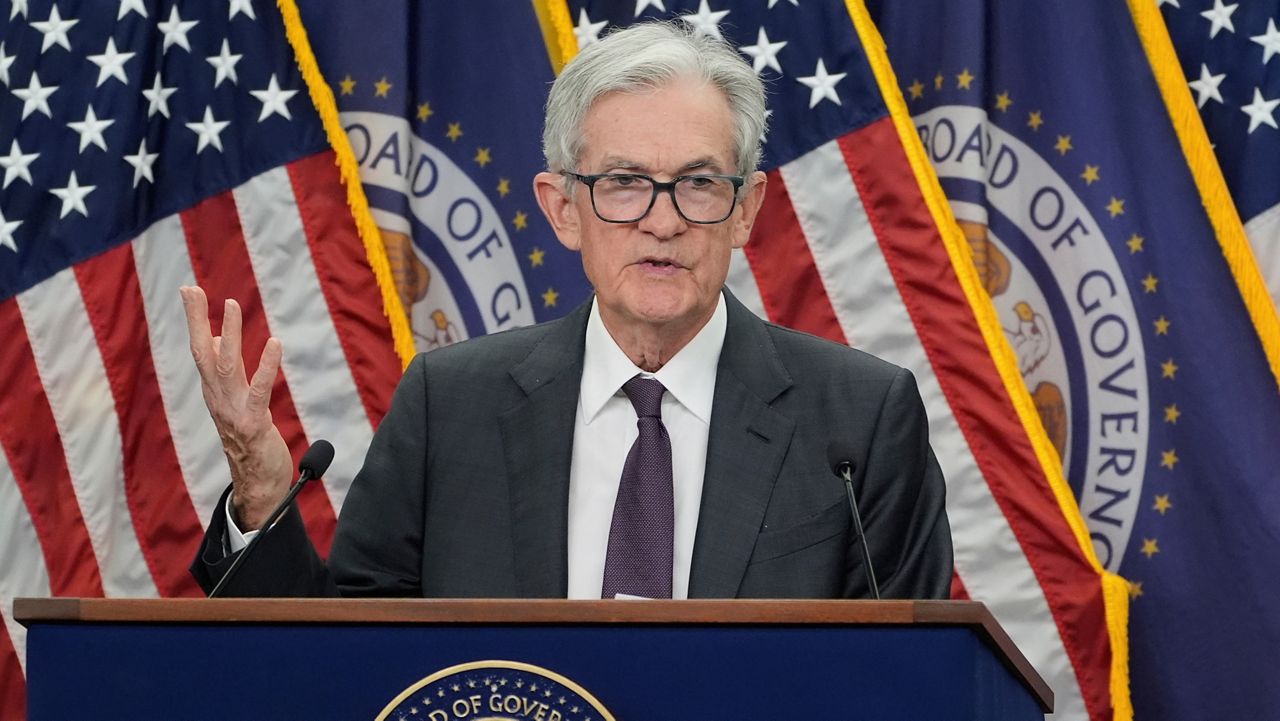
This analysis is based on the YouTube Short [3] published on October 29, 2025, reporting the Federal Reserve’s second consecutive interest rate cut.
The Federal Reserve’s Federal Open Market Committee (FOMC) implemented a widely anticipated 25-basis point rate cut, lowering the benchmark federal funds rate to a range of 3.75%-4.0% [1][3]. The decision was approved by a 10-2 vote, indicating some internal policy disagreement among committee members [2]. This marks the second consecutive rate cut in 2025, signaling a shift toward more accommodative monetary policy.
The announcement included a significant policy change regarding the Fed’s balance sheet, with quantitative tightening set to end on December 1, 2025 [2]. This decision affects the Fed’s $6.6 trillion portfolio and will impact market liquidity conditions. The timing of this policy shift is particularly noteworthy as it coincides with ongoing economic uncertainty.
The policy decision was made under challenging circumstances due to the ongoing government shutdown, which has created significant gaps in economic data availability [1][2]. Fed officials acknowledged limited “economic visibility” as key government reports have been unavailable, complicating their assessment of current economic conditions.
- Policy Uncertainty: The unclear forward guidance for December creates market volatility risk as investors reassess rate cut probabilities [2]
- Elevated Inflation: Annual inflation remains at 3%, above the Fed’s 2% target, with energy costs and tariff impacts continuing to pressure prices [2]
- Labor Market Concerns: The Fed noted “downside risks to employment rose in recent months,” suggesting potential weakening in the job market [1][2]
- Data Gaps: The government shutdown limits economic visibility, potentially leading to policy missteps [1][2]
- Liquidity Injection: The end of quantitative tightening could provide market support through increased liquidity
- Policy Flexibility: The Fed’s willingness to cut rates despite data limitations suggests adaptability to changing conditions
- Market Positioning: Volatility around policy uncertainty may create opportunities for strategic positioning
The Federal Reserve’s October 2025 decision reflects a complex balancing act between supporting a potentially softening labor market and managing inflation that remains above target. The 25-basis point cut to the 3.75%-4.0% range [1][3] represents continued policy easing, but the uncertain forward guidance for December introduces new market dynamics.
The end of quantitative tightening in December marks a significant shift in the Fed’s balance sheet policy, potentially affecting market liquidity conditions. The 10-2 vote indicates internal disagreement about the appropriate policy path [2], while the ongoing government shutdown creates unprecedented data limitations for policymakers [1][2].
Market reactions showed initial enthusiasm for the rate cut, followed by declines after Powell’s cautious December guidance. Current market data shows the S&P 500 down 0.5%, NASDAQ down 0.62%, and Dow down 0.3% on October 29, 2025 [0], reflecting the market’s sensitivity to policy uncertainty.
Insights are generated using AI models and historical data for informational purposes only. They do not constitute investment advice or recommendations. Past performance is not indicative of future results.
About us: Ginlix AI is the AI Investment Copilot powered by real data, bridging advanced AI with professional financial databases to provide verifiable, truth-based answers. Please use the chat box below to ask any financial question.