
Analysis of Challenges and Investment Logic in China's Discount Retail Industry Reflected by Haoteimai's Store Closures
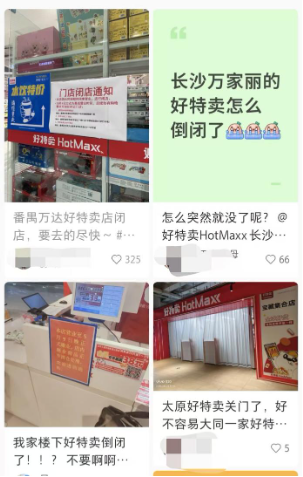
The recent store closures of Haoteimai in core cities such as Guangzhou, Changsha, Hangzhou, and Beijing have profoundly revealed the severe challenges facing China’s discount retail industry. According to industry data analysis, the penetration rate of discount supermarkets and snack bulk retailers has rapidly increased from 20% in 2023 to 40% in 2024, but behind this rapid expansion lie multiple structural problems [1].
- Shopping mall rents continue to rise, especially in core business districts of first-tier cities
- Facing significant rent increases upon lease expiration, squeezing profit margins
- The high-frequency, low-price business model struggles to support high fixed costs
- Unstable access channels for near-expiry products, making quality control challenging
- Although direct procurement can reduce costs by 30%-50%, it requires extremely high supply chain integration capabilities [1]
- Severe product homogenization, making it difficult to maintain differentiated competitive advantages
- Young consumers’ enthusiasm for health concepts such as “sugar abstinence” has waned, and the growth rate of categories like sugar-free tea has declined [1]
- Shifting from pursuing extreme low prices to focusing more on “value for the heart” (emotional satisfaction) and mood fulfillment
- Reduced brand loyalty, while price sensitivity remains high
- Traditional supermarkets like Yonghui and Hema are accelerating community transformation, and the market size will reach 1.2 trillion yuan in 2025 [2]
- E-commerce giants like JD Discount Supermarket are expanding offline, bringing strong supply chain and capital advantages [2]
- The industry shows a pattern of “head concentration + regional deep cultivation”, compressing the living space of small brands

The past “land grab” style of rapid expansion is becoming ineffective, and investment focus is shifting to:
- Small store strategy: Reduce single-store investment risk and improve flexibility [2]
- Digital operations: Use technical means to enhance operational efficiency and customer experience
- Supply chain integration: The key to core competitiveness
- The past story relying on store count growth is unsustainable
- Single-store economic benefits have become a more important evaluation indicator
- Cash flow stability and profit quality are receiving more attention
- Vertical supply chain integration capability
- Degree of digital transformation
- Member stickiness and repurchase rate
- Regional market deep penetration capability
- Discount store models purely relying on near-expiry products
- Regional brands lacking supply chain integration capabilities
- Light asset models overly dependent on franchise expansion
- Community-based fresh food convenience stores: Customer unit price 50-80 yuan, repurchase rate 65%, average monthly revenue per store 500,000 yuan [2]
- Pharmaceutical + Health Composite Format: DTP pharmacies and professional pharmacies account for 35% [2]
- Digitally Advanced Traditional Supermarket Transformation: Such as the community transformation of Yonghui and Hema
- Intensified price wars under consumption downgrade expectations
- Sustained increases in rent and labor costs
- Impact of regulatory policy changes on industry structure
- Impact from offline expansion of e-commerce giants
- Continuous changes in consumer shopping habits
- Supply chain safety and stability issues
- Single-store revenue growth rate vs store count growth rate
- Degree of vertical supply chain integration
- Digital investment and output ratio
- Healthy cash flow status
- Cautious Period: The industry is currently in an adjustment period, so it is recommended to wait and see
- Attention Period: Focus on enterprises with differentiated advantages and strong supply chain capabilities
- Layout Period: Re-evaluate after industry integration increases and the profit model of leading enterprises is verified
It is recommended to reduce the allocation ratio of pure discount retail concepts and increase attention to the following directions:
- Traditional retail enterprises with strong supply chain integration capabilities
- Supermarket enterprises that have successfully transformed into community-based and digital models
- Sub-sectors with policy support such as pharmaceutical health
Haoteimai’s store closure incident marks a turning point for China’s discount retail industry from barbaric growth to intensive cultivation. Investors need to re-examine the industry logic and focus more on the core competitiveness of enterprises rather than pure growth stories.
[1] NetEase - “2025 Week 49: Weekly Market Observation of Food and Beverage Industry” (https://www.163.com/dy/article/KGL4UPAO05118VBB.html)
[2] Chuto Technology - “2025 In-depth Analysis of Five Popular Chain Industries: Large-scale Expansion is the Right Time” (https://www.chuto.cn/xinxizhongxin/230.html)
[3] Jinling AI Data Analysis - Retail Industry Comparative Analysis and Market Data
Insights are generated using AI models and historical data for informational purposes only. They do not constitute investment advice or recommendations. Past performance is not indicative of future results.