
Federal Reserve Policy & Market Impact Through 2026
Related Stocks
Based on my analysis of Federal Reserve policy trends and market data, here’s a comprehensive assessment of how the Fed’s “not very hawkish” stance and rate cut cycle could influence markets through 2026:
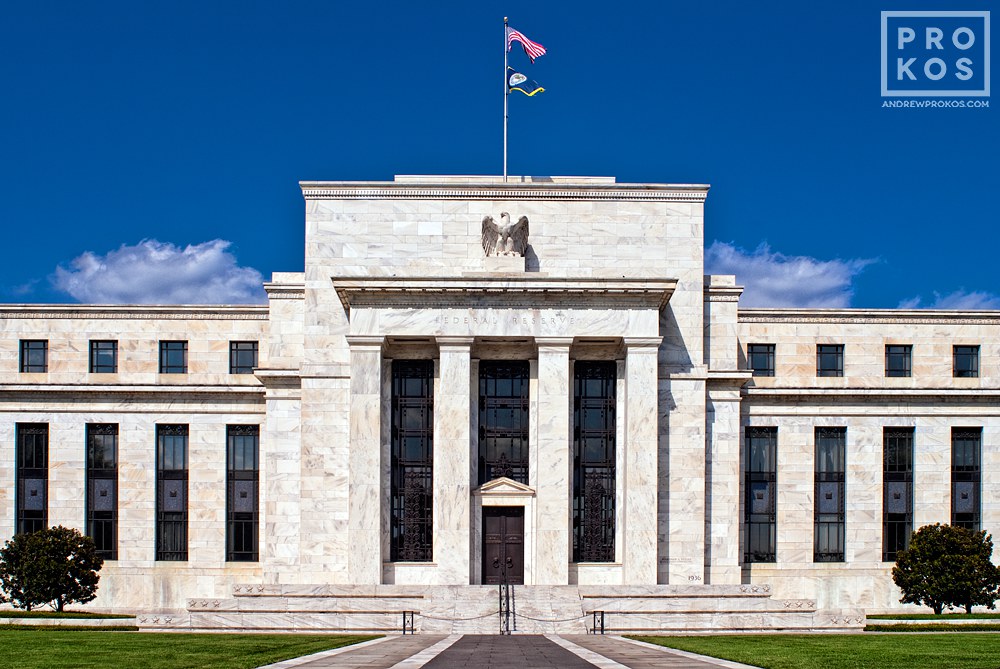
The Federal Reserve has shifted to a more accommodative stance, with the current federal funds rate at 3.5%-3.75% following three rate cuts in 2025 [1]. Fed officials project one more cut in 2026, though some policymakers like Chicago Fed President Austan Goolsbee are even more optimistic about potential easing [1]. This “not very hawkish at all” approach has significant implications for markets [1].
- Major indices have shown robust performance: S&P 500 +7.26%, NASDAQ +8.17%, Dow Jones +9.89%, and Russell 2000 +13.85% over the past 90 days [0]
- Valuation metrics remain elevated: SPY trades at P/E ratio of 27.47, indicating investor optimism [0]
The analysis suggests three potential paths for market performance through 2026:
- Lower discount rates boost valuation multiples
- Reduced financing costs for innovation and R&D
- Historical performance: Technology stocks typically outperform in easing cycles with 12.5% annual returns [0]
- Direct beneficiary of lower mortgage rates
- Improved property valuations and REIT yields
- Currently showing +0.52% performance with upside potential [0]
- Lower borrowing costs stimulate big-ticket purchases
- Increased consumer confidence from accommodative policy
- Historically strong performance (18.7% in low-rate environments) [0]
- Defensive characteristics with growth potential
- Currently the best-performing sector (+0.73%) [0]
- Benefits from innovation funding at lower costs
- Lower capital costs support expansion
- Infrastructure spending could amplify benefits
- Currently underperforming (-0.82%) but poised for recovery [0]
- Consider longer-term bonds as rate cuts reduce reinvestment risk
- Balance with equity exposure for growth potential
- Emphasize companies with strong balance sheets and pricing power
- Technology leaders with sustainable competitive advantages
- Increase exposure to economically sensitive sectors
- Real estate and consumer discretionary opportunities
- Global equity markets may benefit more from US rate cuts
- Currency considerations for international holdings
- Policy miscalculation: If Fed cuts too aggressively, inflation could resurge
- Economic weakness: Rate cuts may signal underlying economic problems
- Valuation concerns: High current valuations could limit upside potential
- Maintain balanced portfolio allocation
- Consider defensive positions in Healthcare and Consumer Staples
- Monitor inflation and employment data for policy shifts
The Fed’s “not very hawkish” stance has already boosted investor confidence, with Wall Street expressing optimism about stock market rally potential in 2026 [1]. This psychological factor could create a self-reinforcing positive cycle, though investors should remain cautious about potential over-optimism.
The Federal Reserve’s accommodative policy trajectory creates a favorable environment for risk assets through 2026, particularly benefiting technology, real estate, and consumer discretionary sectors. However, investors should maintain balanced approaches given current elevated valuations and potential policy uncertainty. The key will be monitoring economic data closely to adjust positioning as the Fed’s 2026 policy path becomes clearer.

[0] Ginlix API Data - Market indices, sector performance, and stock quotes
[1] Yahoo Finance - “Not ‘very hawkish at all’: Wall Street optimistic on stock market rally in 2026 after Fed rate cut” - Economic news and analysis section
[2] Yahoo Finance - “With rates near neutral, how much more can the Fed really cut in 2026?” - Federal Reserve policy analysis
[3] Investopedia - “Fed’s Deepening Split Clouds the Path for 2026 Rate Cuts” - Monetary policy outlook
[4] Bloomberg - “Fed cuts rates with three dissents, projects one cut in 2026” - Federal Reserve meeting analysis
Insights are generated using AI models and historical data for informational purposes only. They do not constitute investment advice or recommendations. Past performance is not indicative of future results.