
In-depth Analysis of Ford's Electrification Strategy Adjustment: Implications for Investors
Related Stocks
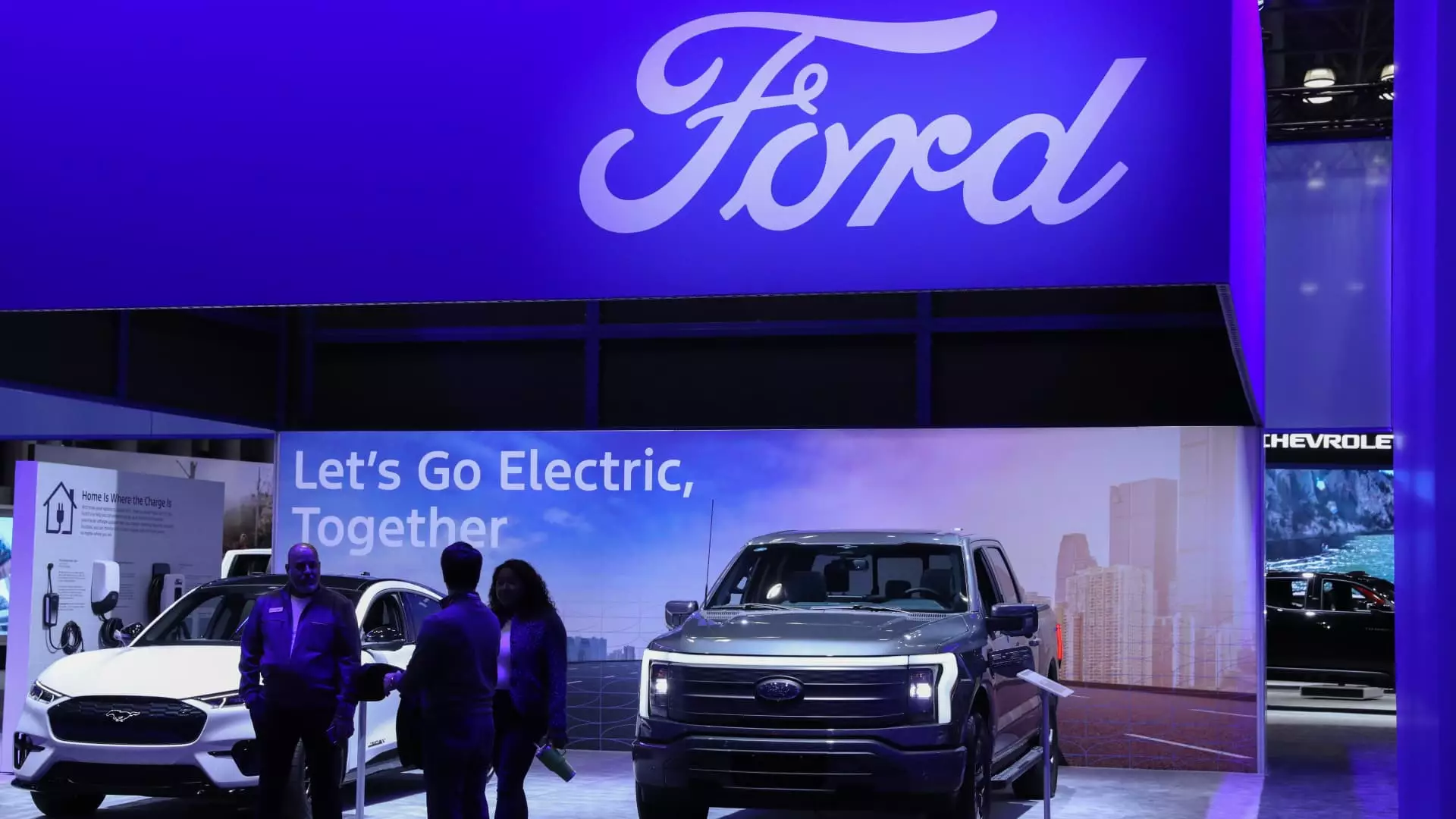
Ford Motor announced a major strategic adjustment on December 16, 2025, suspending production of the fully electric F-150 Lightning to shift to plug-in hybrid models, and planning to take an asset impairment charge of up to $19.5 billion [1][2]. This decision marks an important strategic shift for traditional automakers in their electrification transformation.

- On the day of the strategic adjustment announcement, Ford’s stock price fell slightly by 0.87% to $13.64 [0]
- Year-to-date cumulative increase of 41.35%, showing strong performance [0]
- 6-month gain of 28.44%, 3-month gain of 17.48% [0]
- Current 52-week high of $13.97, low of $8.44, at a relatively high level [0]
- Impairment Scale:$19.5 billion, of which $8.5 billion is asset impairment [2][3]
- EV Business Losses:The Model E division has accumulated losses exceeding $13 billion over three years, with losses reaching $3.6 billion in the first three quarters of 2025 [3]
- Operating Costs:Every Lightning sold is at a loss, even though the price has been raised to $55,000 [3]
- Profit Improvement:The company expects pre-tax profit to rise from $6-6.5 billion to $7 billion [2]
- Cost Savings:Reallocating billions of dollars originally intended for large EVs to high-return areas [1][2]
- Profitability Timeline:The Model E division is expected to become profitable in 2029, 3 years later than originally planned [3]
- Decline in EV Market Share:U.S. EV market share dropped from 12% to 5% [1]
- Surge in Hybrid Demand:Hybrid sales increased by 30% in November [1]
- Consumer Preferences:Consumers want the benefits of electrification but at a reasonable price [2]
- Cancellation of Tax Credits:The Trump administration canceled the $7,500 EV tax credit policy [3][4]
- Relaxation of Emission Standards:Relaxed emission regulations that originally incentivized unprofitable EV production [3]
- Reduced Regulatory Pressure:Reduced the need to compulsorily produce loss-making EV models [3]
- Technical Features:100% driven by electric motor; gasoline engine only serves as a generator [6]
- Range Advantage:Expected range to exceed 700 miles (1127 km) [6]
- Retained Features:Continues to provide V2L bidirectional power supply function [6]
- Application Shift:Battery factories originally used for vehicles are shifted to grid energy storage and AI data centers [1][2]
- Market Demand:Utility battery demand increased by 50% to 39.3 GW in the first ten months of this year [2]
- Risk Considerations:The AI industry faces the risk of a bubble burst [2]
- Tesla Benefits:Loses major pure electric pickup truck competitor, facing less competition in the large EV sector [7]
- Other Traditional Automakers:May follow Ford’s strategy to shift to hybrids; the entire industry may re-evaluate EV strategies
- Market Competition Focus:Shifts from pure electric to hybrid and extended-range technology route competition
- Large EV Market:Traditional automakers may gradually exit; Tesla will dominate
- Hybrid Market:Competition will intensify, becoming a new growth point
- Small EV:Ford plans to launch a mid-sized electric pickup truck priced around $300,000 [3]
- Cost savings and profitability improvement are immediate
- Avoid continued investment in loss-making EV business
- Focus on more profitable traditional and hybrid businesses
- Product strategy closer to actual market demand
- New growth point for battery technology in energy storage sector
- Accumulate technical and market advantages in hybrid sector
- Impact of $19.5 billion impairment charge on short-term financial performance
- Uncertainty in investment payback period for new technology routes
- Technical and market risks in battery energy storage business
- May be seen as an EV strategy failure, affecting brand image
- If EV demand rebounds, may miss growth opportunities
- Competitors like Tesla further expand their advantages in pure electric sector
- Adopt a cautious attitude in the short term, wait for the impairment impact to be absorbed
- Focus on specific data of the company’s profitability improvement
- Focus on the growth performance of the hybrid business
- May consider gradual position building after stock price adjustment
- Focus on long-term development potential of battery energy storage business
- Monitor the company’s market performance in EREV technology
Ford’s strategic adjustment reflects the real challenges faced by traditional automakers in their electrification transformation. Although this decision causes huge financial losses in the short term, it may be a more rational and pragmatic strategic choice in the long run.
- Whether hybrid models can achieve expected sales growth
- Whether battery energy storage business can become a new profit growth point
- Whether the company can achieve the EV business profitability target in 2029
- Specific implementation of the new strategy in the Q1 2026 financial report
- Market acceptance and profitability of hybrid models
- Commercialization progress of battery technology in AI data centers and grid energy storage sectors
This strategic adjustment may become an important turning point in the electrification transformation of the automotive industry; whether other traditional automakers will follow suit is worth paying attention to. For investors, this is both a risk and an opportunity, and corresponding decisions need to be made based on their own risk preferences.
[0] Jinling API Data
[1] Business Insider - “Ford is switching gears from EVs: ‘It was really the customer changing their decision’”
[2] IBT UK - “Ford Cancels Electric F-150 Lightning in $19.5 Billion U-turn, Declares EVs ‘Have No Path to Profit’”
[3] Invezz - “Ford stock price forecast after the $19.5 billion EV charge”
[4] Claims Journal - “Ford Retreats From EVs, Takes $19.5B Charge as Trump Policies Grip Industry”
[5] WDRB - “All 1,600 Kentucky battery plant employees laid off as Ford pivots away from EV business”
[6] Drive.com.au - “Ford F-150 Lightning electric ute axed, set to return with extended-range petrol generator”
[7] Teslarati - “Tesla stands to gain from Ford’s decision to ditch large EVs”
Insights are generated using AI models and historical data for informational purposes only. They do not constitute investment advice or recommendations. Past performance is not indicative of future results.