
In-depth Analysis of Pop Mart's 'Content-Free IP' Model and Globalization Vision
Pop Mart’s ‘content-free IP’ model and Zara-like fast supply chain capabilities have indeed provided important support for its vision of becoming a global IP group. However, this model still faces challenges such as short IP lifecycle, cultural adaptability issues, and sustainability concerns. The company needs to maintain its rapid response capabilities while addressing the shortcomings in content depth and brand value.

According to the latest financial data, Pop Mart has shown an amazing growth trajectory:
- Revenue: 130.4 billion yuan, up 106.9% year-over-year (YoY)
- Net profit: 31.3 billion yuan, YoY increase of 188.77%
- Gross margin: 66.8%, net margin: 26.1%[1]
- Revenue: 138.8 billion yuan, YoY growth of 204.4%
- Net profit: 45.74 billion yuan, YoY surge of 396.5%
- Gross margin climbed to 70.3%, a record high[1]
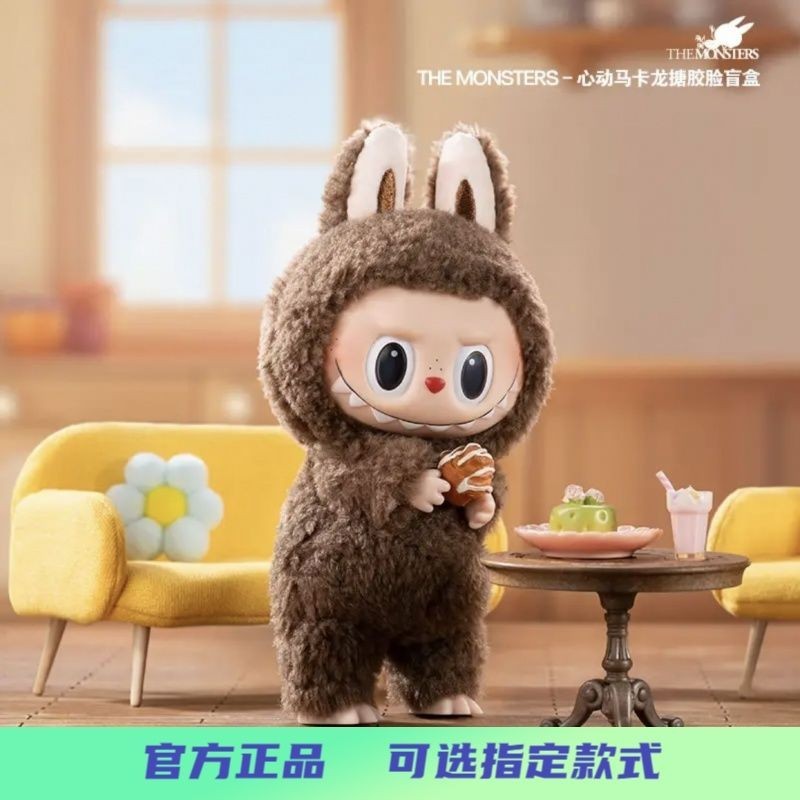
This performance is mainly driven by the global popularity of the core IP Labubu. The THE MONSTERS series generated 48.1 billion yuan in revenue in H1 2025, up 668% YoY[1].
-
Strong Industrialization Capability: Pop Mart excels at transforming artistic inspiration into standardized products, increasing the sales of trendy toys from hundreds to thousands annually to millions or even tens of millions[4]
-
Rapid Response Mechanism: The company has established an IP rating system (S/A/B/C) to quickly adjust resource allocation based on sales performance. For example, after SKULLPANDA was promoted from Grade A to Grade S, it immediately received more supply chain and promotion resources[4]
-
Agile Product Innovation: Through rapid iteration based on consumer feedback, after discovering users’ preference for soft touch, it quickly developed the vinyl plush new category, with sales increasing by 1289% YoY in 2024[4]
-
Insufficient IP Stickiness: Compared to Disney’s deep emotional connection shaped by film and television content, Pop Mart’s ‘story-free IP’ lacks a three-dimensional core, resulting in relatively weak fan stickiness[5]
-
Fragile Lifecycle: The premium of Labubu hidden editions has shrunk by over 50%, and the price of regular editions on second-hand platforms has fallen below the official retail price, indicating the rapid attenuation of IP popularity[1][6]
-
Dependence on Blockbuster Logic: Multiple capital market insiders pointed out that Pop Mart’s current growth is highly dependent on the blockbuster efficiency of the ‘trendy toy economy’, and this model is easily overdrawn[3]
Pop Mart’s fast supply chain response capability was fully verified after Labubu became popular:
- Rapid Capacity Expansion: From an average of 10 million units per month in H1 to 50 million units per month at the end of the year[1]
- Production Layout Optimization: In China, it expanded from Guangdong to Jiangxi, Hunan, Guizhou, Guangxi and other places; overseas, it established its first contract factory in Vietnam[5]
- Quality Control Improvement: Through digital transformation, the latest Polar series was rated by consumers as ‘the one with the best quality control and details’[5]
Rapid capacity expansion also brought quality control issues. The fourth-generation Labubu had quality problems such as ‘crooked mouth’, and consumers complained about products from Zhongshan (Guangdong) factory, Jiangxi factory, and Vietnam factory[5], reflecting that supply chain quality control still needs to be strengthened.
Overseas markets performed brightly in H1 2025:
- Asia-Pacific Region: Revenue of 28.5 billion yuan, YoY growth of 257.8%
- Americas Region: Revenue of 22.6 billion yuan, YoY growth of 1142.3%
- Europe and Others: Revenue of 4.8 billion yuan, YoY growth of 729.2%[2]
The company has opened 571 stores in 18 countries worldwide, with more than 3000 foreign employees, and the North American region has achieved 100% localized team management[2].
-
Cultural Adaptability: In mature European and American markets, Pop Mart faces not only the problem of store quantity but also the ability to establish high-end retail systems and scarcity narratives[2]
-
Growth Sustainability: Bernstein analysts pointed out that North American offline sales trends weakened in November, and the sales growth rate of US business slowed to below 500% this quarter[6]
-
Valuation Pressure: Morgan Stanley expects Labubu’s revenue growth rate to slow significantly in 2026 due to the high base effect and some trend consumers not returning[6]
-
Contentization Compensation: Established a film studio to promote the animated series “LABUBU and Friends”, and granted Sony Pictures the film adaptation rights of Labubu[5]
-
Introducing Luxury Gene: Hired Wu Yue, an executive from the LVMH system, to join the board of directors, bringing long-term brand governance methods[2][3]
-
Fan Circle Operation: Enhanced user interaction through park performances, meet-and-greets, etc., similar to Disney’s Duffy family operation model[5]
To achieve the vision of a global IP group, Pop Mart needs to:
-
Balance Speed and Depth: While maintaining rapid response capabilities, inject more cultural connotations and emotional value into IP
-
Diversified IP Matrix: Reduce over-reliance on a single IP and establish a healthy IP echelon and replacement mechanism
-
In-depth Localization Operation: Establish brand narratives and retail experiences that conform to local cultures in different markets
- The stock price has fallen by more than 40% from the annual high of HK$339.8, and the market value has evaporated by more than HK$200 billion[1]
- Short positions surged to 6.3% of tradable shares, and market bearish sentiment is strong[1]
- “Availability Paradox”: Popularization is often a precursor to the decline of popularity[6]
- China’s trendy toy market is expected to reach 1101 billion yuan by 2026[3]
- Overseas markets still have huge penetration space
- IP licensing and content monetization have imaginative space
Pop Mart’s ‘content-free IP’ model and fast supply chain capabilities have indeed provided strong support for its global expansion, enabling it to achieve amazing performance growth in the short term. However, the long-term sustainability of this model faces challenges:
-
Advantage Level: Industrial IP transformation capability, fast supply chain response, and global channel layout have established a solid growth foundation for the company
-
Risk Level: Insufficient IP stickiness, fragile lifecycle, and cultural adaptability challenges may limit its becoming a true global IP group
-
Key Turning Point: The company is in a critical period of transition from “explosive growth” to “sustainable growth”, and needs to address the shortcomings in content depth and brand value while maintaining speed advantages[6]
Whether it can finally realize the vision of a global IP group depends on whether Pop Mart can successfully combine Zara’s “speed” with Disney’s “depth” to create a unique business paradigm.
[1] NetEase Finance - “Market Value Evaporates 200 Billion Yuan: Why Has Pop Mart Become a ‘Discarded Product’ in Consumers’ Eyes?” (https://www.163.com/dy/article/KGLRIOH40556FS0I.html)
[2] Sina Finance - “Luxury ‘Godfather’ Wu Yue’s New Task: Teaching Pop Mart Brand and Overseas Lessons” (https://finance.sina.com.cn/tech/roll/2025-12-13/doc-inharkhp4837966.shtml)
[3] NetEase Finance - “Bright Financial Report but Plunging Stock Price: What’s Wrong with Pop Mart?” (https://www.163.com/dy/article/KGGAIS5L05567I2C.html)
[4] Zhihu Column - “Understanding the Business Logic of Trend Consumption from Pop Mart” (https://zhuanlan.zhihu.com/p/1979569921697531732)
[5] CBNData - “Stock Price Drop, Growth Slowdown: What is Pop Mart’s Next Ace?” (https://www.cbndata.com/information/294766)
[6] CNYES - “Pop Mart Targeted by Short Sellers, Market Value Evaporates Over 200 Billion Yuan: ‘Overseas Expansion’ Dividend Stage Ends” (https://hao.cnyes.com/post/215129)
Insights are generated using AI models and historical data for informational purposes only. They do not constitute investment advice or recommendations. Past performance is not indicative of future results.