
Balance vs. Imbalance in Trading: Reddit Community Insights and Auction Market Theory Context
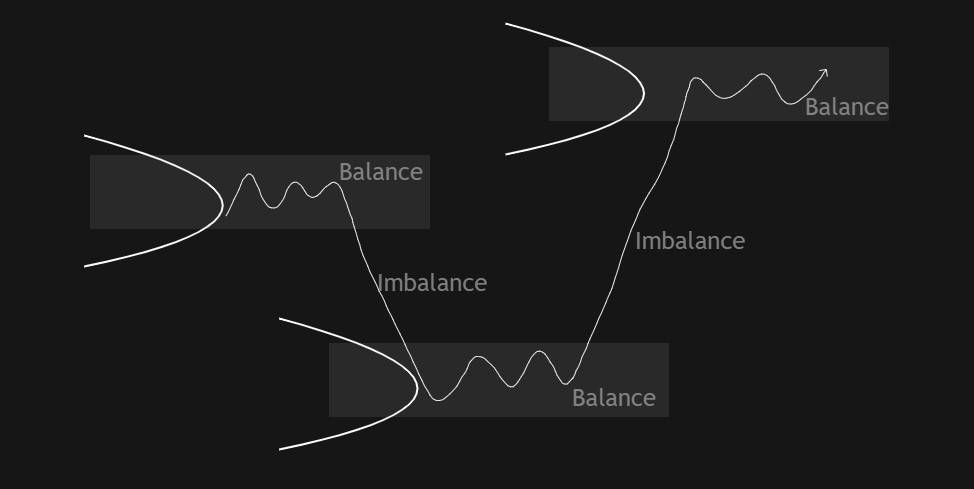
The analysis draws from a 2025 Reddit trading discussion [1] focusing on balance and imbalance—core concepts within Auction Market Theory (AMT) [0]. The original post defines
Community participants expanded on these concepts, highlighting practical strategies: waiting 30-60 minutes after the NY session opening to assess daily direction, reducing exposure during balance phases, and using AMT frameworks to enhance balance trading predictability [1]. Challenges noted include real-time phase identification (often only clear in hindsight) and overtrading risks from mismatched strategies across phases [1].
- Hindsight Bias Challenge: A critical gap exists between recognizing balance/imbalance historically vs. in real-time— a common pain point cited by traders [1]. This can lead to impulsive decisions and losses.
- Phase-Specific Skills: Successful trading across both phases demands distinct skills: balance trading requires patience/range-bound strategies, while imbalance trading needs trend-following discipline [1]. Failing to adapt increases risk.
- NY Session Timing Tool: The high-liquidity NY session’s initial 30-60 minutes provides a practical framework to filter noise and gauge the day’s dominant phase (balance/imbalance) [1].
- AMT Structuring Value: While real-time identification is hard, AMT’s focus on value areas and HVNs offers a structured balance trading approach using historical volume data [0].
-
Risks:
- Phase Misidentification: Incorrectly classifying phases can lead to premature entries/exits and losses [1].
- Overtrading: Applying balance-focused strategies during imbalance (e.g., frequent range trading in strong trends) increases risk [1].
- Real-Time Complexity: Difficulty in real-time identification may result in missed opportunities or delayed responses [1].
-
Opportunities:
- Strategy Discipline: Understanding phases can guide traders to focus on high-probability imbalance trends while reducing exposure during balance [1].
- AMT Tool Integration: Leveraging value areas/HVNs enhances balance trading structure and predictability [0].
- Skill Specialization: Developing phase-specific skills may improve consistent performance across conditions [1].
Core community-defined concepts:
- Balance: Consolidated, narrow-range action with matched pressure (AMT equilibrium).
- Imbalance: Trending movement to new ranges with unmatched pressure (AMT new price discovery).
- Practical Advice: Wait 30-60 minutes post-NY session opening; reduce balance phase exposure; use AMT tools for balance trading.
- Challenges: Real-time identification; skill adaptation across phases.
Critical gaps include detailed real-time methods, empirical data on the NY session strategy, and cross-asset balance/imbalance comparisons.
Insights are generated using AI models and historical data for informational purposes only. They do not constitute investment advice or recommendations. Past performance is not indicative of future results.