
Trump’s 2025 Executive Order to Curtail State AI Laws for a Single Federal Standard
Related Stocks
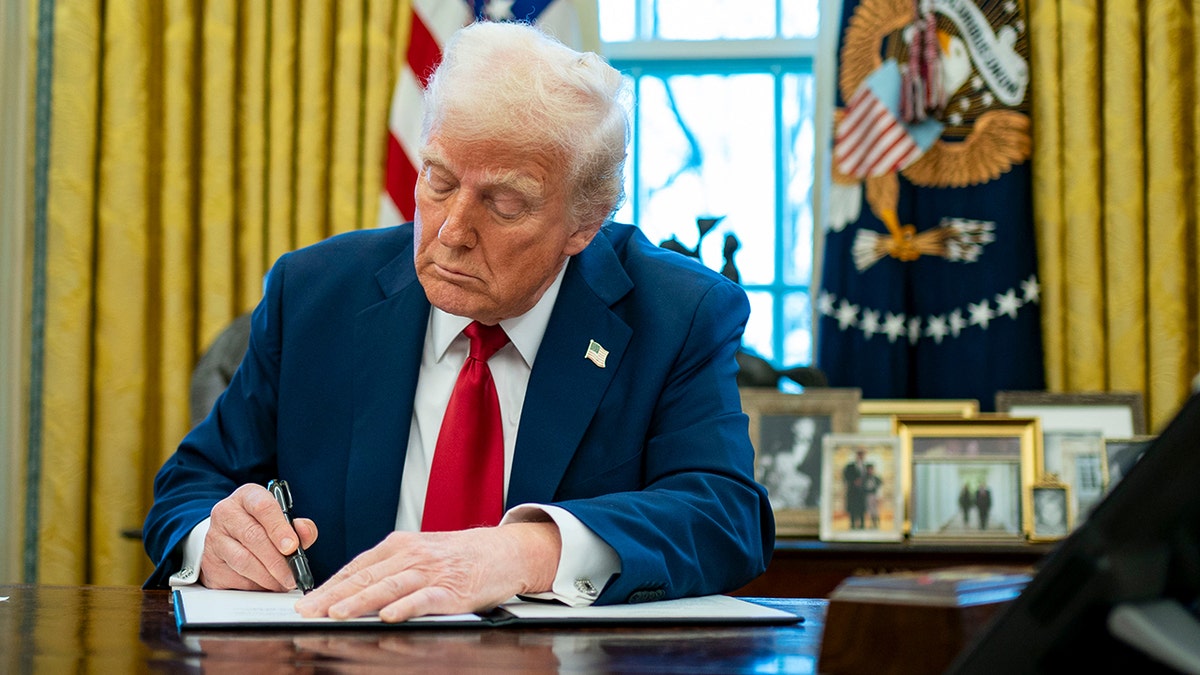
On December 11, 2025, US President Donald Trump signed an executive order (EO) to curtail state-level artificial intelligence (AI) laws, authorizing the Department of Justice (DOJ) to punish states with rules deemed “restrictive” for AI. The order aims to unify AI regulation under a single federal standard, framed by the administration as a response to a “confusing patchwork” of state rules to enhance US AI leadership [0][10].
Prior to the EO, states had accelerated AI legislative activity: 27 states adopted 73 new AI-related laws in 2025, covering deepfake protections (15 states), child safety for AI chatbots (California, Maine, New York, Utah), and healthcare AI transparency (California’s AB 3030) [1][2][3][4]. Nationwide, over 1,080 AI bills were introduced in 2025, with 118 enacted, reflecting varied state priorities—for example, New York’s RAISE Act targeted frontier AI models with risk safeguards, while Texas focused on AI use in government applications [4].
The EO builds on the Trump administration’s July 2025 AI Action Plan, which called for removing regulatory barriers to AI leadership, and EO 14319, which focused on unbiased AI principles [5][6]. The action also follows congressional failure to pass federal AI regulations earlier in 2025 [7][8].
Stakeholder reactions were divided: tech companies like OpenAI and Google, along with venture firm Andreessen Horowitz, supported the EO as reducing burdensome regulatory fragmentation that increased compliance costs [7]. In contrast, some bipartisan AI protection groups criticized the order, while the administration framed it as necessary to compete with China by eliminating “onerous regulations” [8][9].
- Tension Between Federal Preemption and State Regulatory Innovation: The EO limits states’ ability to experiment with context-specific AI safeguards, which could delay iterative regulatory progress tailored to local needs (e.g., California’s healthcare AI transparency rules) [2][3].
- Industry Lobbying Influence: Tech companies’ longstanding advocacy for federal preemption—driven by the complexity of navigating 50 distinct state regulatory regimes—likely shaped the EO’s focus [7].
- Legal Uncertainties: The DOJ’s authority to punish states raises questions about federal preemption limits, potentially leading to litigation from states with comprehensive AI laws (e.g., California) [10].
- Competitiveness Framing vs. Consumer Protections: The administration’s emphasis on competing with China may overshadow debates about whether a single federal standard will weaken consumer and privacy protections compared to existing state rules [8][9].
- Weakened Consumer Protections: If the federal AI standard is less stringent than state rules (e.g., California’s healthcare AI transparency requirements), consumers may face reduced safeguards [2][9].
- Reduced Regulatory Innovation: States can no longer test niche AI risk solutions, slowing the development of tailored regulatory approaches [1][4].
- Legal Disputes: States with established AI laws may challenge the EO in court, leading to regulatory delays and uncertainty [10].
- Lower Compliance Costs: AI companies operating nationwide will benefit from a single federal standard, reducing the complexity and expense of navigating multiple state regimes [7].
- Streamlined Industry Clarity: A unified framework may provide consistent rules for AI development and deployment, fostering industry certainty [0][8].
- Enhanced US Competitiveness: The administration argues reduced regulatory barriers will accelerate US AI development relative to global competitors like China [8].
This analysis covers President Trump’s December 11, 2025, executive order to replace a patchwork of 73 state AI laws (enacted by 27 states) with a single federal standard, enforced by the DOJ. The EO builds on prior federal AI initiatives and responds to congressional inaction in 2025. Tech industry leaders support the reduced regulatory fragmentation, while critics warn of limited state regulatory experimentation and potential weaker consumer protections. Unresolved details include the specific criteria for defining “restrictive” state laws, the content of the federal AI standard, and the mechanics of DOJ enforcement.
Insights are generated using AI models and historical data for informational purposes only. They do not constitute investment advice or recommendations. Past performance is not indicative of future results.