
Fed Rate Cut with 6-Year High Dissent and Oracle's Double-Digit Drop Impact Markets
Related Stocks
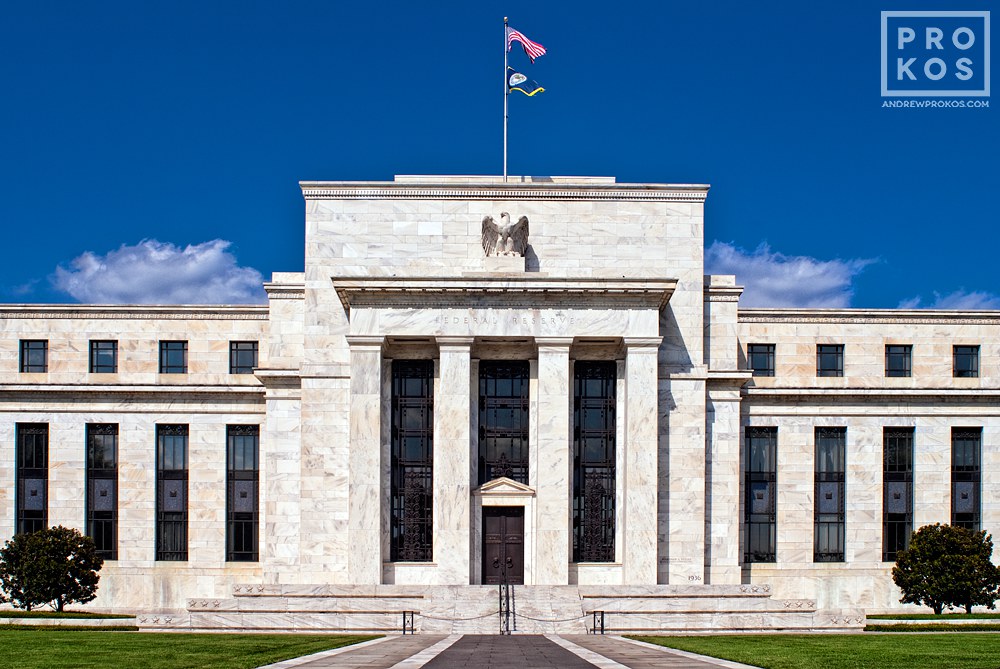
This analysis is based on the original event report [1] and subsequent verified market data and reporting [0][2][3][4][5]. On December 10, 2025, the Federal Reserve announced a 25-basis-point interest rate cut, reducing the target range to 3.50–3.75%—its third cut of the year [2][3]. The decision was marked by the most significant dissent in six years (9–3 vote), with Governor Stephen Miran favoring a 50-bps cut (dovish) and Presidents Jeffrey Schmid (Kansas City) and Austan Goolsbee (Chicago) opposing any cut (hawkish) [2][3]. The Fed’s dot plot also revealed deep division over the 2026–2027 policy outlook, with forecasts ranging from a 0.25-point hike to 1.50 points in cuts for 2026 [2][3].
Initially, U.S. equity indices closed higher on December 10 (NASDAQ +0.50%, S&P 500 +0.78%, Dow Jones +1.02%) as investors priced in the near-term stimulus [0][2][3]. However, futures markets, including Nasdaq futures, faltered after the meeting, reflecting concerns about the Fed’s divided policy outlook [0][2][3].
Separately, Oracle (ORCL) released its Q2 FY2026 earnings after market close, which missed revenue estimates ($16.06B vs. $16.21B expected) [4]. While its cloud OCI revenue grew 68%, the company revealed surging data center capital expenditure (capex) that will push free cash flow negative for years [4]. This news led to a double-digit percentage drop in Oracle’s shares in extended trading [4]. The stock has already fallen 46% from its September 2025 peak ($345.72) amid long-standing skepticism about its AI investment returns [5]. Norway’s $2 trillion Sovereign Wealth Fund further amplified concerns by expressing caution about investing in volatile data center infrastructure [2].
-
Fed Policy Uncertainty as a Systemic Risk: The 9–3 vote (the most dissent in six years) and wide dot plot range (2.1–3.9% for 2026 end rate) signal deep uncertainty about the Fed’s ability to balance inflation, labor markets, and economic growth. This uncertainty is likely to increase medium-term market volatility, affecting both equity and fixed-income markets [2][3].
-
AI Infrastructure Investment Risks: Oracle’s heavy capex for AI data centers, combined with its reliance on unprofitable partner OpenAI and missed revenue targets, highlights the challenges of monetizing AI infrastructure. The company’s lack of clarity on free cash flow recovery timeline and OpenAI contract terms adds to these risks [4][5].
-
Institutional Skepticism in Data Center Valuations: Norway’s Sovereign Wealth Fund’s caution about data center infrastructure suggests broader institutional concerns about overvaluation and volatility in the AI infrastructure segment. This could lead to reduced investment in related stocks, affecting the entire tech sector [2].
- Fed Policy Volatility: The split decision and uncertain outlook increase the likelihood of market swings in response to future economic data releases (e.g., inflation, non-farm payrolls) [2][3].
- Oracle’s Financial Health: The company’s negative free cash flow outlook and rising credit default swap spreads raise concerns about debt sustainability amid its aggressive data center capex and $300B OpenAI contract [4][5].
- AI Infrastructure Bubble Risks: Oracle’s drawdown and industry-wide capex concerns highlight the potential for a correction in overvalued AI stocks [4][5].
- Tech Sector Spillover: Oracle’s poor earnings performance could weigh on other cloud and AI infrastructure stocks in the short term [4].
While the analysis primarily highlights risks, sectors less exposed to interest rate uncertainty and AI capex risks may present relative stability. Decision-makers should monitor these sectors alongside incoming economic data to identify potential opportunities [0].
This report synthesizes the following critical data points for decision-making support (no prescriptive investment recommendations):
- The Federal Reserve cut its target interest rate range to 3.50–3.75% (25-bps) with a 9–3 vote dissent (most in 6 years) [2][3].
- The Fed’s dot plot shows a wide range of rate forecasts for 2026 (2.1–3.9%), indicating policy uncertainty [2][3].
- Oracle (ORCL) missed Q2 FY2026 revenue estimates ($16.06B vs. $16.21B) and forecast negative free cash flow due to data center capex [4].
- Oracle’s stock dropped over 10% in extended trading and is down 46% from its September 2025 peak [4][5].
- Norway’s $2T Sovereign Wealth Fund expressed caution about volatile data center infrastructure investments [2].
Insights are generated using AI models and historical data for informational purposes only. They do not constitute investment advice or recommendations. Past performance is not indicative of future results.