
Fed’s December 25 BPS Rate Cut a ‘Close Call’ Amid FOMC Division and Conflicting Economic Signals
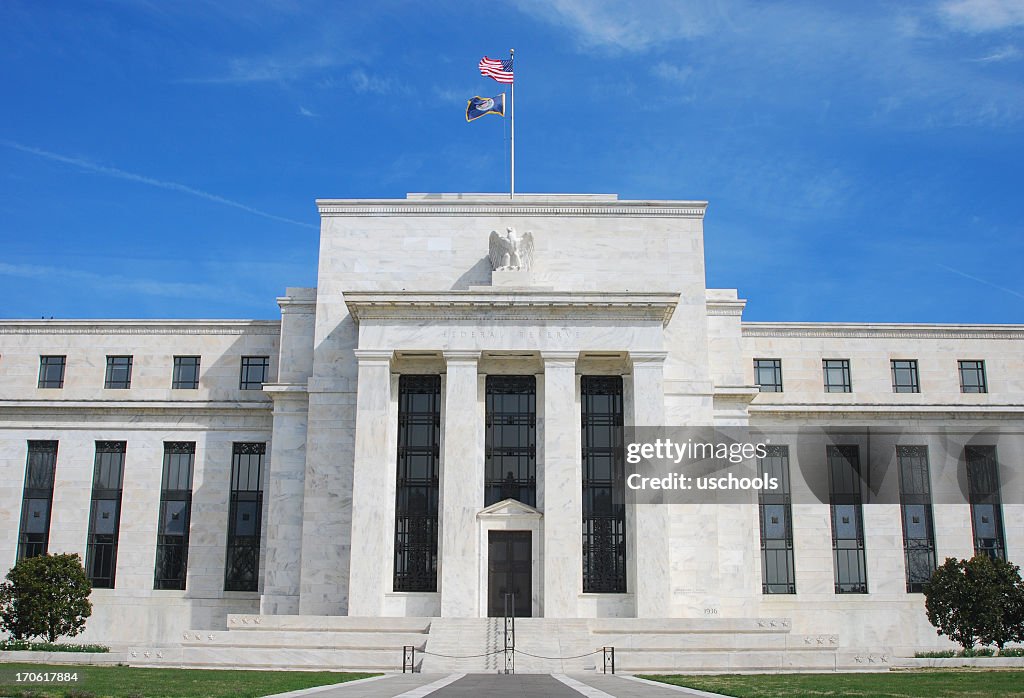
On December 10, 2025, Federal Reserve Chair Jerome Powell described the Fed’s 25 bps rate cut (to 3.5-3.75%) as a “close call,” noting a case could be made for either policy direction [5]. This third annual cut came amid a deeply divided FOMC meeting: 3 members dissented (Austan Goolsbee and Lisa Schmid favored holding rates steady, while Michelle Miran pushed for a 50 bps cut), the highest dissent count since 2019 [1][2]. Six additional FOMC participants were “soft dissents” who would not have supported the cut [1].
The decision unfolded against conflicting economic signals: November ADP private sector jobs fell by 32,000 [3], with unemployment expected to rise to 4.5% (a near four-year high), while inflation remained above the Fed’s 2% target (2.8% in September via PCE gauge [4]). A government shutdown delayed critical economic data, complicating data-dependent policy formulation [1].
The FOMC’s dot plot projected only one more 25 bps cut in 2026, followed by another in 2027, with rates settling at a long-term neutral 3% [1]. The committee also raised its 2026 GDP growth forecast to 2.3% (up 0.5 percentage points), signaling optimism about economic resilience [1]. Separately, the Fed announced $40 billion monthly short-term bill purchases—a technical measure to stabilize funding markets, not quantitative easing [1].
Market reactions were positive: Dow Jones +1.02%, S&P 500 +0.78%, NASDAQ +0.50% [0]. The 10-year Treasury yield fell 0.33% to 4.19%, though the decline was moderate due to the dot plot’s cautious easing projections [0].
- FOMC Division Epitomizes Policy Dilemma: High dissent reflects tension between supporting a weakening labor market and containing persistent inflation—exacerbated by delayed data from the government shutdown. Powell’s “close call” comment highlights this uncertainty.
- Cautious Dot Plot Defies Market Expectations: Despite 90% pre-meeting market pricing for the 25 bps cut [2], the dot plot’s limited 2026 easing projection shows the Fed prioritizing inflation control. Positive market reactions stemmed from the upbeat GDP forecast offsetting slower easing concerns.
- Technical Measures as Stealth Easing: While framed as a funding market stabilization tool, $40 billion monthly bill purchases may be interpreted by markets as “stealth easing” supporting risk assets [1].
- Fed Chair Transition Adds Volatility Risk: Powell’s term ends in May 2026, and the new chair appointment introduces uncertainty about future policy direction, which could roil markets.
- Data Uncertainty: Delayed jobs and inflation data from the shutdown hinder the Fed’s ability to assess economic trajectory [1].
- Inflation Persistence: Sticky inflation above 2% could force policy reversal, roiling markets [4].
- Leadership Transition Volatility: A new Fed chair may shift policy priorities, creating investor uncertainty [1].
- Dissent-Driven Instability: A divided FOMC could provide inconsistent guidance, confusing markets [1].
- Lower Borrowing Costs: Rate cuts and projected easing reduce consumer/business borrowing costs, supporting spending [1].
- Funding Market Stability: Bill purchases mitigate liquidity shortage risks [1].
- Growth Outlook Boost: The raised 2026 GDP forecast may enhance investor confidence in economic resilience [0].
This analysis synthesizes the Fed’s December 2025 rate cut decision, including:
- 25 bps cut to 3.5-3.75% (third of the year) with 9-3 dissents
- Dot plot projecting one additional 25 bps cut in 2026
- $40 billion monthly short-term bill purchases for funding market stability
- Positive market reactions (major indices up, 10Y Treasury yield down)
- Economic context: weak ADP jobs, above-target inflation, delayed data due to shutdown
- Powell’s May 2026 term end and upcoming chair appointment
No prescriptive investment recommendations are made; this summary provides objective context for decision-making.
Insights are generated using AI models and historical data for informational purposes only. They do not constitute investment advice or recommendations. Past performance is not indicative of future results.