
Fed’s Third 2025 Rate Cut: Powell’s Payroll Overcount Comment and Market Implications
Related Stocks
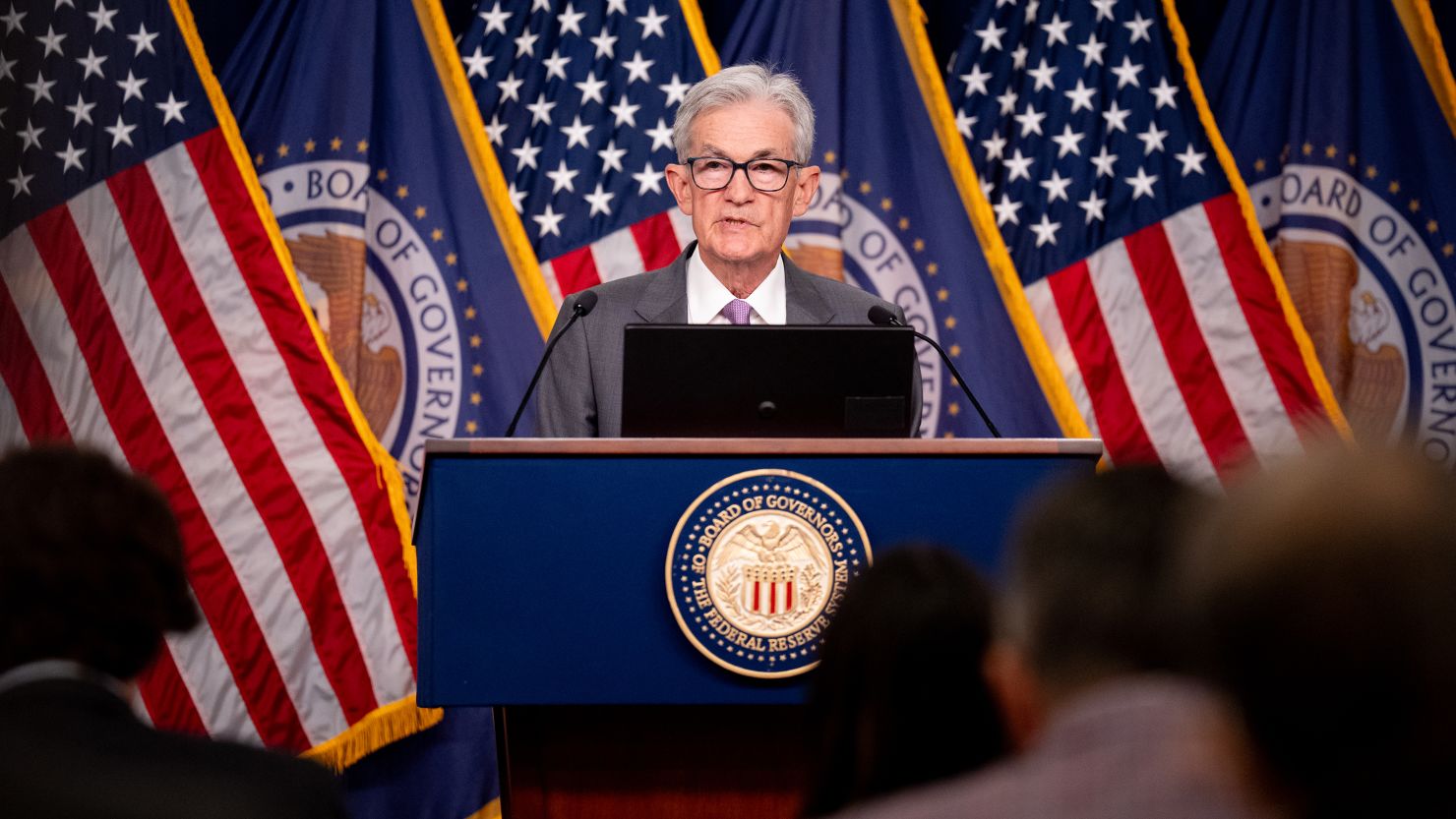
This report is based on the YouTube video of Fed Chair Jerome Powell’s press conference [3] following the December 10, 2025 FOMC meeting, supplemented by FOMC meeting materials [1] and market data [0].
The FOMC announced its third interest rate cut of the year, reducing the federal funds rate to its lowest level since late 2022 [1]. This move follows rate cuts in September and October 2025, signaling the Fed’s ongoing effort to support economic activity. However, the decision was not unanimous: three officials dissented—Stephen Miran advocated for a larger half-point cut, while Jeff Schmid and Austan Goolsbee favored no change—marking the most dissents since September 2019 [2].
The FOMC’s dot plot projects a gradual policy path: one additional rate cut in 2026, another in 2027, and a longer-run federal funds rate of around 3% [1]. Concurrently, officials upgraded their 2026 GDP projection to 2.3% (from 1.8% in September) but forecasted inflation to remain above the 2% target until 2028 [1].
During the press conference, Powell noted an overcount in payroll job numbers that will be corrected [3]. This remark raises the potential for downward revisions to past employment data, which could alter interpretations of the labor market’s strength and influence future Fed policy.
The S&P 500 closed 0.78% higher on December 10, 2025 [0], reflecting investor optimism about the rate cut despite the Fed’s extended inflation forecast and internal dissent.
- Policy Division: The three dissents highlight ongoing debate within the Fed about rate policy pace and magnitude, which may introduce future policy uncertainty [2].
- Labor Market Revision Risk: Powell’s payroll overcount comment suggests potential downward revisions to employment data, which could reassess the labor market’s perceived strength and impact policy decisions [3].
- Market-Sentiment Disconnect: The positive S&P 500 response contrasts with the Fed’s inflation projection (above 2% until 2028), indicating investors may prioritize near-term rate cuts over long-term inflation risks [0][1].
-
Risks:
- Policy Uncertainty: Fed dissent could lead to inconsistent messaging, increasing market volatility [2].
- Inflation Persistence: Above-target inflation until 2028 may erode purchasing power and limit future rate-cut room [1].
- Labor Data Volatility: Payroll revisions could weaken investor confidence if they reveal a slower labor market [3].
-
Opportunities:
- Economic Support: Lower rates may boost borrowing, investment, and consumer spending, supporting 2026 GDP growth [1].
- Short-Term Market Gains: The positive S&P 500 reaction suggests rate cuts may continue to support equities near-term [0].
- The Federal Reserve implemented its third 2025 interest rate cut, lowering the federal funds rate to late-2022 levels [1].
- Three Fed officials dissented (the most since September 2019), indicating policy division [2].
- FOMC projections: 1 rate cut in 2026, 1 in 2027, longer-run rate ~3% [1].
- 2026 GDP forecasted at 2.3% (up from 1.8%), inflation above 2% until 2028 [1].
- Fed Chair Powell noted an overcount in payroll job numbers that will be corrected [3].
- The S&P 500 closed 0.78% higher on the announcement day [0].
Insights are generated using AI models and historical data for informational purposes only. They do not constitute investment advice or recommendations. Past performance is not indicative of future results.