
2025 Fed Rate Cut: Trump Criticism and Market Reactions
Related Stocks
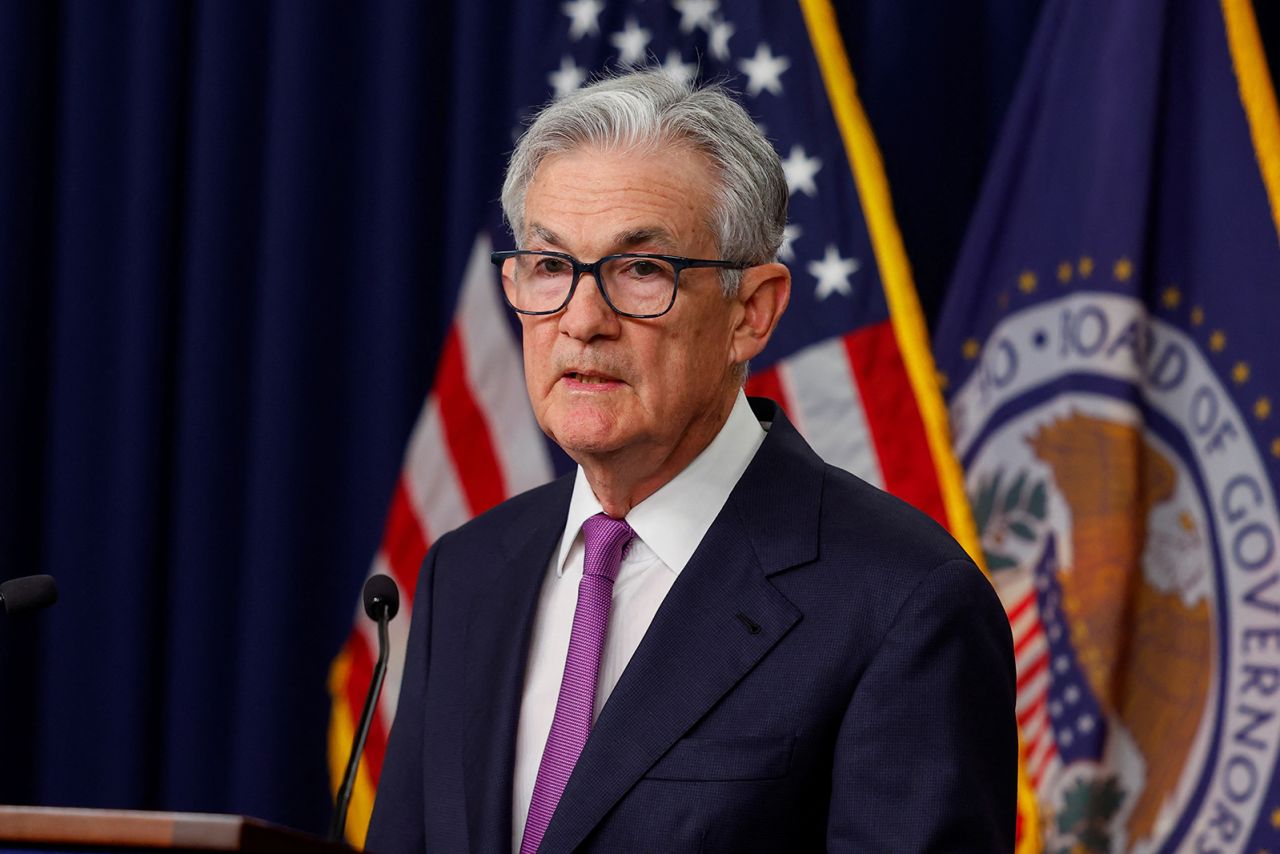
On December 10, 2025, the Federal Reserve cut benchmark interest rates by 25 basis points to a range of 3.5%-3.75%, a move consistent with 88% market expectations per the CME FedWatch Tool [3]. However, President Donald Trump criticized the cut as “rather small,” stating it “could have been at least doubled” and referring to Fed Chair Jerome Powell as “a stiff” [2]. Despite the criticism, major indices maintained positive momentum: the Dow Jones Industrial Average (DJIA) rose 1.13% to 48,112.88, the S&P 500 gained 0.78% to 6,886.95, and the NASDAQ Composite increased 0.48% to 23,648.90 [0]. Sector performance was mixed: Energy (1.66%) and Financial Services (1.55%) led gains on expectations of increased economic activity, while Real Estate (-0.79%) and Communication Services (-2.36%) underperformed due to concerns about the Fed’s cautious stance [0]. The Fed’s decision included three dissenting votes in favor of maintaining rates and projected only one additional 25bps cut in 2026, indicating internal policy division [1]. Trading volume for major indices was below recent averages (2.63B for S&P 500, 5.80B for NASDAQ), suggesting a muted reaction to the event and subsequent criticism [0].
- Market expectations insulated against criticism: The 88% probability of a 25bps cut (per CME FedWatch Tool [3]) meant the decision was fully priced in, limiting the impact of Trump’s critique on market performance.
- Sector dynamics reflect growth confidence: Cyclical sectors (Energy, Financials) outperformed defensive sectors (Consumer Defensive, Communication Services), indicating investor confidence in sustained economic growth [0].
- Fed division signals policy uncertainty: Three dissenting votes and projections for only one more 2026 cut highlight internal disagreement, which could increase market volatility if economic conditions shift.
- Muted volume suggests cautious optimism: Below-average trading volume indicates investors may be waiting for more clarity on labor market dynamics (a key Fed rationale for the cut [1]) and future monetary policy.
- Risks: Persistent inflation could delay further rate cuts, undermining growth expectations [5]. Geopolitical tensions may offset the positive effects of lower rates, leading to market volatility [0]. High-debt companies could face margin compression if economic growth slows [0].
- Opportunities: Rate-sensitive sectors (Energy, Financials) may benefit from increased economic activity if growth holds, while lower borrowing costs could support corporate investment. These opportunities depend on the Fed’s ability to balance inflation and growth.
The December 10, 2025, Fed rate cut and subsequent presidential criticism did not disrupt the market’s positive momentum, as the cut aligned with investor expectations. Major indices rose, with cyclical sectors outperforming defensive ones. The Fed’s internal division and cautious 2026 projection signal policy uncertainty. Investors should monitor inflation data, labor market dynamics, and geopolitical developments to assess the rally’s sustainability and potential risks.
Insights are generated using AI models and historical data for informational purposes only. They do not constitute investment advice or recommendations. Past performance is not indicative of future results.