
Charles Payne on AI Trade Skepticism: Market Analysis of Data Center Doubters and Infrastructure Investment
Unlock More Features
Login to access AI-powered analysis, deep research reports and more advanced features
About us: Ginlix AI is the AI Investment Copilot powered by real data, bridging advanced AI with professional financial databases to provide verifiable, truth-based answers. Please use the chat box below to ask any financial question.
Related Stocks
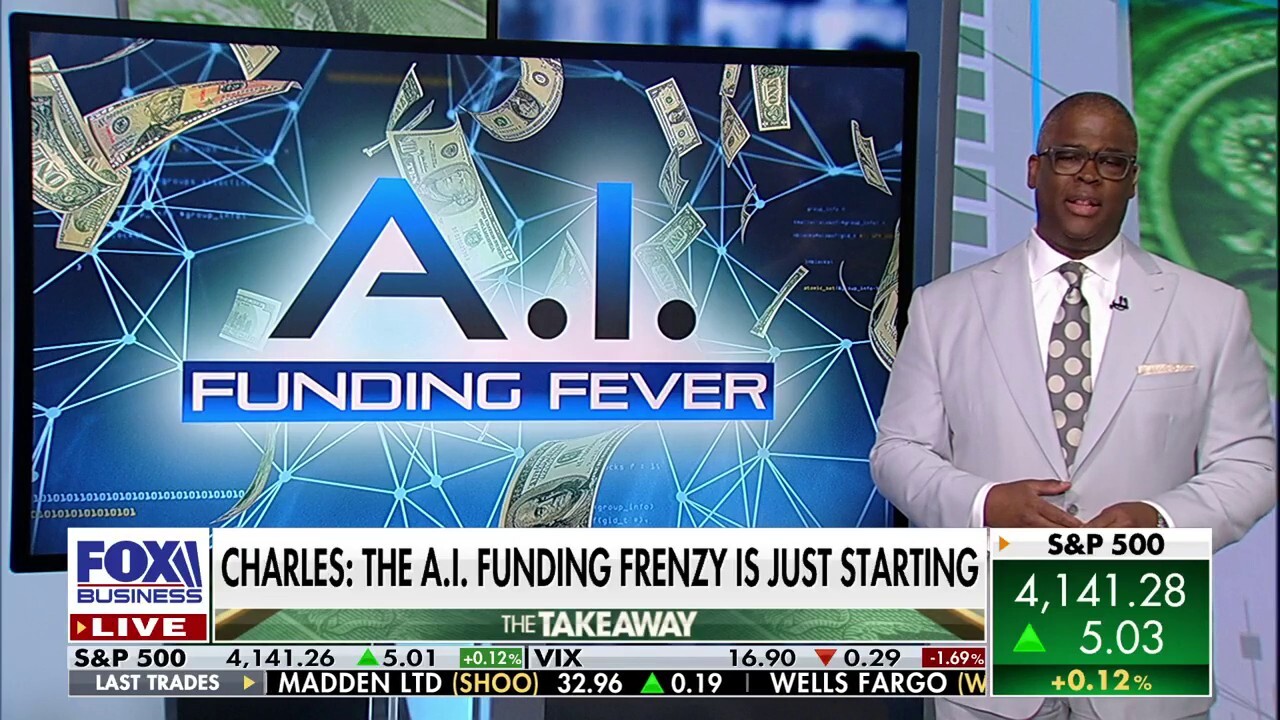
This analysis is based on the FOX Business segment [1] featuring Charles Payne on “Making Money,” published on November 6, 2025, where he addressed the rise of data center doubters and characterized the current AI trade as a “wasted opportunity.”
The AI sector experienced significant pressure on November 6, 2025, with key technology stocks showing notable declines. NVIDIA (NVDA) closed at $188.08, down 3.65% (-$7.13) on heavy volume of 219.14M shares, while Microsoft (MSFT) declined 1.98% (-$10.06) to $497.10 [0]. The Global X Data Center & Digital Infrastructure ETF (DTCR), which tracks data center and digital infrastructure companies, fell 1.59% to $21.73 [0]. This weakness contributed to broader technology sector underperformance, with the NASDAQ Composite down 2.90% over the past 30 days and the technology sector declining 1.58% on November 6 alone [0].
Despite market skepticism, major technology companies are maintaining unprecedented levels of AI infrastructure investment. Microsoft has allocated approximately $80 billion for fiscal year 2025 AI-enabled data centers, Amazon is targeting roughly $125 billion in capital expenditures this year, and Alphabet has raised its 2025 guidance to $91-93 billion [2]. Collectively, these four companies (Microsoft, Amazon, Meta, Alphabet) are on track to spend approximately $350 billion in 2025 on AI-driven data centers and chips [2]. This massive capital commitment contrasts sharply with growing market skepticism, creating a significant divergence between corporate investment strategies and investor sentiment.
The competitive dynamics in AI infrastructure are intensifying. Google’s new Ironwood TPUs reportedly offer Blackwell-level performance at scale, potentially threatening NVIDIA’s market dominance [5]. Additionally, China’s AI providers are expected to invest $70 billion in data centers amid overseas expansion, with China’s data center power demand expected to increase 25% in 2025 [3]. This international competition adds complexity to the investment thesis for AI infrastructure companies.
The current market environment reveals significant valuation concerns. NVIDIA is trading at a P/E ratio of 53.58, suggesting a premium valuation that may be difficult to sustain [0]. The Global X Data Center & Digital Infrastructure ETF (DTCR), despite being up 35% year-to-date as of November 2025, shows signs of near-term profit-taking with its recent decline [2]. Charles Payne’s characterization of the AI trade as a “wasted opportunity” likely reflects concerns about market timing and the risk of potential corrections in overvalued AI infrastructure stocks.
High-profile investors are increasingly positioning against the AI trade. Michael Burry has placed $1.1 billion in put options against NVIDIA and Palantir, betting on AI sector decline [5]. This institutional skepticism, combined with the technical weakness observed in AI infrastructure stocks, suggests that market participants are reassessing the risk-reward profile of these investments after significant year-to-date gains.
A critical gap in the current analysis concerns the actual utilization rates and return on investment from the massive AI infrastructure expenditures. While companies continue to invest billions, there is limited public data on the revenue generation and efficiency gains from these investments. This uncertainty may be contributing to the growing skepticism that Payne references in his commentary.
- Valuation Risk: High P/E ratios combined with recent market weakness suggest potential for further corrections [0]
- Competitive Pressure: Google’s TPU developments and Chinese AI infrastructure expansion threaten market leaders [3][5]
- Market Timing Risk: After significant YTD gains, profit-taking appears likely across the sector [2]
- Regulatory Uncertainty: Potential AI regulations could impact infrastructure investment returns
- Long-term Infrastructure Demand: Despite short-term volatility, the fundamental demand for AI infrastructure remains robust
- International Expansion: China’s $70 billion data center investment creates global market opportunities [3]
- Technology Evolution: Competitive pressure may drive innovation and efficiency improvements in AI chips and infrastructure
Users should be aware that several factors may significantly impact AI infrastructure investments:
- High valuation multiples combined with recent market weakness
- Increasing competitive pressures from both domestic and international players
- Growing institutional skepticism as evidenced by high-profile short positions
- Potential for AI bubble concerns to trigger broader market corrections
The current AI infrastructure market presents a complex picture of massive corporate investment coinciding with growing investor skepticism. While major technology companies collectively plan to spend approximately $350 billion on AI infrastructure in 2025 [2], market participants are increasingly questioning the timing and valuation of these investments. The technology sector’s recent underperformance, with NVIDIA down 3.65% and the broader tech sector declining 1.58% on November 6, 2025 [0], reflects this shifting sentiment.
Charles Payne’s commentary about a “wasted opportunity” [1] appears to capture the market’s concern about potentially overvalued AI infrastructure stocks after significant year-to-date gains. However, the underlying demand for AI computing power and the continued massive capital commitments from major technology companies suggest that any corrections may represent temporary market dynamics rather than fundamental changes in the long-term growth trajectory of AI infrastructure.
Investors should monitor key indicators including AI infrastructure ROI metrics, competitive landscape developments, institutional positioning changes, and technical indicators. NVIDIA’s current price ($188.08) remains significantly below its 52-week high of $212.19, suggesting potential for further volatility [0]. The divergence between corporate investment strategies and market sentiment creates both risks and opportunities that require careful consideration of timing, valuation, and long-term demand fundamentals.
Insights are generated using AI models and historical data for informational purposes only. They do not constitute investment advice or recommendations. Past performance is not indicative of future results.
About us: Ginlix AI is the AI Investment Copilot powered by real data, bridging advanced AI with professional financial databases to provide verifiable, truth-based answers. Please use the chat box below to ask any financial question.