
Analysis of Potential Year-End Market Rally Driven by Fed Rate Cut Expectations
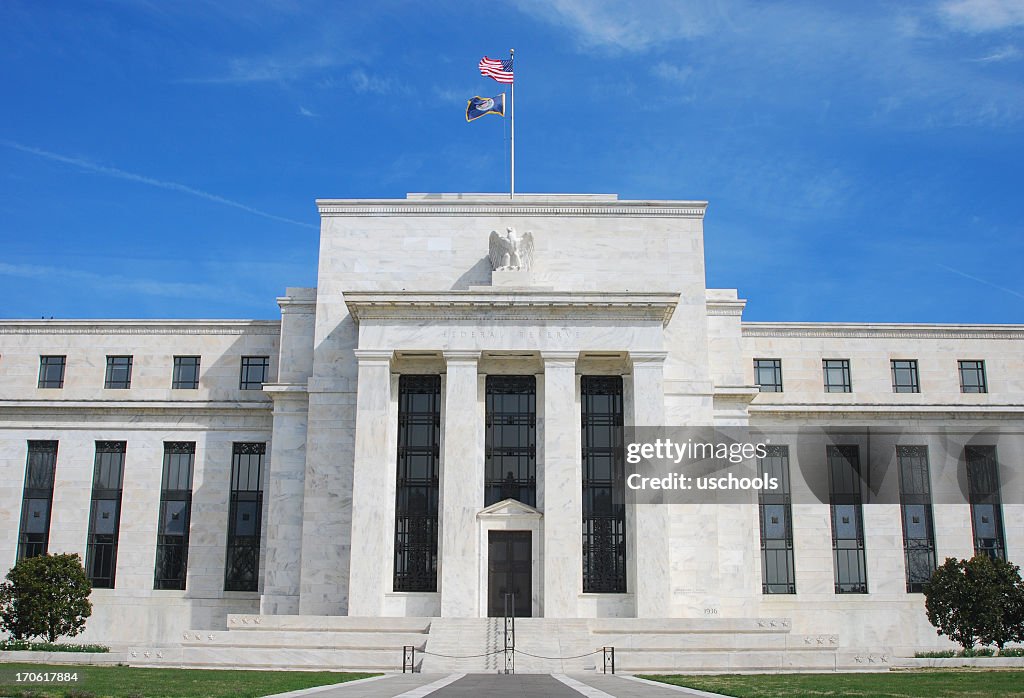
On December 9, 2025, InvestorPlace published an article predicting a year-end stock market rally beginning December 10, 2025, fueled by expected Federal Reserve (Fed) interest rate cuts [1]. The article cited Wall Street traders pricing in 87-90% odds of a 25-basis-point (bps) rate cut, as indicated by the CME FedWatch Tool [2][3].
Legendary investor Louis Navellier argued for a rate cut due to three key factors: labor market weakness (ADP private payrolls reported a loss of 32,000 jobs in November), real estate deflation, and abysmally low consumer confidence (88.7 in November, down from 95.5 in October) [1]. Conversely, technology expert Luke Lango noted improving December University of Michigan Consumer Sentiment (first increase since June) and falling consumer inflation expectations (4.1% from 4.5%), suggesting potential economic stabilization [1].
Market performance on December 9 reflected cautious optimism: the Nasdaq Composite (rate-sensitive tech stocks) rose 0.31%, the S&P 500 remained flat, and the Dow Jones Industrial Average fell 0.34% [0]. A separate Yahoo Finance article cited a powerful earthquake off Japan’s coast leading to higher U.S. Treasury yields and investor jitters on December 9, which could overshadow any positive impact from a Fed rate cut [4]. Historically, the second half of December has been the second strongest time of the year for stocks since 1928, with average gains of 1% and positive returns 70% of the time [1].
- Market Pricing Risk: The 87-90% odds of a rate cut indicate high market consensus, raising the possibility of a “buy the rumor, sell the news” scenario if the cut is already fully priced in [2][3].
- Sector Rotation Trend: The Nasdaq’s outperformance on December 9 suggests investors are rotating into rate-sensitive sectors (tech, real estate, consumer discretionary) in anticipation of lower borrowing costs [0].
- Guidance over Rate Cut: The Fed’s forward-looking statements (dovish vs. hawkish) are likely to drive market reaction more than the rate cut itself, as noted by Louis Navellier’s expectation of ambiguous guidance in the FOMC statement [1].
- Global Risk Overhang: External events like the Japan earthquake add uncertainty, potentially mitigating or overriding the positive effects of a Fed rate cut [4].
- Conflicting Economic Signals: Weak labor market data and low consumer confidence contrast with improving Michigan sentiment and falling inflation expectations, creating a mixed economic backdrop [1].
- Hawkish Cut Risk: If the Fed cuts rates but provides hawkish guidance (e.g., signaling no further cuts in 2026), the market could sell off sharply despite the rate reduction [1].
- Disappointment Risk: Failure to cut rates at all would likely result in a significant market correction, as the high odds of a cut are already priced into current valuations [1].
- Sector Disparities: Rate cuts may benefit some sectors (tech, real estate) more than others (utilities, financials), leading to uneven performance [1].
- Global Event Impact: The Japan earthquake and other global risks could continue to weigh on market sentiment, overriding the effects of a Fed rate cut [4].
- Rate-Sensitive Sectors: Companies in tech, real estate, and consumer discretionary sectors may benefit from lower interest costs, supporting stock price gains [0][1].
- Risk Asset Rally: Bitcoin and high-growth assets could see significant rallies if lower rates boost investor risk appetite [1].
- Historical December Strength: The historical tendency of the second half of December to deliver positive returns provides context for the rally prediction [1].
- Fed Rate Cut Odds (25bps): 87-90% as of December 9, 2025, per the CME FedWatch Tool [2][3].
- Key Economic Indicators: ADP private payrolls (-32k jobs, November), consumer confidence (88.7, November), improving December University of Michigan sentiment, and consumer inflation expectations (4.1%) [1].
- December 9 Market Performance: Nasdaq Composite +0.31%, S&P 500 flat, Dow Jones Industrial Average -0.34% [0].
- Critical Factors to Monitor: Fed decision and forward guidance, upcoming economic data (jobs, inflation), and global events (Japan earthquake aftermath) [1][4].
Insights are generated using AI models and historical data for informational purposes only. They do not constitute investment advice or recommendations. Past performance is not indicative of future results.