
U.S. Uncovers $160M Nvidia GPU Smuggling Scheme Amid H200 Export Approval
Related Stocks
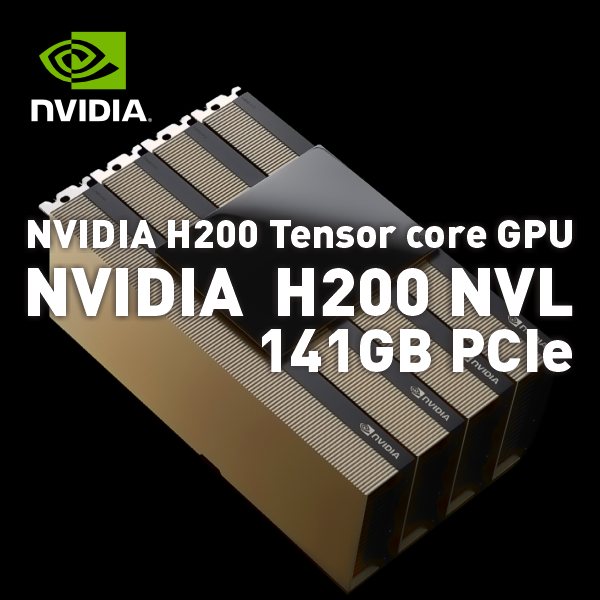
On December 9, 2025, two key developments involving Nvidia (NVDA) emerged simultaneously. First, the U.S. DOJ announced it had uncovered a $160 million smuggling scheme targeting NVDA’s high-end H100 and H200 AI GPUs, part of an enforcement operation dubbed “Operation Gatekeeper.” Alan Hao Hsu, a Houston-based individual, and his company Hao Global LLC pleaded guilty to using shell companies, falsified shipping paperwork, and chip relabeling between October 2024 and May 2025 to evade U.S. export bans to China [1][2][4]. Second, U.S. President Donald Trump approved NVDA to export its H200 AI chips to approved Chinese customers, subject to a 25% U.S. revenue share and strict national security safeguards [3].
NVDA’s stock closed at $185.55 on December 9, representing a 1.59% increase from the previous day’s close, with trading volume reaching 204.38 million shares—17% above the 5-day average [0]. The positive price movement is largely attributed to the concurrent H200 export approval, which overshadowed the smuggling news due to its potential as a significant revenue opportunity for NVDA in the Chinese market, a historically major source of data center chip revenue [0][3].
- Strong demand validation: The $160 million smuggling scheme underscores sustained high demand for NVDA’s cutting-edge AI chips in China, even amid strict export controls [1][2].
- Market prioritization of regulatory relaxation: The positive stock reaction to the H200 export approval indicates investors value expanded market access more than near-term enforcement challenges associated with smuggling [0][3].
- Systemic enforcement challenges: The scheme’s use of sophisticated tactics (shell companies, falsified documents) highlights the difficulty of enforcing export controls for high-margin technologies, suggesting potential for future smuggling networks to emerge [1][2][4].
- Revenue potential from H200 sales: The export approval allows NVDA to tap into pre-existing strong demand in China for its high-end chips, with the 25% revenue share condition representing a structured pathway to market access [3].
- Demand-driven product positioning: The smuggling scheme reinforces NVDA’s dominant market position and the value of its AI chip technology globally [1][2].
- Regulatory uncertainty: Continued smuggling attempts could prompt tighter U.S. export controls, potentially restricting NVDA’s access to the Chinese market beyond the approved H200 sales [1][2][4].
- China’s market response: Domestic Chinese companies may reject H200 chips due to the 25% revenue share condition or ongoing efforts to shift to domestic AI chip alternatives [3].
- Enforcement scrutiny: Increased DOJ focus on export violations could lead to more investigations, potentially disrupting NVDA’s operations or impacting its reputation [1][4].
This analysis synthesizes two concurrent December 9, 2025, events involving NVDA: a $160 million smuggling scheme to China and H200 export approval with a 25% U.S. revenue share. The smuggling scheme utilized shell companies and falsified records, while the export approval introduces structured market access. NVDA’s stock rose 1.59% with above-average volume, driven primarily by the export approval. The events collectively highlight strong global demand for NVDA’s AI chips, regulatory trade-offs, and persistent challenges in enforcing export controls for high-value technologies.
Insights are generated using AI models and historical data for informational purposes only. They do not constitute investment advice or recommendations. Past performance is not indicative of future results.