
U.S. Hardwood Sawmill Closures Accelerate Amid Tariffs, Weak Demand, and Alternative Competition
Unlock More Features
Login to access AI-powered analysis, deep research reports and more advanced features
About us: Ginlix AI is the AI Investment Copilot powered by real data, bridging advanced AI with professional financial databases to provide verifiable, truth-based answers. Please use the chat box below to ask any financial question.
Related Stocks
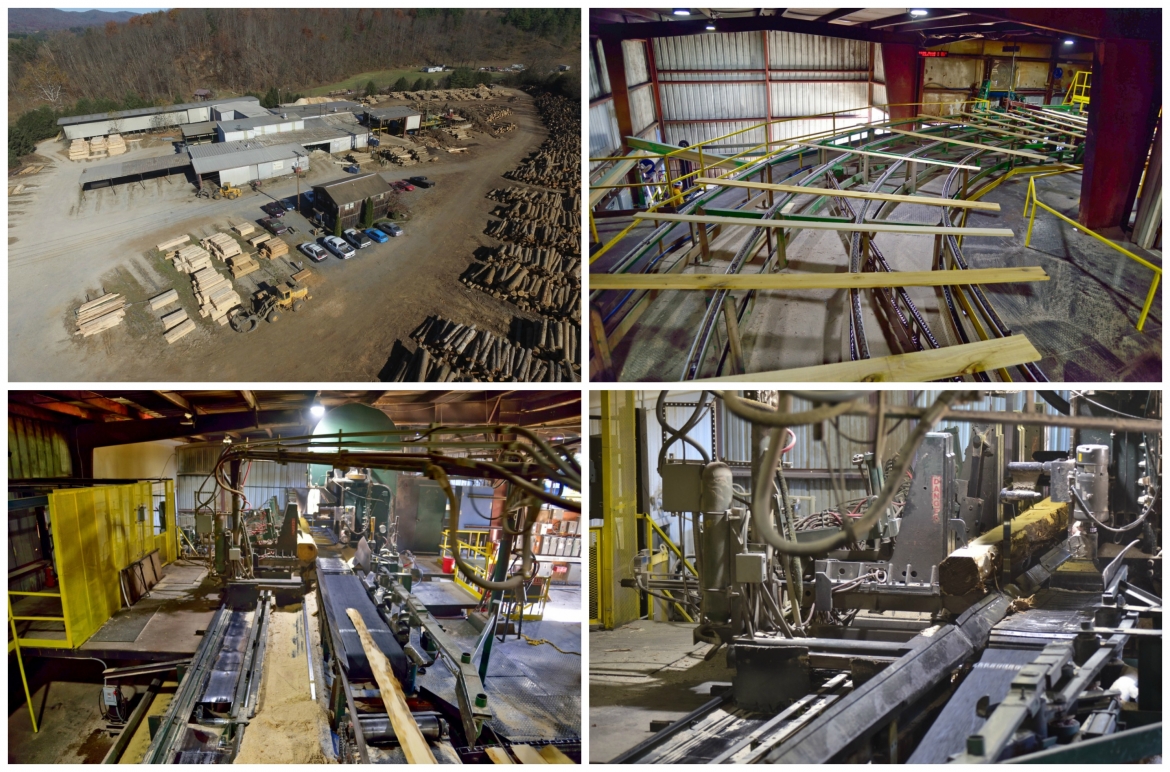
On December 3, 2025, Fox Business reported accelerating U.S. hardwood sawmill closures amid a “perfect storm” of tariffs, shrinking export markets, and growing competition from synthetic wood alternatives [1]. The industry’s decline traces to 2018 trade tensions when China halted U.S. hardwood purchases (retaliating against tariffs), costing the U.S. half its Chinese market share (once its second-largest export market for hardwood) to competitors like Russia, Thailand, and Malaysia [1]. September 2025 tariff escalations (10% on lumber, 25% on furniture/cabinets) further strained margins [1]. Compounding these issues, synthetic wood alternatives—marketed as “luxury” products—dominate retail display space (200 alternatives to 4–5 solid hardwood options), reducing demand [1].
Closures affect sawmills of all sizes: West Fraser Timber Co. (WFG) is closing its 140 million board foot Georgia mill, eliminating 130 jobs [2]; small family-owned operations like Evans Lumber Co. (Tennessee) face imminent closure [1]. Large operators like AHF Products are consolidating by acquiring sawmills to secure supply chains [3]. The crisis ripples through the value chain: tree farmers face reduced raw timber demand, while downstream manufacturers may encounter limited solid hardwood supply [1].
- Cumulative pressure drives acceleration: The crisis stems from years of tariff legacy, not isolated events, amplified by recent policy escalations and alternative competition [1].
- Size-dependent vulnerability: Small sawmills (with limited financial buffers) are most at risk, while large operators respond through consolidation or targeted closures [1][2][3].
- Downstream ecosystem impact: Sawmill closures threaten tree farmer livelihoods, increase job losses in rural communities, and may constrain solid hardwood supply for furniture and flooring manufacturers [1][2].
- Short-term (3–6 months): Accelerated closures without policy relief or demand recovery, risking further job losses [1].
- Medium-term (1–2 years): Persistent market share loss to synthetic alternatives and fragmented supply chains [1].
- Long-term (3–5 years): Industry consolidation reducing operational diversity, potentially making the solid hardwood sector more fragile [3].
- Policy advocacy: Over 450 sawmills have pleaded for White House/USDA relief, with a planned Washington D.C. trip (early 2026) and China trade negotiations offering potential export market restoration [1].
- Supply chain integration: Large operators can leverage acquisitions to strengthen resilience [3].
- Product differentiation: The industry could innovate to highlight solid hardwood’s unique attributes against synthetic alternatives [1].
- The U.S. hardwood sawmill sector faces accelerating closures due to tariffs, shrinking export markets, and synthetic wood competition [1].
- Closure rates: ~1 per week; over 4% of sawmills lost since 2018 trade tensions [1].
- Impacts span sawmills (all sizes), tree farmers, employees (e.g., 130 jobs lost at West Fraser’s Georgia mill), and downstream manufacturers [1][2].
- Critical recovery factors include trade policy adjustments, domestic/international demand rebound, and competitive strategy adaptation [1][2][3].
Insights are generated using AI models and historical data for informational purposes only. They do not constitute investment advice or recommendations. Past performance is not indicative of future results.
About us: Ginlix AI is the AI Investment Copilot powered by real data, bridging advanced AI with professional financial databases to provide verifiable, truth-based answers. Please use the chat box below to ask any financial question.