
Analysis: Reddit Bear Thesis on NVDA vs. Market Realities and Ecosystem Strengths
Unlock More Features
Login to access AI-powered analysis, deep research reports and more advanced features
About us: Ginlix AI is the AI Investment Copilot powered by real data, bridging advanced AI with professional financial databases to provide verifiable, truth-based answers. Please use the chat box below to ask any financial question.
Related Stocks
This analysis is based on a Reddit post dated 2025-12-02 07:11:32 EST [5], where a user argued NVIDIA (NVDA) is “finished” and positioned to profit from its decline. Key bearish claims include: Google developing AI chips (TPUs), Meta Platforms (META) buying these chips, an 89% surge in accounts receivable, a 32% inventory rise, and Ilya Sutskever’s comment on the “end of scaling.”
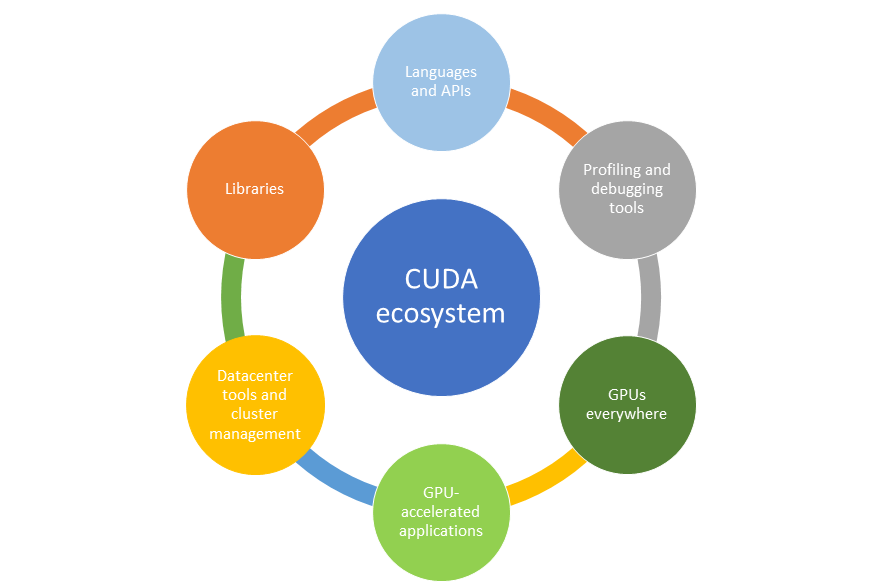
Counterarguments from Reddit commenters emphasize NVDA’s ecosystem moat—including CUDA libraries refined over a decade, developer familiarity, and end-to-end tooling infrastructure—making rapid transition to competing chips (like TPUs) logistically and economically challenging [5]. Market news supports both perspectives: a Nov. 25, 2025, report of Google-Meta TPU deal talks caused NVDA to drop 4% intraday [4], reflecting market sensitivity to threats against its data center GPU dominance. However, NVDA closed up 1.65% at $179.92 on 12/02 [0], with trading volume (184.61M) slightly below its 191.08M average [0], indicating limited short-term impact from the Reddit post.
Experts clarify NVDA’s financial metrics to counter bearish claims: Ming-Chi Kuo defends the inventory rise as driven by work-in-process for the upcoming Blackwell B300 GPU and upstream capacity ramp at TSMC, while the accounts receivable surge stems from concentrated receivables from large cloud customers—a standard industry practice [2]. Ilya Sutskever’s “end of scaling” comment (2025) should be interpreted with nuance: he noted AI progress will shift from compute-heavy scaling to research-driven ideas, not that GPU demand will decline [3].
- Ecosystem moat (CUDA + developer investment) is a stronger defense than hardware alone: Years of developer training and tooling refinement have created a barrier that competing chips (like Google TPUs) can’t overcome quickly [5].
- Short-term market reactions may not reflect long-term fundamentals: NVDA’s 4% drop from Google-Meta TPU news [4] was followed by a rebound [0], showing investor focus on the Blackwell B300 launch amid competitive concerns.
- The bear thesis misinterprets financial metrics: Experts frame inventory/accounts receivable increases as normal for a new product ramp-up (Blackwell), not a sign of weakening demand [2].
- Ilya Sutskever’s comment does not signal GPU demand decline: It refers to a shift in AI progress drivers, reducing the bear thesis’s core credibility [3].
- Competition: The Google-Meta TPU deal could capture 10% of NVDA’s data center revenue (~$5B annually) by 2027 [4]; AMD’s MI300X also poses a threat to NVDA’s 80%+ market share [4].
- Demand moderation: If AI progress reduces compute requirements, GPU demand growth may slow compared to recent years [3].
- Supply chain delays: Production issues with the Blackwell B300 could impact 2026 revenue [2].
- Ecosystem lock-in: CUDA and developer familiarity continue to insulate NVDA from rapid competition [5].
- Blackwell B300 launch: Scheduled for 2026, the new GPU could drive significant demand growth [2].
- AI market expansion: Ongoing AI adoption across industries supports long-term GPU demand [0].
NVIDIA (NVDA) faced a bearish thesis on Reddit claiming its decline due to competition, financial metrics, and industry commentary. Counterarguments highlight NVDA’s ecosystem moat (CUDA, developer investment) and workload dependency. Market data shows NVDA closed up 1.65% at $179.92 on 2025-12-02, with a prior 4% drop from Google-Meta TPU deal news. Experts defend NVDA’s inventory/accounts receivable as normal for the Blackwell B300 ramp-up. Ilya Sutskever’s “end of scaling” comment refers to AI progress shifts, not GPU demand decline. Competition from Google TPUs and AMD remains a long-term risk, while NVDA’s ecosystem and new product launch offer growth opportunities.
Insights are generated using AI models and historical data for informational purposes only. They do not constitute investment advice or recommendations. Past performance is not indicative of future results.
About us: Ginlix AI is the AI Investment Copilot powered by real data, bridging advanced AI with professional financial databases to provide verifiable, truth-based answers. Please use the chat box below to ask any financial question.