
Analysis of Apple's AI Leadership Transition and Market Implications
Unlock More Features
Login to access AI-powered analysis, deep research reports and more advanced features
About us: Ginlix AI is the AI Investment Copilot powered by real data, bridging advanced AI with professional financial databases to provide verifiable, truth-based answers. Please use the chat box below to ask any financial question.
Related Stocks
This analysis is based on Apple’s official announcement [1], market news reports [2][3][4], and Reddit community discussions about Apple’s AI performance [5]. On December 1, 2025, Apple revealed that John Giannandrea, Senior Vice President for Machine Learning and AI Strategy since 2018, would step down and serve as an advisor until spring 2026 [1]. Amar Subramanya, a former Google Gemini AI researcher and Microsoft AI executive, will take over leadership of foundation models, research, and AI safety under software chief Craig Federighi [2][3].
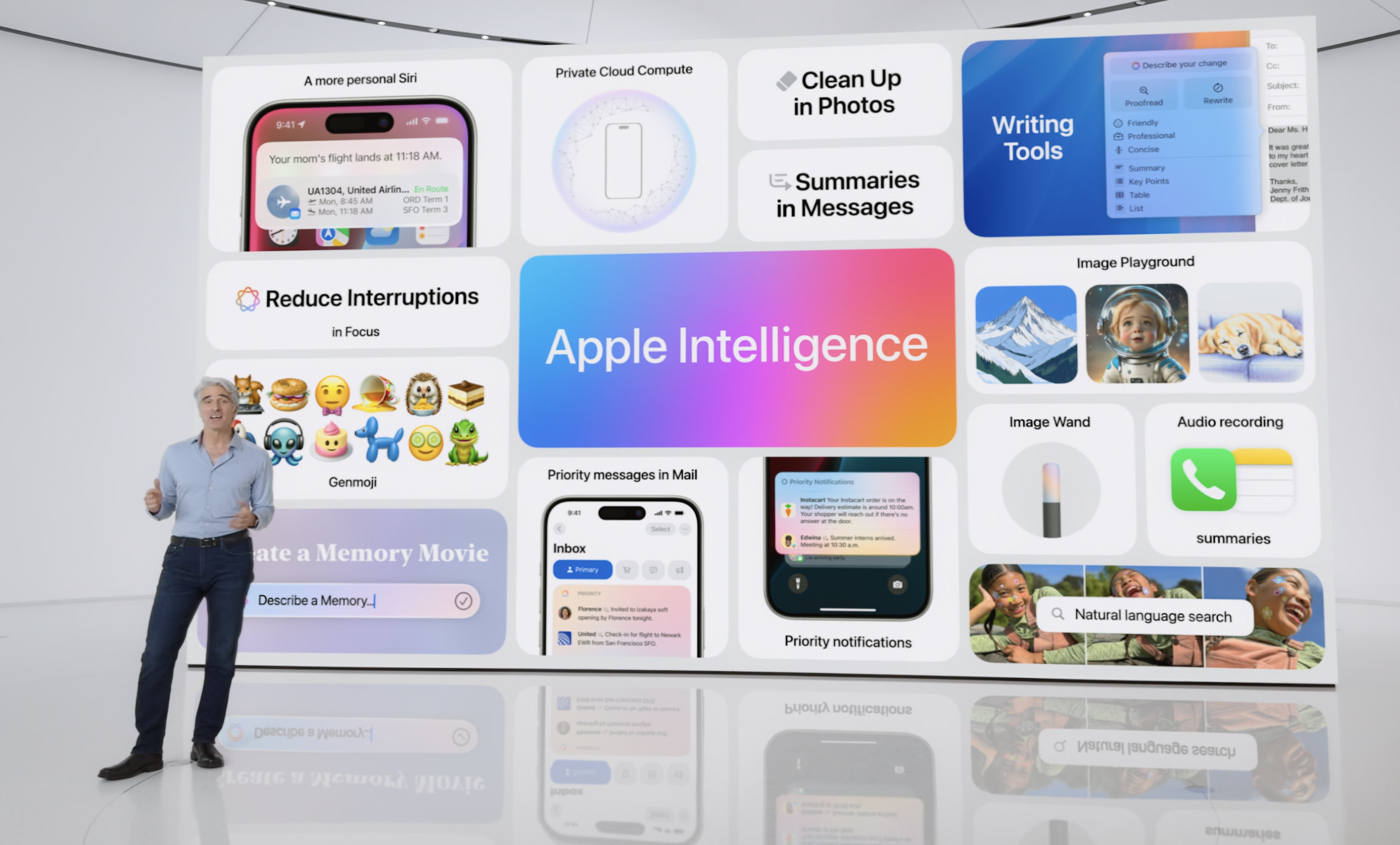
The transition comes amid well-documented struggles for Apple’s AI initiatives: Apple Intelligence (launched 2024) has received poor reviews, and the improved Siri AI assistant has been delayed until 2026 [4]. Reddit users echoed these concerns, criticizing Siri’s performance and calling Apple Intelligence “an embarrassment” [5]. They also speculated that Giannandrea might leave to start his own AI company or due to industry shifts away from LLMs [5].
Market reaction was unexpectedly positive: AAPL closed at $283.10, up 1.52% from the previous close, while the S&P 500 remained flat [0]. Trading volume (45.53 million shares) was slightly below the 51.43 million average [0], suggesting investors view Subramanya’s strong AI credentials as a potential catalyst to improve Apple’s AI efforts, which have lagged behind Google and Microsoft [3].
- Market Sentiment Disconnect: Reddit users criticized Apple’s AI performance and perceived overvaluation (citing a 40x forward P/E ratio [5]), but the stock’s positive movement indicates institutional investors prioritize Subramanya’s leadership potential over current AI struggles.
- Competitive Urgency: The transition highlights Apple’s need to accelerate AI development to compete with Google (Gemini) and Microsoft (Copilot), which have made significant AI strides in consumer products.
- Ecosystem Impact: Success with Apple Intelligence and Siri could enhance user engagement across Apple’s ecosystem—iPhone (50.4% of FY2025 revenue) and Services (26.2% of FY2025 revenue)—driving long-term value [0].
- Competitive Lag: Google and Microsoft continue advancing AI capabilities; failure to accelerate could widen Apple’s gap [3].
- Execution Risk: No guarantee Subramanya can deliver the delayed Siri upgrade and improved Apple Intelligence by 2026 [4].
- Reputational Risk: Continued AI underperformance could harm Apple’s reputation as a consumer tech innovator [5].
- Valuation Vulnerability: AAPL’s 37.78x P/E ratio (above market average [0]) leaves the stock exposed to correction if AI progress remains slow.
- Leadership Expertise: Subramanya’s experience with Google Gemini and Microsoft AI could revitalize Apple’s foundation model research [2].
- Ecosystem Integration: Improved AI features could increase cross-sell opportunities and retain high-value users.
- Market Confidence: The positive short-term stock reaction demonstrates investor willingness to support Apple’s AI turnaround.
Apple’s AI leadership transition marks a critical juncture for its AI strategy, following challenges with Apple Intelligence and delayed Siri features. AAPL stock showed short-term strength (+1.52% on December 1, 2025) amid flat broader market conditions [0]. Key metrics include a $4.18T market cap, 37.78x P/E ratio, and $300 analyst consensus target [0]. Decision-makers should monitor Subramanya’s strategy announcements, progress on delayed AI features, and competitive comparisons with Google and Microsoft.
Insights are generated using AI models and historical data for informational purposes only. They do not constitute investment advice or recommendations. Past performance is not indicative of future results.
About us: Ginlix AI is the AI Investment Copilot powered by real data, bridging advanced AI with professional financial databases to provide verifiable, truth-based answers. Please use the chat box below to ask any financial question.