
U.S. Tariff Reduction on South Korean Autos and Market Implications
Unlock More Features
Login to access AI-powered analysis, deep research reports and more advanced features
About us: Ginlix AI is the AI Investment Copilot powered by real data, bridging advanced AI with professional financial databases to provide verifiable, truth-based answers. Please use the chat box below to ask any financial question.
Related Stocks
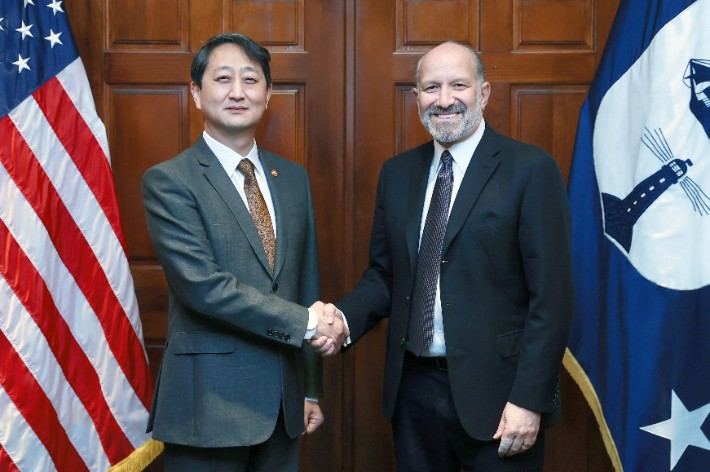
On December 1, 2025, U.S. Commerce Secretary Howard Lutnick formally announced a tariff reduction on South Korean autos from 25% to 15%, effective retroactively to November 1. This places South Korea on parity with Japan and the EU, which face the same reciprocal tariff rate. The move follows a trade agreement announced on October 29, under which South Korea pledges $350 billion in U.S. investments [1].
Hyundai Motor (005380.KS) and Kia Corp (000270.KS) experienced profit-taking on December 1, with Hyundai down 2.68% and Kia down 1.58%. This decline is attributed to the market already pricing in the tariff reduction following the October 29 announcement. Trading volumes were below average (Hyundai: 153,317 vs. avg 788,888; Kia: 163,061 vs. avg 983,871), indicating limited selling pressure [0]. In contrast, the broader U.S. Consumer Cyclical sector rose 0.56% on December 1, reflecting general market trends rather than the tariff announcement [0].
The tariff reduction lowers costs for South Korean automakers in the U.S., their largest market (contributing ~40% of revenue). As part of the world’s third-largest automaking group, Hyundai and Kia stand to gain market share in the U.S. by improving price competitiveness against domestic and other imported vehicles [2][3].
- Market Efficiency: The October 29 initial announcement led to significant stock gains (Hyundai +18.10%, Kia +11.74% from Oct 1 to Dec 1), demonstrating the market’s ability to price in anticipated policy changes ahead of formal announcements [0].
- Competitive Parity: Matching tariffs with Japan and the EU eliminates a disadvantage South Korean automakers faced in the U.S. market, creating a more level playing field [1].
- Investment Linkage: The tariff reduction is contingent on South Korea’s $350 billion U.S. investment pledge, highlighting the interdependency of trade policy and foreign direct investment [1].
- Cost Reduction: The 10 percentage point tariff cut directly reduces import costs for South Korean autos, enhancing price competitiveness [2].
- Market Share Growth: Improved cost efficiency could lead to increased U.S. market share for Hyundai and Kia [3].
- Investment Boost: South Korea’s $350 billion U.S. investment pledge may stimulate growth in auto-related sectors, creating indirect benefits [1].
- Regulatory Uncertainty: Trade policies could reverse under future political administrations, posing a risk to the tariff reduction [2].
- Exchange Rate Volatility: Fluctuations in the USD/KRW exchange rate may offset tariff reduction benefits [2].
- Supply Chain Disruptions: Any interruptions in South Korea’s auto supply chain could limit the ability to capitalize on the tariff cut [2].
- Event: U.S. reduces South Korean auto tariffs to 15% effective Nov 1, 2025, matching Japan/EU rates [1].
- Affected Companies: Hyundai Motor (005380.KS) and Kia Corp (000270.KS) [0].
- Stock Performance: Oct 1 to Dec 1 gains (Hyundai +18.10%, Kia +11.74%) followed by Dec 1 profit-taking [0].
- Market Context: Tariff reduction linked to South Korea’s $350 billion U.S. investment pledge [1].
The analysis provides objective context for decision-making, highlighting both short-term market dynamics and long-term strategic implications without prescriptive investment recommendations.
Insights are generated using AI models and historical data for informational purposes only. They do not constitute investment advice or recommendations. Past performance is not indicative of future results.
About us: Ginlix AI is the AI Investment Copilot powered by real data, bridging advanced AI with professional financial databases to provide verifiable, truth-based answers. Please use the chat box below to ask any financial question.