
OpenAI's Competitive Headwinds from Google: Structural Challenges and Strategic Dependencies
Unlock More Features
Login to access AI-powered analysis, deep research reports and more advanced features
About us: Ginlix AI is the AI Investment Copilot powered by real data, bridging advanced AI with professional financial databases to provide verifiable, truth-based answers. Please use the chat box below to ask any financial question.
Related Stocks
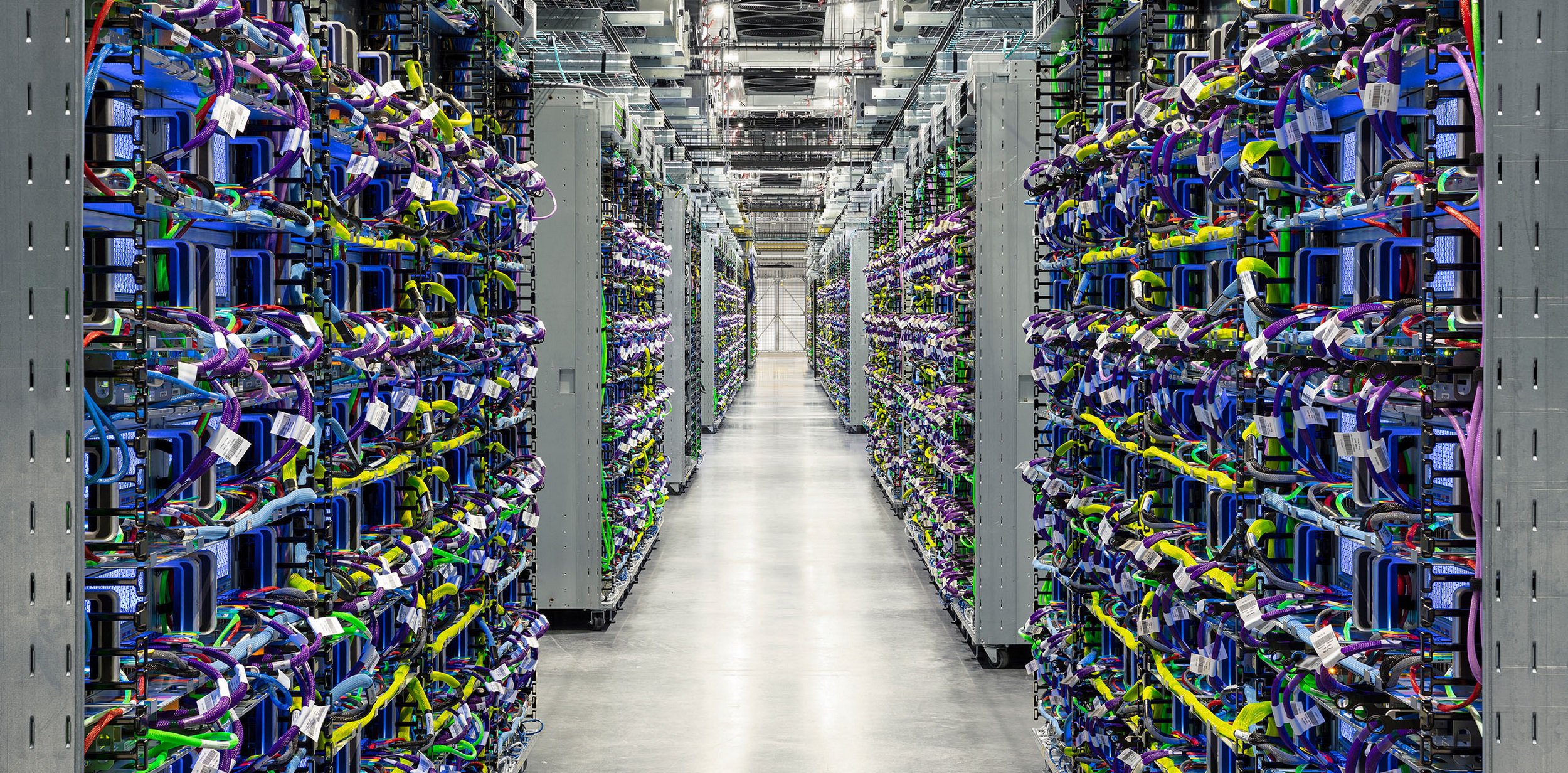
OpenAI confronts mounting challenges from Google, rooted in Google’s structural advantages: zettabytes of user data (vs OpenAI’s third-party data needs) and proprietary TPUs/datacenters (vs OpenAI’s cloud reliance) [0,1]. OpenAI’s shift to for-profit has led to unsustainable cash burn—projected at $8-8.5B in 2025, driven by models like Sora ($15M/day compute cost) [0]. The Microsoft partnership is a critical lifeline: Microsoft received $866M in revenue share from OpenAI in Q1-Q3 2025, aligning incentives for continued support [0]. Google’s rapid execution (Gemini 3.0 launched 21 months after Bard) and ecosystem integration (search, Workspace) further erode OpenAI’s early-mover advantage [1].
- Structural Edge: Google’s data/infrastructure gives it a long-term competitive advantage over OpenAI’s third-party dependencies [0].
- Cash Burn Dynamics: OpenAI’s for-profit model has increased operational costs, making it dependent on external funding or Microsoft absorption [0].
- Ecosystem Integration: Google’s ability to embed AI into existing products reduces user friction compared to OpenAI’s standalone ChatGPT [1].
- Mutual Benefit: Microsoft’s revenue share from OpenAI ensures strategic alignment, though OpenAI’s autonomy may be at risk [0].
- OpenAI’s Cash Crunch: With $17.5B in reserves, OpenAI faces funding gaps without additional capital or deeper Microsoft integration [0].
- User Atrophy: Google’s AI-integrated search could reduce ChatGPT’s user base [1].
- Microsoft Integration: Absorption into Microsoft could provide stability and resource access for OpenAI [1].
- Google’s Market Gain: Gemini’s progress may increase Google’s AI market share in search/enterprise [0].
- OpenAI Metrics: 2025 revenue target ($12-13B), cash burn ($8-8.5B), cash reserves ($17.5B) [0].
- Google’s Progress: Gemini 3.0 launched 21 months after Bard, demonstrating rapid iteration [1].
- Microsoft Partnership: Revenue share of ~20% from OpenAI, yielding $866M in Q1-Q3 2025 [0].
- Sora Cost: Estimated $15M/day in compute expenses [0].
Insights are generated using AI models and historical data for informational purposes only. They do not constitute investment advice or recommendations. Past performance is not indicative of future results.
About us: Ginlix AI is the AI Investment Copilot powered by real data, bridging advanced AI with professional financial databases to provide verifiable, truth-based answers. Please use the chat box below to ask any financial question.