
AI-Driven Market Concentration Creates Structural Shift and K-Shaped Economy
Unlock More Features
Login to access AI-powered analysis, deep research reports and more advanced features
About us: Ginlix AI is the AI Investment Copilot powered by real data, bridging advanced AI with professional financial databases to provide verifiable, truth-based answers. Please use the chat box below to ask any financial question.
Related Stocks
This analysis is based on the Seeking Alpha report [1] published on November 6, 2025, which highlights how AI investment has fundamentally broken traditional market structures. The current market is dominated by unprecedented concentration in the Magnificent 7 stocks, which are driving massive AI-related capital expenditure that acts like quantitative easing for the economy. This structural shift is creating both opportunities and significant risks, including labor market disruption and the emergence of a K-shaped economy where benefits flow unevenly across sectors and demographics.
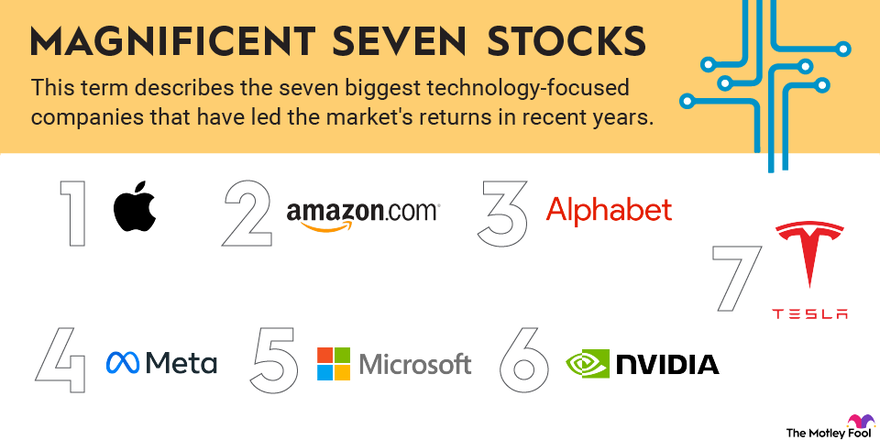
The Magnificent 7 (Apple, Microsoft, Amazon, Alphabet, Meta, Nvidia, Tesla) are investing a staggering $380 billion in AI infrastructure for 2025, representing a 54% year-over-year increase [2]. This investment surge has created market concentration not seen since the dot-com era, with these seven stocks now accounting for over 25% of S&P 500 market capitalization [1]. The S&P 500 closed at 6,796.29 (+0.39%) while the Nasdaq Composite reached 23,499.80 (+0.61%) [0], reflecting the dominance of these AI giants.
The massive AI CapEx is functioning similarly to quantitative easing, providing liquidity and fueling innovation across the economy. However, unlike traditional QE, this investment is highly concentrated and sector-specific, creating uneven economic effects. The Russell 2000’s outperformance (+1.47%) [0] suggests some market breadth, but the underlying structure remains heavily skewed toward AI beneficiaries.
The AI-driven transformation is already showing significant labor market impacts. October job cuts reached their highest level for the month in 22 years at 153,074, representing a 183% surge from September [3]. This data validates concerns about AI-driven displacement and suggests the K-shaped economy is intensifying as automation accelerates across sectors.
Current sector performance reveals the emerging K-shaped pattern:
- Energy(+2.80%): Leading gains, benefiting from AI data center power demands
- Industrials(+2.32%): Infrastructure plays gaining on AI build-out
- Healthcare(+1.73%): Defensive positioning amid uncertainty
- Technology(+0.40%): Surprisingly muted, suggesting selective AI exposure
- Consumer Defensive(-0.45%): Underperforming as economic concerns grow [0]
The AI investment theme is resonating globally, with Asian markets showing mixed performance but Chinese indices demonstrating particular strength - Shanghai Composite up 1.2% and Shenzhen Component gaining 2.1% [0]. This suggests the AI-driven market transformation is not limited to US markets but represents a global structural shift.
The massive AI CapEx is creating secondary beneficiaries beyond the tech sector. Energy, utilities, and industrial companies are experiencing increased demand as data centers require unprecedented power and infrastructure support [1]. This explains the relative outperformance of these sectors despite technology’s modest gains.
Passive index investing now carries significant hidden risks due to extreme Mag 7 dominance [1]. Investors may unknowingly have excessive exposure to a small group of stocks, creating vulnerability to any AI-specific corrections or regulatory changes.
The current AI boom is creating a multi-year infrastructure investment cycle that extends beyond traditional technology companies. Energy, industrial equipment, and semiconductor equipment companies are positioned to benefit from the build-out required to support AI expansion.
The acceleration in job cuts suggests AI is moving from experimental to implementation phase across industries. This creates both efficiency opportunities and significant social challenges that could lead to regulatory and political pressures.
- Concentration Risk: Extreme Mag 7 dominance creates market vulnerability [1]
- Valuation Concerns: AI infrastructure stocks may be pricing in multi-year growth prematurely
- Regulatory Risk: AI antitrust concerns could emerge as dominance increases
- Economic Disruption: Labor market impacts could create social and political pressures
- Direct AI Beneficiaries: Companies with genuine AI moats and pricing power
- Infrastructure Plays: Energy, utilities, and industrials supporting AI build-out
- Diversification: Reducing concentration risk through international and small-cap exposure
- Defensive Positioning: Healthcare and consumer staples as K-shaped economy hedge
- S&P 500: Resistance at 6,820, support at 6,760 [0]
- Nasdaq: Key resistance at 23,600, support at 23,300 [0]
- Russell 2000: Breakout potential above 2,470 if breadth continues improving [0]
The AI-driven market transformation represents a fundamental structural shift that is reshaping investment landscapes. The Magnificent 7’s $380 billion AI investment for 2025 [2] is creating unprecedented market concentration while fueling innovation and liquidity. However, this transformation is also driving significant labor market disruption, with October job cuts reaching 22-year highs [3], indicating the emergence of a K-shaped economy.
Sector performance reflects this divergence, with energy (+2.80%) and industrials (+2.32%) leading gains due to AI infrastructure demands, while consumer defensive sectors underperform [0]. The market structure favors selective positioning over broad exposure, with opportunities in direct AI beneficiaries, infrastructure plays, and defensive positioning against economic disruption.
Investors should be aware of concentration risks in passive indexing, potential regulatory challenges, and the social implications of accelerated automation. The AI investment cycle appears to be in early stages, suggesting multi-year opportunities for companies positioned to benefit from infrastructure build-out and genuine AI competitive advantages.
Insights are generated using AI models and historical data for informational purposes only. They do not constitute investment advice or recommendations. Past performance is not indicative of future results.
About us: Ginlix AI is the AI Investment Copilot powered by real data, bridging advanced AI with professional financial databases to provide verifiable, truth-based answers. Please use the chat box below to ask any financial question.