
Supreme Court Challenges Trump's Tariff Authority in Landmark Constitutional Case
Unlock More Features
Login to access AI-powered analysis, deep research reports and more advanced features
About us: Ginlix AI is the AI Investment Copilot powered by real data, bridging advanced AI with professional financial databases to provide verifiable, truth-based answers. Please use the chat box below to ask any financial question.
This analysis is based on the Bloomberg Television report [3] published on November 5, 2025, covering the Supreme Court hearing on Trump’s tariff authority.
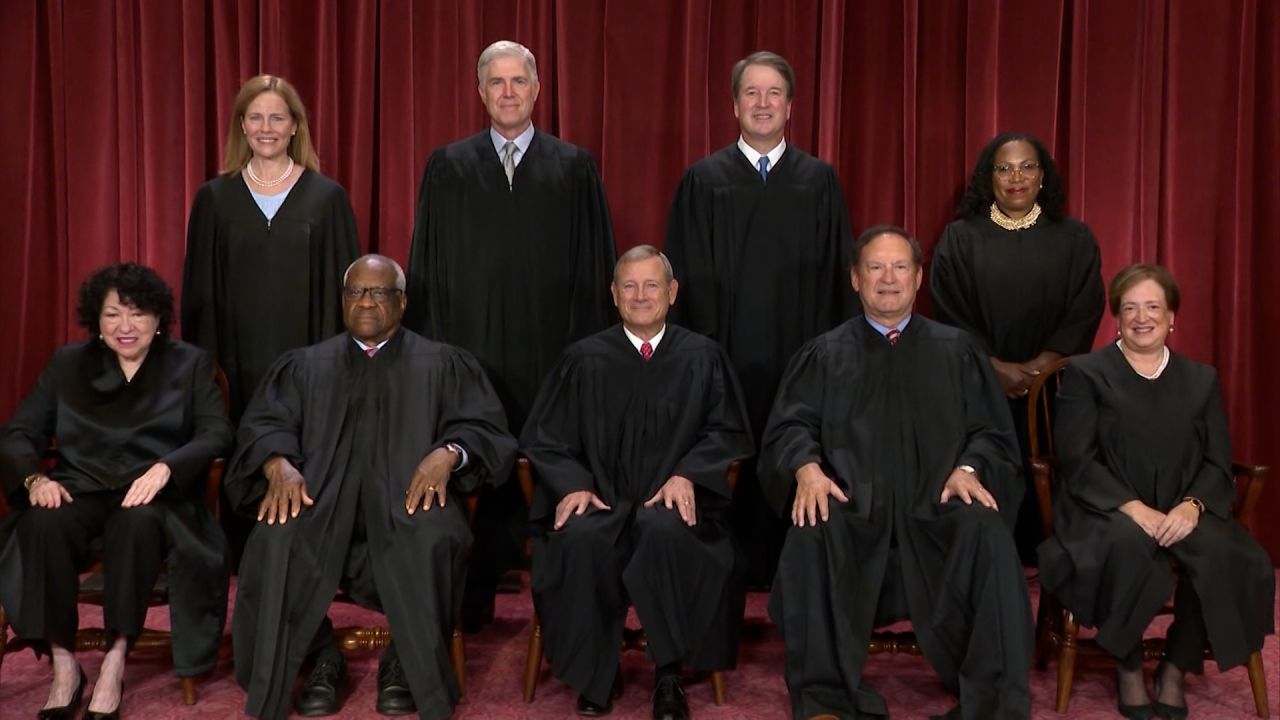
The Supreme Court hearing on November 5, 2025, represents a critical constitutional challenge to President Trump’s signature economic policy. The case centers on whether the administration properly used the 1977 International Emergency Economic Powers Act (IEEPA) to impose tariffs that traditionally fall under Congress’s taxation power [1][3]. The legal challenge, brought by a dozen Democratic-run states and private companies, questions whether Trump overstepped constitutional boundaries by using an emergency sanctions law never previously employed for tariff imposition [1].
The judicial skepticism appeared to cross ideological lines, with both conservative and liberal justices expressing concerns about the administration’s interpretation of presidential authority. Chief Justice John Roberts questioned why Trump believed he had authority under a nearly 50-year-old law never used for tariffs, noting that tariffs “has always been the core power of Congress” [1]. Notably, three Trump-appointed justices—Gorsuch, Kavanaugh, and Barrett—all expressed doubts about the administration’s arguments [1].
The case represents a fundamental test of the separation of powers between executive and legislative authority over economic policy. Justice Sonia Sotomayor stated plainly: “It’s a congressional power, not a presidential power, to tax. And you want to say tariffs are not taxes, but that’s exactly what they are” [1]. This highlights the core constitutional question that could reshape the balance of power in U.S. governance.
The case heavily involves the “major questions doctrine,” which requires clear congressional authorization for executive actions of vast economic and political significance [2]. The Federal Circuit Court’s August 2025 ruling against Trump cited this doctrine, suggesting Congress did not explicitly grant the president sweeping tariff authority through IEEPA [1].
Perhaps most significantly, the three justices appointed by Trump himself appeared skeptical of the administration’s arguments. Justice Gorsuch called it a “one way ratchet” that would make it nearly impossible for Congress to reclaim tariff authority, and raised concerns about future presidents declaring climate emergencies to impose 50 percent tariffs on gasoline-powered vehicles [1]. This suggests the case may not break along predictable ideological lines.
- Tariff Revenue Reversal: The administration has collected tens of billions of dollars monthly through these tariffs, which could require refunding if ruled illegal [1][3]. This represents a significant fiscal risk that could impact federal finances.
- Trade Policy Disruption: A ruling against Trump would significantly constrain presidential trade authority and could force renegotiation of numerous trade deals secured under tariff pressure [1].
- Precedent Setting: The decision will establish crucial boundaries for presidential emergency powers that could affect future administrations across policy areas beyond trade [1].
- Congressional Oversight Challenges: The difficulty of checking presidential emergency powers was demonstrated when, despite a bipartisan Senate majority voting to terminate three of Trump’s emergency declarations, House Republican leadership blocked votes until January [1].
- Restored Constitutional Balance: A ruling against the administration could reinforce Congress’s constitutional role in taxation and trade policy.
- Clear Legal Framework: The decision could provide clearer boundaries for future presidential actions regarding emergency powers and trade authority.
- IEEPA Authority: The Trump administration argues that IEEPA’s provision allowing the president to “regulate” imports naturally includes tariff authority, particularly when combined with inherent foreign policy powers [1].
- Historical Context: No previous president has used IEEPA to impose tariffs, and the law was passed in 1977 to constrain presidential emergency powers in peacetime, not expand them [1].
- Fentanyl Tariffs: Targeting China, Canada, and Mexico to stop drug and precursor chemical shipments [1].
- Reciprocal Tariffs: Affecting nearly every country to reduce the U.S. trade deficit, announced April 2 as “Liberation Day” [1].
- Lower Court Rulings: Both the U.S. Court of International Trade (May 2025) and Federal Circuit Court (August 2025) ruled against Trump’s tariff authority under IEEPA [1].
- Supreme Court Decision: The Court accepted the case on an expedited basis, with a decision expected before June 2026 [2].
Solicitor General D. John Sauer argued the tariffs are “regulatory” rather than “revenue-raising,” claiming they would be “most effective if no person ever paid them” [1]. However, this argument faces challenges given Trump’s frequent boasts about the billions in revenue generated by his tariffs and their importance to federal finances [1].
The hearing spanned more than two and a half hours, with the Supreme Court combining challenges from states, private companies, and toy manufacturers into a single case [1]. President Trump has called the outcome “literally, LIFE OR DEATH for our country,” highlighting the policy’s centrality to his economic agenda [1].
Insights are generated using AI models and historical data for informational purposes only. They do not constitute investment advice or recommendations. Past performance is not indicative of future results.
About us: Ginlix AI is the AI Investment Copilot powered by real data, bridging advanced AI with professional financial databases to provide verifiable, truth-based answers. Please use the chat box below to ask any financial question.