
Treasury Yield Movements Driven by Hawkish Fed Policy: Schwab Analysis
Unlock More Features
Login to access AI-powered analysis, deep research reports and more advanced features
About us: Ginlix AI is the AI Investment Copilot powered by real data, bridging advanced AI with professional financial databases to provide verifiable, truth-based answers. Please use the chat box below to ask any financial question.
Related Stocks
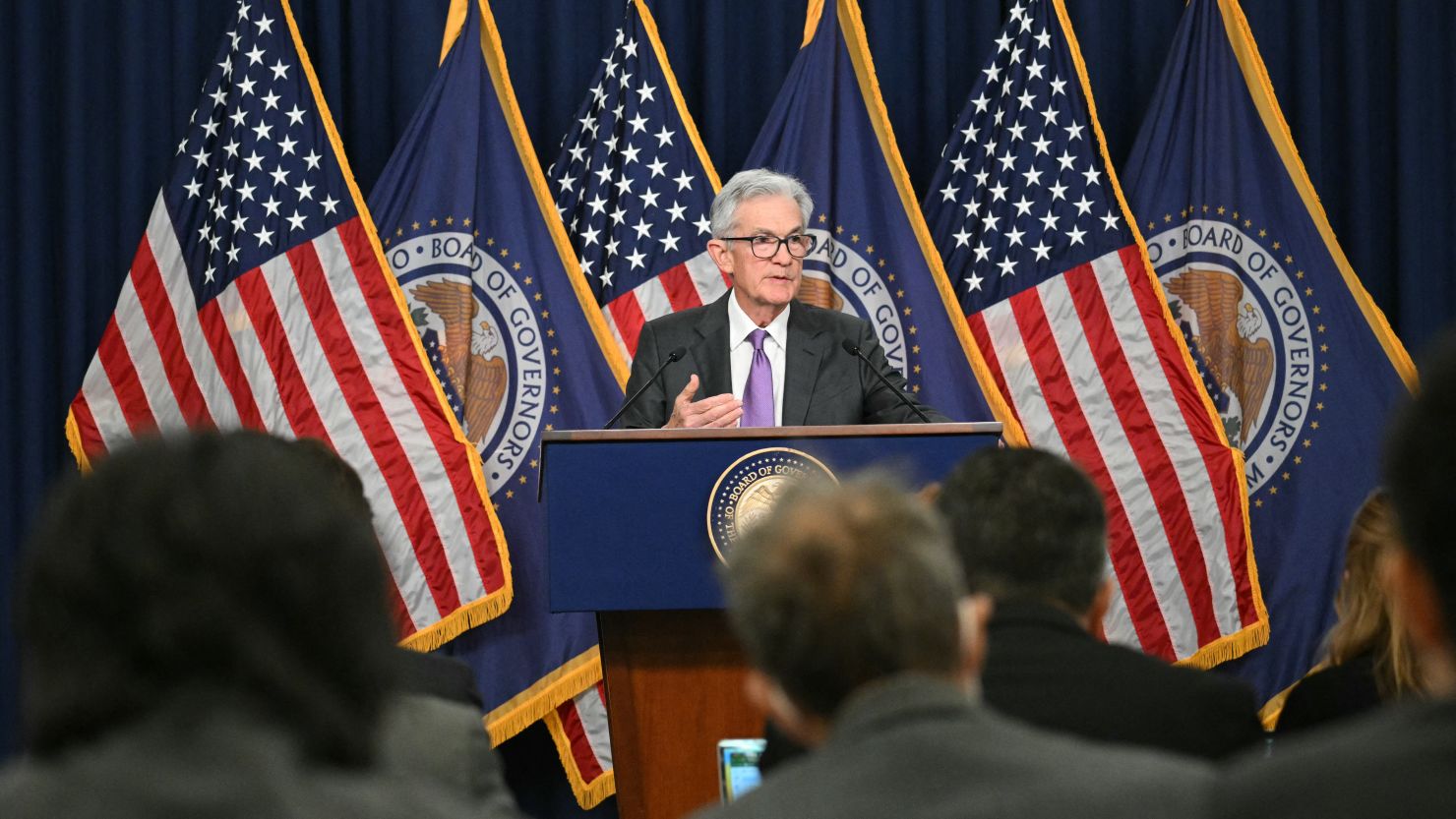
This analysis is based on the CNBC interview [1] with Charles Schwab’s Chief Fixed Income Strategist Kathy Jones on November 5, 2025, where she attributed recent Treasury yield movements to increasingly hawkish rhetoric from Federal Reserve Chair Jerome Powell. The timing of Jones’ comments aligns with significant shifts in Fed communication following the October 29, 2025 FOMC meeting, where Powell notably stated that “Further reduction in the policy rate at the December meeting is not a foregone conclusion, far from it” [2].
Recent market data shows the 10-year Treasury yield at approximately 4.11% as of November 3, 2025, representing a 0.03 percentage point increase from the previous session [0]. According to Federal Reserve data, the 10-year nominal yield stood at 4.01% while the inflation-indexed 10-year yield was at 1.73% as of November 5, 2025 [0]. The yield has fallen by 0.04 points over the past month but remains 0.18 points lower than a year ago [0].
The broader equity markets showed mixed performance around this period, with the S&P 500 closing at 6,796.29 (up 0.39%), NASDAQ at 23,499.80 (up 0.61%), and Dow Jones at 47,311.01 (up 0.45%) [0]. Sector performance revealed risk-on sentiment with Energy (+2.82%) and Industrials (+2.33%) leading gains, while defensive sectors like Consumer Defensive (-0.45%) and Utilities (-0.05%) lagged [0].
The analysis reveals that Treasury yield movements are being driven more by Fed policy communication than fundamental economic factors. Financial markets responded to Powell’s remarks by reducing bets on another rate cut at the December 9-10 meeting, with prospects now given roughly two-to-one odds against [2]. The S&P 500 ended largely flat after giving up earlier gains following Powell’s comments [2].
The sector performance data indicates a complex market dynamic where risk-on sectors (Energy, Industrials) are performing strongly despite concerns about Fed policy, suggesting that investors may be separating short-term policy concerns from longer-term economic outlook [0].
SCHW shares closed at $93.68 on November 5, down 0.17% for the session, with the stock trading in a 52-week range of $65.88 to $99.59 [0]. The company maintains a market capitalization of $170.05 billion with a P/E ratio of 21.94 [0], suggesting that even as a major financial services provider, Schwab is experiencing some pressure from the rate uncertainty.
Users should be aware that Fed communication volatility may significantly impact Treasury yields and fixed income valuations in the short term. The apparent division within the Federal Reserve suggests potential for unexpected policy shifts [2]. Historical patterns indicate that periods of Fed policy uncertainty typically lead to increased Treasury market volatility.
The analysis reveals several risk factors that warrant attention, particularly given the elevated sensitivity to Fed communications. Fixed income investors should carefully monitor duration exposure given the potential for yields to remain elevated if the Fed maintains a more hawkish stance than previously anticipated.
- Fed Communications: Watch for additional comments from Powell and other FOMC members
- Economic Data: Monitor inflation readings and employment reports that could influence policy
- Market Expectations: Track Fed funds futures and options pricing for rate cut probabilities
- Treasury Auctions: Monitor demand at upcoming Treasury auctions for yield direction signals
The interview with Kathy Jones highlights that Treasury yield movements are primarily driven by increasingly hawkish Fed policy communication rather than fundamental economic factors [1]. Recent data shows the 10-year Treasury yield at 4.11% with market expectations shifting away from anticipated December rate cuts [0][2]. The broader market shows mixed performance with risk-on sectors leading gains while defensive sectors lag, suggesting complex investor sentiment [0]. Charles Schwab’s stock performance reflects some pressure from the rate uncertainty environment [0]. The analysis underscores the importance of monitoring Fed communications, economic data releases, and Treasury auction demand for fixed income market direction.
Insights are generated using AI models and historical data for informational purposes only. They do not constitute investment advice or recommendations. Past performance is not indicative of future results.
About us: Ginlix AI is the AI Investment Copilot powered by real data, bridging advanced AI with professional financial databases to provide verifiable, truth-based answers. Please use the chat box below to ask any financial question.