
Fed Governor Miran Advocates Rate Cuts as Supreme Court Reviews Trump Tariff Authority
Unlock More Features
Login to access AI-powered analysis, deep research reports and more advanced features
About us: Ginlix AI is the AI Investment Copilot powered by real data, bridging advanced AI with professional financial databases to provide verifiable, truth-based answers. Please use the chat box below to ask any financial question.
This analysis examines two significant policy developments on November 5, 2025: Federal Reserve Governor Stephen Miran’s advocacy for additional rate cuts and the Supreme Court’s review of presidential tariff authority. These events, while distinct, intersect through their potential impact on economic policy and market stability.
Governor Stephen Miran, in an interview with Yahoo Finance Senior Reporter Jennifer Schonberger, expressed support for interest rates to be “a little bit lower than they are now” and suggested that a December rate cut would be “a reasonable action” [1]. However, analysis indicates Miran may represent an outlier perspective within the Federal Reserve system. Other officials including Chicago Fed President Goolsbee, Governor Cook, and San Francisco Fed President Daly have expressed reservations about December rate cuts [1], suggesting significant internal policy divergence ahead of the upcoming FOMC meeting.
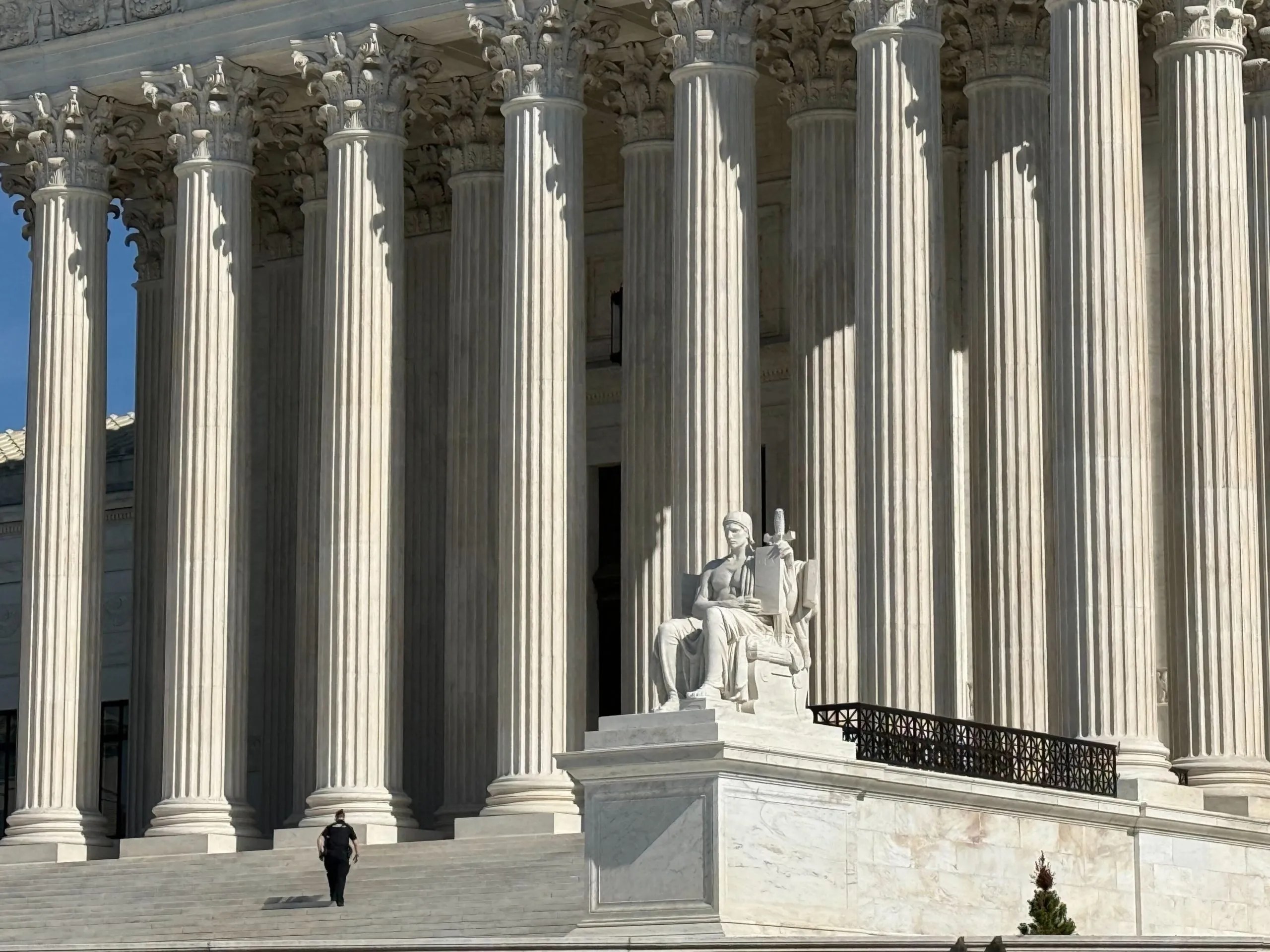
Simultaneously, the Supreme Court heard oral arguments in a case challenging the scope of presidential emergency tariff powers under the International Emergency Economic Powers Act (IEEPA) [2]. Justices reportedly appeared skeptical of Trump’s broad tariff authority, creating uncertainty about the future of approximately $200 billion in annual tariff revenue [1][2]. Governor Miran specifically warned that the loss of this revenue could impact monetary policy considerations through effects on national savings rates and broader economic implications.
The convergence of monetary and trade policy uncertainty creates a complex environment for market participants. The Fed’s internal division on rate policy, combined with potential structural changes to trade policy through judicial review, suggests heightened near-term volatility risk. Rate-sensitive sectors including financials, real estate, and utilities face uncertainty from monetary policy direction, while trade-exposed industries including manufacturing, agriculture, and consumer goods await clarity on tariff authority [1].
The public disagreement among Federal Reserve officials represents a significant departure from the typically more unified communication strategy. Miran’s hawkish-to-dovish shift, contrasting with other officials’ caution, may reflect deeper philosophical divisions about the appropriate path to neutral policy and the interpretation of economic data.
The Supreme Court case represents a fundamental test of the separation of powers, potentially reshaping presidential authority in international trade. Beyond the immediate financial implications, the ruling could establish precedents affecting future emergency powers across multiple policy domains.
Miran’s explicit connection between tariff revenue loss and monetary policy considerations highlights the often-overlooked relationship between fiscal revenue streams and central bank policy decisions. The potential $200 billion annual revenue loss could influence national savings rates, affecting the Fed’s calculation of the neutral interest rate.
The overlapping timelines create particular challenges for market participants. The Fed’s December decision approaches much faster than the Supreme Court’s typical 2-3 month ruling timeline, creating sequential policy uncertainty that may compound market volatility.
- Policy Uncertainty Volatility: The combination of Fed division and Supreme Court deliberations creates elevated near-term market volatility risk, particularly for sectors sensitive to both interest rates and trade policy [0][1].
- Monetary Policy Surprise Risk: If Miran’s position gains traction within the Fed, markets could be caught off-guard by a December rate cut despite other officials’ reservations.
- Tariff Revenue Disruption: A Supreme Court ruling against presidential tariff authority could create immediate fiscal uncertainty and impact government revenue projections [2].
- Currency Market Pressure: Trade policy uncertainty combined with potential rate cuts could create significant currency market volatility and international capital flow disruptions.
- Rate-Sensitive Sector Monitoring: Financial institutions, real estate investment trusts, and utility companies require close monitoring as they face direct exposure to interest rate direction uncertainty.
- Trade Exposure Assessment: Companies with significant international supply chains or export/import dependencies need contingency planning for potential tariff structure changes.
- Yield Curve Analysis: The policy uncertainty creates opportunities for analyzing term premia and yield curve dynamics as market participants price in various scenarios [0].
- Governor Stephen Miran publicly advocated for rates to be “a little bit lower” and called December rate cuts “reasonable” [1]
- Internal Fed division evident as other officials (Goolsbee, Cook, Daly) expressed December rate cut reservations [1]
- FOMC meeting in December represents key decision point amid policy uncertainty
- Court heard challenges to Trump’s emergency tariff authority under IEEPA [2]
- Justices appeared skeptical of broad presidential tariff powers [2]
- $200 billion in annual tariff revenue potentially at risk [1][2]
- Expected ruling timeline: 2-3 months after oral arguments
- Rate-sensitive sectors: financials, real estate, utilities face monetary policy uncertainty
- Trade-exposed industries: manufacturing, agriculture, consumer goods await tariff authority clarity
- Currency markets and international capital flows vulnerable to dual policy uncertainty
- Immediate focus: Fed December FOMC meeting decision
- Medium-term: Supreme Court ruling expected within 2-3 months
- Ongoing: Monitoring Fed communication patterns and voting alignments
Insights are generated using AI models and historical data for informational purposes only. They do not constitute investment advice or recommendations. Past performance is not indicative of future results.
About us: Ginlix AI is the AI Investment Copilot powered by real data, bridging advanced AI with professional financial databases to provide verifiable, truth-based answers. Please use the chat box below to ask any financial question.