
Supreme Court Hears Landmark Challenge to Trump's Tariff Authority
Unlock More Features
Login to access AI-powered analysis, deep research reports and more advanced features
About us: Ginlix AI is the AI Investment Copilot powered by real data, bridging advanced AI with professional financial databases to provide verifiable, truth-based answers. Please use the chat box below to ask any financial question.
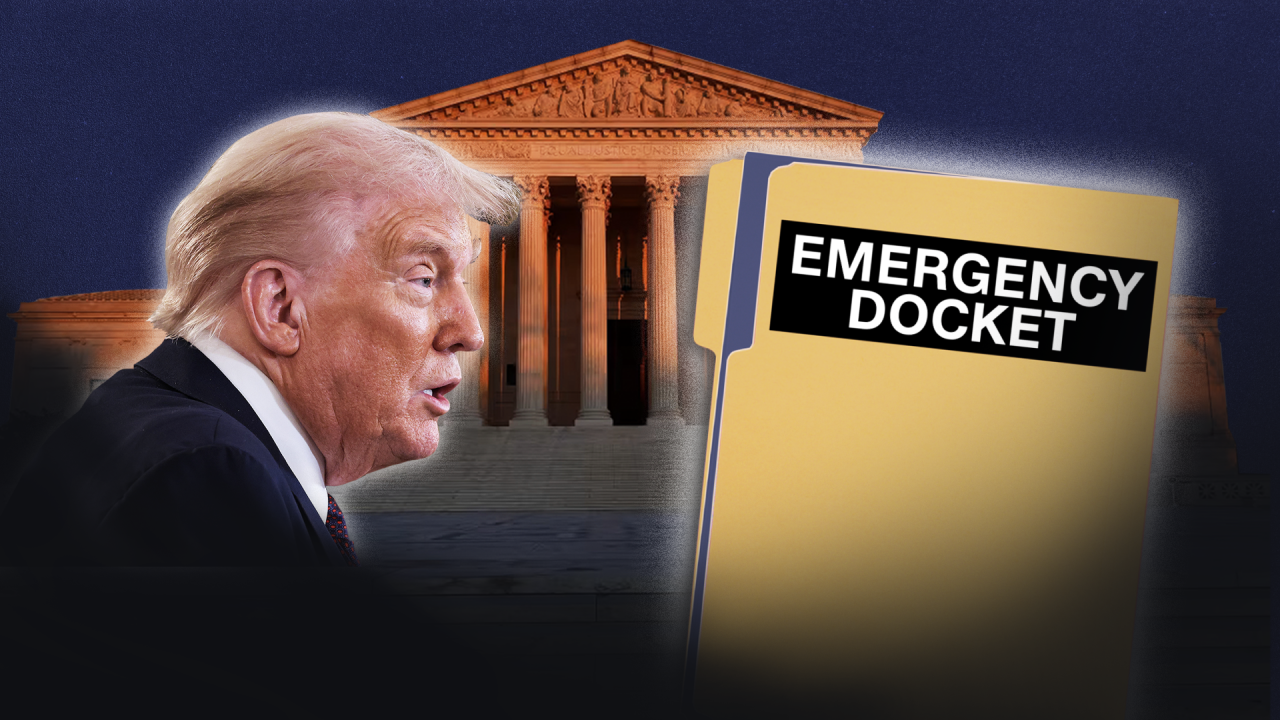
This analysis is based on the CNBC Television YouTube report [0] published on November 5, 2025, covering the Supreme Court’s oral arguments in a landmark case challenging President Trump’s tariff authority.
The Supreme Court hearing represents a constitutional showdown over presidential power, with the case challenging Trump’s use of the 1977 International Emergency Economic Powers Act (IEEPA) to implement tariffs affecting nearly every U.S. trading partner [0][1]. The fundamental legal question centers on whether Congress or the president holds constitutional authority to impose tariffs, as the U.S. Constitution explicitly grants Congress, not the president, the power to issue taxes and tariffs [2].
The tariff structure includes “Liberation Day” tariffs implemented on April 2, 2025, featuring 10% global tariffs, 25% on fentanyl-producing countries (including Canada and Mexico), reciprocal tariffs based on trade surpluses, and 30% on China (later raised to 145%) [3]. Federal courts previously ruled that Trump exceeded his IEEPA authority, finding that longstanding trade imbalances do not constitute the “unusual and extraordinary threat” required by the statute [1][4].
- Timeline: Oral arguments began November 5, 2025, with a decision expected in coming months [0][1]
- Legal Basis: Challenge centers on whether IEEPA authorizes tariffs despite not explicitly mentioning them [2][4]
- Economic Scale: Tariffs affect nearly every U.S. trading partner with potential $3 trillion revenue impact over decade [1][3]
- Market Impact: Tariffs would raise U.S. prices by 7.1% and lower GDP by 0.8% according to CSIS analysis [3]
- International Response: Canada has already imposed 25% retaliatory tariffs on $20.8 billion of U.S. exports [3]
Trade lawyers describe this as “the biggest trade case the Supreme Court has ever heard” and “the most consequential legal case concerning trade in recent memory” [1]. The outcome will significantly impact not only U.S. trade policy but also the fundamental balance of power between the executive and legislative branches of government.
Insights are generated using AI models and historical data for informational purposes only. They do not constitute investment advice or recommendations. Past performance is not indicative of future results.
About us: Ginlix AI is the AI Investment Copilot powered by real data, bridging advanced AI with professional financial databases to provide verifiable, truth-based answers. Please use the chat box below to ask any financial question.