
Supreme Court Tariffs Decision: Evercore ISI's 50-50 Assessment and Market Implications
Unlock More Features
Login to access AI-powered analysis, deep research reports and more advanced features
About us: Ginlix AI is the AI Investment Copilot powered by real data, bridging advanced AI with professional financial databases to provide verifiable, truth-based answers. Please use the chat box below to ask any financial question.
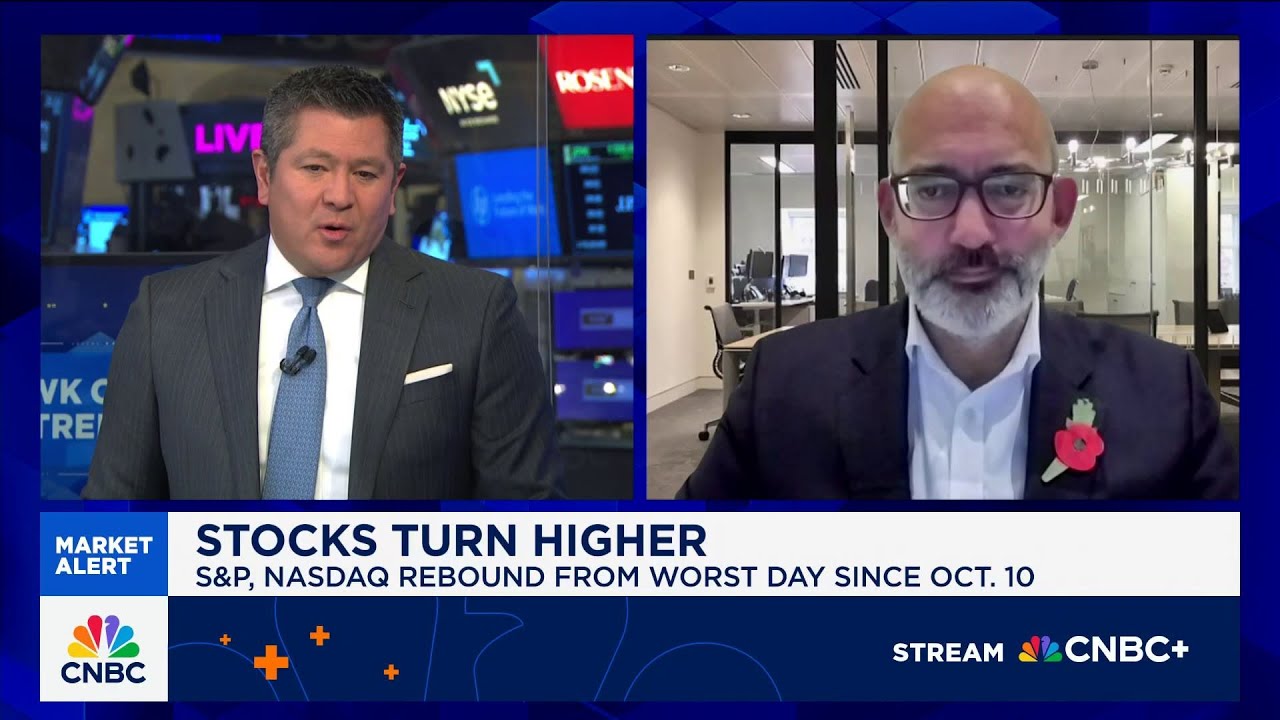
This analysis is based on the CNBC interview [Event source] with Krishna Guha, Evercore ISI Vice Chairman, published on November 5, 2025, during ongoing Supreme Court oral arguments on President Trump’s tariff authority.
The Supreme Court is currently hearing arguments on President Trump’s use of the International Emergency Economic Powers Act (IEEPA) to impose sweeping tariffs on imports from over 100 countries, including fentanyl-related and “liberation day” tariffs [1][2]. Guha’s 50-50 assessment reflects the divided judicial sentiment observed during oral arguments, creating significant uncertainty for markets and trade policy.
The case represents a fundamental challenge to presidential emergency powers, with unusual coalitions forming across ideological lines. Conservative justices, including Roberts, Gorsuch, and Barrett, joined liberal colleagues in questioning the administration’s broad interpretation of tariff authority [1]. This judicial skepticism suggests the Court may impose limits on executive power, potentially reshaping the balance between presidential and congressional authority in international trade.
- Legal Uncertainty:The 50-50 probability assessment reflects genuine judicial division, making the outcome highly unpredictable [Event source]
- Economic Disruption:A ruling either way could trigger significant market adjustments and supply chain reconfigurations
- Presidential Power Limitations:A decision against the administration could constrain future executive emergency actions across policy areas
- International Relations:The outcome will affect diplomatic relationships with over 100 trading partners
- Strategic Planning:Companies can use this period to develop contingency plans for different tariff scenarios
- Policy Development:Congressional action may be stimulated regardless of Court outcome, potentially creating more predictable trade frameworks
- Market Positioning:Investors can identify sectors likely to benefit from either tariff continuation or limitation
The Supreme Court case centers on whether President Trump exceeded his authority under IEEPA by imposing tariffs on over 100 countries [1][2]. Key judicial questioning suggests the Court may apply the major questions doctrine, requiring clear congressional authorization for such sweeping economic measures. The unusual coalition of conservative, libertarian, and business groups opposing the administration’s position further complicates the political dynamics [1].
The decision timeline remains uncertain, but the ruling is expected in 2025 with immediate economic implications. Market participants should monitor both the judicial proceedings and potential congressional responses, as legislative action may follow regardless of the Court’s outcome. The case represents a critical moment in defining the balance of power between executive and legislative branches in international trade policy.
Insights are generated using AI models and historical data for informational purposes only. They do not constitute investment advice or recommendations. Past performance is not indicative of future results.
About us: Ginlix AI is the AI Investment Copilot powered by real data, bridging advanced AI with professional financial databases to provide verifiable, truth-based answers. Please use the chat box below to ask any financial question.