
AI Valuation Concerns Trigger Global Market Sell-Off: Analysis of Jim Cramer's Comments
Unlock More Features
Login to access AI-powered analysis, deep research reports and more advanced features
About us: Ginlix AI is the AI Investment Copilot powered by real data, bridging advanced AI with professional financial databases to provide verifiable, truth-based answers. Please use the chat box below to ask any financial question.
Related Stocks
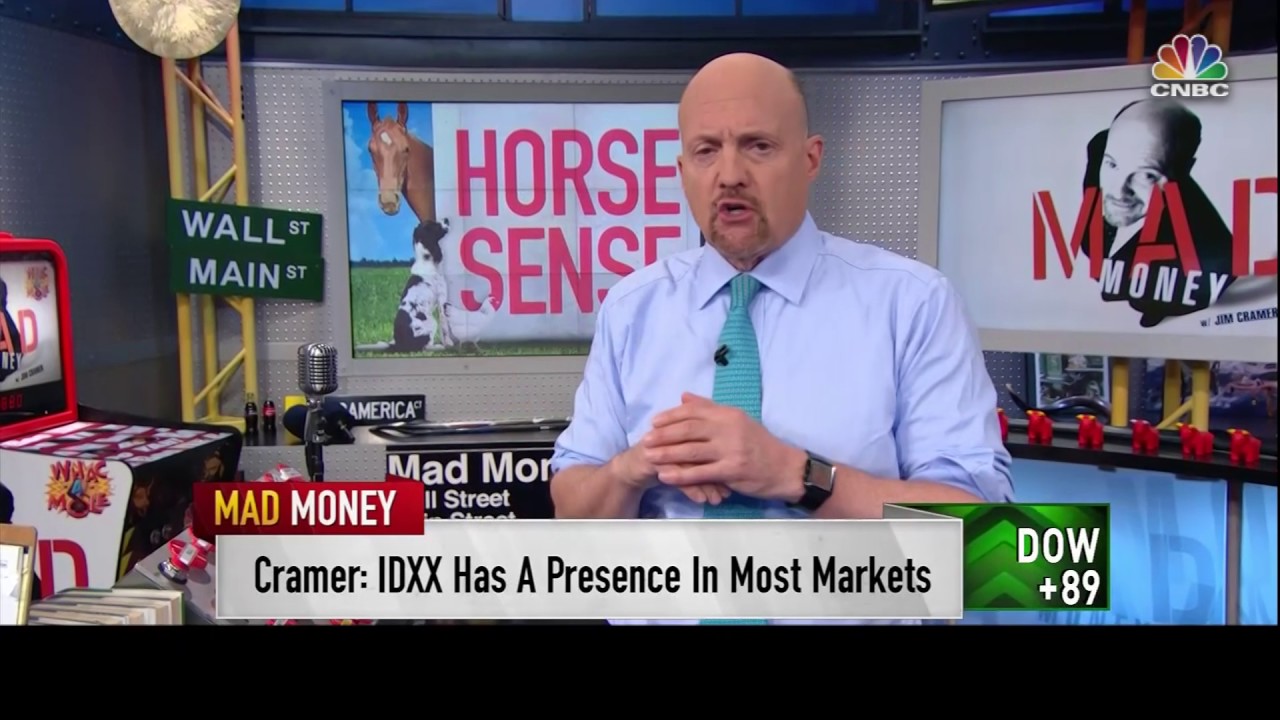
This analysis is based on the CNBC report [1] published on November 4, 2025, featuring Jim Cramer’s discussion of AI valuation concerns on his “Mad Money” program, which coincided with significant market turbulence.
The market events of November 4-5, 2025, represent a critical inflection point in AI investment sentiment. Jim Cramer argued that Wall Street was “too fixated on the high valuations of tech and speculative stocks” and that investors were overreacting to valuation fears [1]. However, the market reaction suggests deeper concerns about AI sector sustainability.
The valuation concerns triggered substantial market declines on November 4, with the S&P 500 losing 1.17%, the Dow shedding 0.53%, and the tech-heavy Nasdaq Composite sinking 2.04% [0]. The sell-off extended globally on November 5, with Asian markets experiencing significant declines, particularly SoftBank Group plunging more than 14% and wiping out approximately $32 billion in market cap [2].
- Palantir Technologies (PLTR):Dropped 7.94% to $190.74 despite beating earnings expectations, with trading volume nearly double average at 119.81M shares [0]
- NVIDIA (NVDA):Declined 3.96% to $198.69 on elevated volume of 185.78M shares [0]
- Microsoft (MSFT):Fell 0.52% to $514.33 [0]
The current market environment shows concerning valuation metrics, with the S&P 500 forward P/E above 23, its highest level since 2000 [2]. Individual AI stocks show extreme valuations, with Palantir’s P/E at 433.50, NVIDIA’s at 56.45, and Microsoft’s at 36.58 [0].
- Concentration Risk:AI-related stocks have become “the market’s most crowded trade” [2], creating vulnerability to sudden sentiment shifts
- Bubble Comparisons:Analysts increasingly compare current AI valuations to the dot-com boom of the late 1990s [2]
- Influential Voices:Michael Burry, famed for predicting the 2008 crisis, has taken significant short positions in Palantir and Nvidia [2]
Users should be aware that several factors may significantly impact AI-related investments:
-
Valuation Correction Risk:The S&P 500’s forward P/E above 23 (highest since 2000) suggests markets may be vulnerable to significant corrections [2]
-
Concentration Risk:The heavy weighting of AI stocks in major indices means any sustained sell-off could have outsized market impact
-
Liquidity Risk:High trading volumes in AI stocks suggest potential for rapid price movements
-
Regulatory Risk:Increased scrutiny of AI companies could impact business models and profitability
The market correction may present opportunities for differentiation between quality AI companies and speculative names. Companies with strong fundamentals, sustainable revenue growth, and clear competitive advantages may emerge stronger.
Critical indicators to watch include earnings quality, institutional flows, technical support levels, economic indicators affecting growth stock valuations, and competitive landscape changes.
The November 4-5 market events reflect growing tension between AI growth potential and valuation sustainability. While Jim Cramer argues that some AI stocks deserve premium valuations [1], the market appears to be undergoing a necessary reassessment of risk-reward dynamics.
The coming weeks will likely provide important signals about whether this represents a healthy correction or the beginning of a more prolonged AI bear market. Investors should focus on fundamental analysis, diversification within AI exposure, and careful monitoring of valuation metrics and market sentiment indicators.
Insights are generated using AI models and historical data for informational purposes only. They do not constitute investment advice or recommendations. Past performance is not indicative of future results.
About us: Ginlix AI is the AI Investment Copilot powered by real data, bridging advanced AI with professional financial databases to provide verifiable, truth-based answers. Please use the chat box below to ask any financial question.