
Treasury Secretary Bessent Declares Housing Market in Recession Due to Fed Rate Policies
Unlock More Features
Login to access AI-powered analysis, deep research reports and more advanced features
About us: Ginlix AI is the AI Investment Copilot powered by real data, bridging advanced AI with professional financial databases to provide verifiable, truth-based answers. Please use the chat box below to ask any financial question.
Related Stocks
This analysis is based on the Fox Business report [1] published on November 4, 2025, which reported Treasury Secretary Scott Bessent’s declaration that the U.S. housing market is in recession due to Federal Reserve interest rate policies.
Treasury Secretary Scott Bessent’s announcement on November 4, 2025, represents a significant policy statement regarding the U.S. housing market’s condition [1]. Speaking on CNN’s “State of the Union,” Bessent attributed the housing recession directly to the Federal Reserve’s interest rate policies, specifically calling for rate cuts to reduce mortgage rates and stimulate housing activity [1][2].
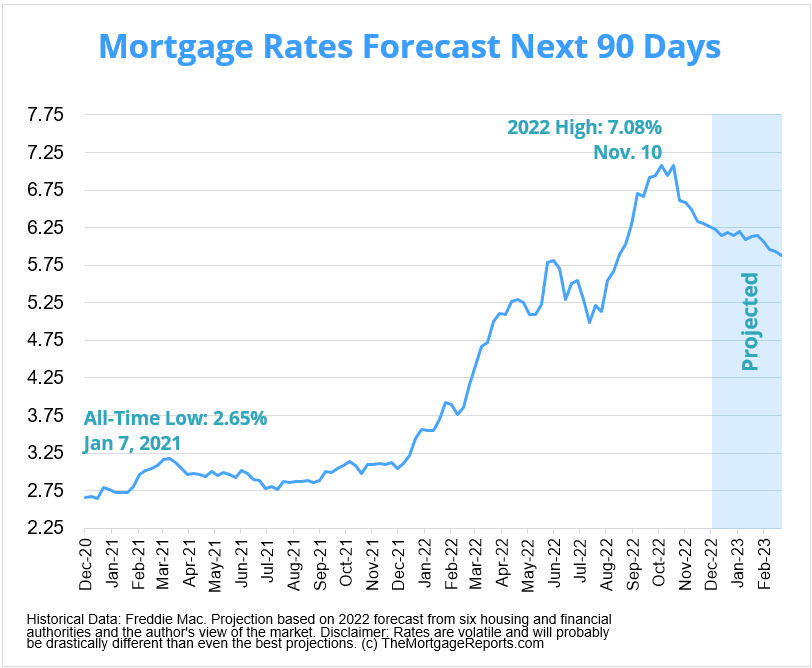
The housing market data supports Bessent’s assessment, showing substantial distress across multiple metrics. Home sales have stagnated at approximately 4 million existing homes annually for the past 2.5 years, representing a 20% decline from the historical average of 5 million homes sold annually before the COVID-19 pandemic [1]. This sales contraction has occurred despite mortgage rates recently falling to 6.17% - their lowest level in over a year - though still significantly above historical norms [1].
The market impact is clearly reflected in homebuilder stock performance. D.R. Horton (DHI) has declined 14.37% from October 1 to November 4, 2025, falling from $169.89 to $145.48, while Lennar Corporation (LEN) dropped 3.90% over the same period, declining from $126.50 to $121.57 [0]. Both stocks trade substantially below their 52-week highs, indicating investor concerns about sector fundamentals [0].
Interestingly, broader market indices showed only modest declines on November 4 - S&P 500 down 0.24%, NASDAQ down 0.44%, and Dow Jones down 0.13% [0] - suggesting the housing recession concerns may be sector-specific rather than indicating broader economic weakness.
The housing market is experiencing what National Association of Realtors Deputy Chief Economist Jessica Lautz described as “a tale of two cities” [1]. This bifurcation reveals several critical dynamics:
Decision-makers should closely track several critical indicators:
- Fed Policy Signals: Any changes in the Federal Reserve’s stance on interest rates will be crucial for housing market recovery prospects [3]
- Mortgage Rate Trends: Continued declines below 6% could significantly improve affordability and stimulate demand [1]
- Housing Inventory Levels: Changes in supply dynamics will impact price equilibrium and market activity [1]
- Employment and Income Data: Housing market health correlates strongly with employment levels and income growth trends
- Consumer Confidence Metrics: Housing activity responds strongly to economic sentiment and future expectations
The current environment may present opportunities for:
- Long-term Investors: Attractive entry points in quality homebuilder stocks if the housing recession proves cyclical rather than structural [0]
- First-time Buyers: Improved affordability if mortgage rates continue declining from current levels [1]
- Real Estate Services: Companies focused on renovation and remodeling may benefit as homeowners stay in place longer
The housing market recession declared by Treasury Secretary Bessent appears well-founded based on available data, with home sales 20% below historical averages and homebuilder stocks reflecting significant weakness [1][0]. The market shows clear bifurcation between cash buyers and financed purchasers, with first-time buyers particularly disadvantaged [1].
While broader economic indicators remain stable according to Bessent, the housing sector’s importance to overall economic growth means prolonged weakness could create broader economic impacts through reduced consumer spending and construction activity [1][2]. The policy divergence between the Treasury Department’s call for rate cuts and the Federal Reserve’s current stance creates additional uncertainty for market participants [3].
The 30-year mortgage rate at 6.17% represents a recent improvement but remains elevated by historical standards, continuing to constrain affordability for many potential buyers [1]. Homeowners’ reluctance to sell (holding periods now averaging 11 years) has created inventory shortages that support prices despite weak demand, suggesting market dynamics may remain constrained until either affordability improves significantly or economic conditions force more inventory onto the market [1].
Insights are generated using AI models and historical data for informational purposes only. They do not constitute investment advice or recommendations. Past performance is not indicative of future results.
About us: Ginlix AI is the AI Investment Copilot powered by real data, bridging advanced AI with professional financial databases to provide verifiable, truth-based answers. Please use the chat box below to ask any financial question.