
US Labor Market Analysis: Job Openings Hit 4.5-Year Low Amid Government Shutdown
Unlock More Features
Login to access AI-powered analysis, deep research reports and more advanced features
About us: Ginlix AI is the AI Investment Copilot powered by real data, bridging advanced AI with professional financial databases to provide verifiable, truth-based answers. Please use the chat box below to ask any financial question.
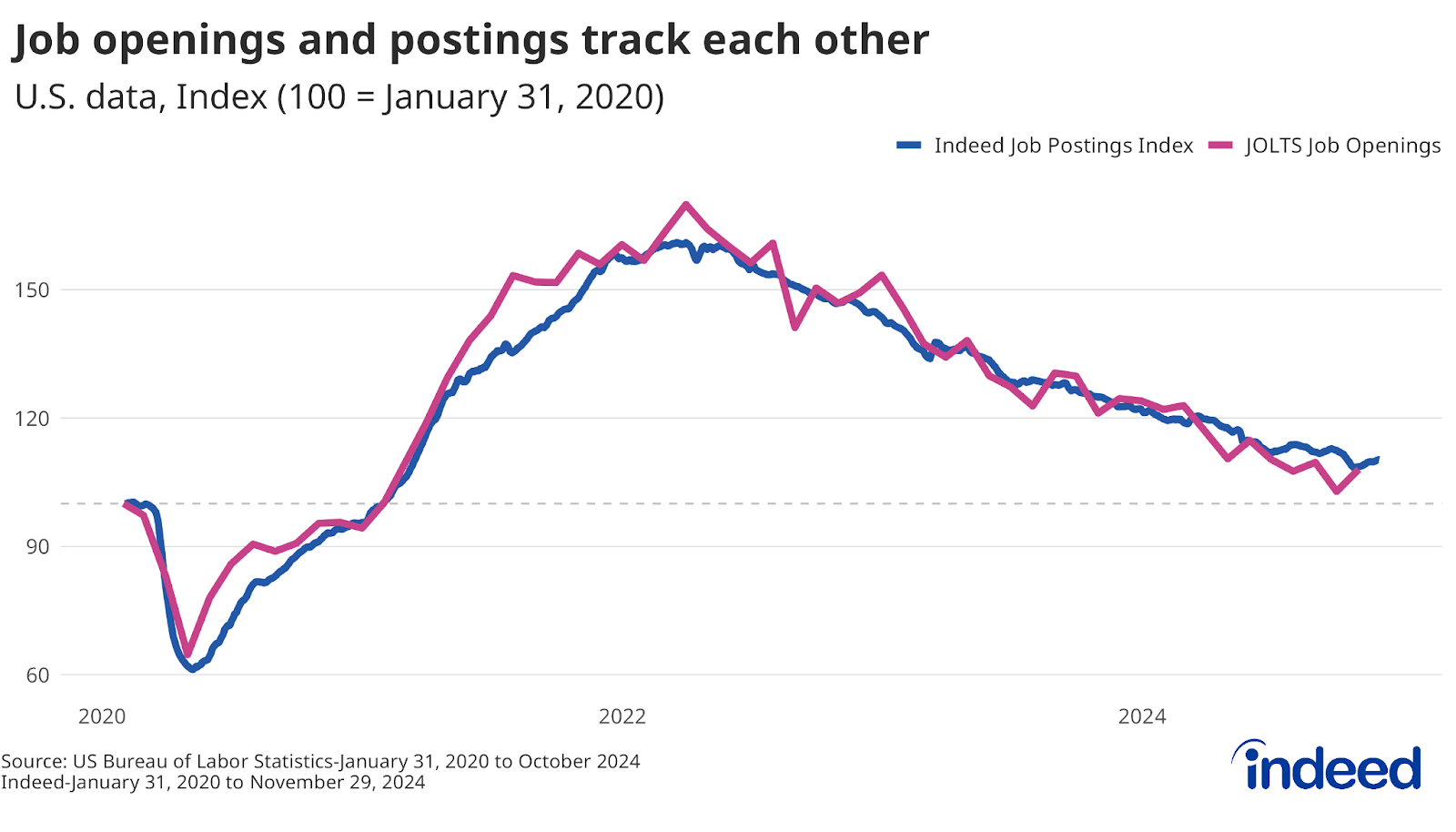
This analysis is based on the CNBC report [1] published on November 4, 2025, which revealed that U.S. job openings slumped to their lowest level in more than 4½ years as October 2025 concluded. The Indeed Job Postings Index fell to 101.9 as of October 24, 2025, representing the lowest level since February 2021 [1]. This significant labor market deterioration occurred against the backdrop of what has become the longest federal government shutdown in U.S. history, now tied with the 2018-2019 shutdown at 35 days [2][3].
The timing of this labor market weakness is particularly critical given the unprecedented data gaps created by the government shutdown. Key federal economic reports, including the Bureau of Labor Statistics’ Job Openings and Labor Turnover Survey (JOLTS) and monthly nonfarm payrolls data, have been delayed, forcing policymakers and analysts to rely increasingly on alternative data sources like Indeed’s metrics [1]. This data vacuum has elevated the importance of private-sector labor market intelligence in economic policy decisions.
The employment services industry faces immediate challenges, with Indeed’s data showing a 0.5% decline from the beginning of October and approximately 3.5% decline from mid-August levels [1]. This contraction directly impacts revenue streams for job platforms, recruitment agencies, and staffing firms dependent on transaction volumes and employer recruitment spending. Concurrently, salary offerings have declined, with year-over-year wages in Indeed postings rising only 2.5% in August, down from 3.4% in January [1].
The Federal Reserve has responded to labor market weakness with monetary policy easing, approving its second straight interest rate cut on October 29, 2025, lowering the benchmark rate to a target range of 3.75%-4% [5][7]. Notably, Fed Governor Lisa Cook specifically cited Indeed data, stating “Hiring is slowing. We see this from Indeed, from job postings” [1]. This represents a significant validation of private-sector labor market data in monetary policy decisions and potentially reshapes the landscape of economic intelligence gathering.
The Treasury Department estimates that the shutdown is reducing current quarter GDP growth through multiple channels: direct output loss from furloughed workers, reduced consumption from delayed paychecks, and ancillary impacts on complementary industries [3]. The shutdown has affected approximately 900,000 furloughed federal employees and 2 million workers working without pay [2], creating substantial economic drag that extends beyond the immediate labor market indicators.
The crisis has accelerated the shift toward private-sector labor market intelligence, creating competitive advantages for companies with robust data collection capabilities and real-time analytics platforms [1][6]. ADP’s recent report showing a “tepid recovery” with average weekly employment increases of 14,250 jobs in October highlights the growing importance of private data sources [6]. This trend toward alternative economic indicators could permanently reshape how labor markets are monitored and analyzed.
While overall job openings have declined, certain sectors may show resilience. Indeed’s holiday job search data indicates that seasonal hiring patterns remain active, suggesting sector-specific opportunities that could benefit specialized recruitment platforms [4]. This divergence indicates that the labor market weakness is not uniform across all industries, with technology and healthcare sectors potentially showing more resilience than government-dependent industries.
The analysis reveals several risk factors that warrant attention. The extended duration of the government shutdown (35 days and ongoing) creates prolonged uncertainty that differs from shorter historical shutdowns, with each additional week increasing economic damage and data gaps [2][3]. The reliance on private-sector labor market data introduces potential biases and coverage gaps that may affect policy accuracy [1]. Additionally, the combination of fewer job openings and slower wage growth indicates reduced bargaining power for workers, particularly those in sectors most affected by the government shutdown.
The crisis has created unexpected opportunities for private-sector data providers and recruitment technology companies. Companies like Indeed, ADP, and other labor market analytics firms have become critical sources of economic intelligence, potentially increasing their market value and influence in economic policy discussions [1][6]. The Federal Reserve’s accommodative monetary policy stance, with recent rate cuts and expressed concerns about labor market weakness, suggests policy will remain supportive of economic recovery once the shutdown ends [5][7].
The approaching holiday season may provide temporary relief for the labor market, with Indeed data showing increased interest in seasonal positions, potentially moderating the overall decline [4]. However, the full impact of the government shutdown on fourth-quarter economic performance remains uncertain, particularly given the delayed federal data releases that would normally provide comprehensive labor market visibility.
The U.S. labor market reached a significant inflection point in October 2025, with job openings falling to their lowest level since February 2021 according to Indeed’s Job Postings Index of 101.9 [1]. This decline occurred during the longest federal government shutdown in U.S. history, which has created unprecedented data gaps by delaying key federal economic reports including JOLTS and nonfarm payrolls data [2][3].
The Federal Reserve has responded with monetary policy easing, cutting interest rates for the second consecutive meeting to a target range of 3.75%-4% [5][7]. Fed officials have explicitly cited private-sector data sources like Indeed in their policy deliberations, marking a significant shift in economic intelligence reliance [1].
The employment services industry faces immediate challenges from declining job postings and salary offerings, with year-over-year wage growth in Indeed postings slowing to 2.5% in August from 3.4% in January [1]. However, the crisis has accelerated the shift toward private-sector labor market analytics, creating opportunities for companies with robust data collection capabilities [1][6].
The Treasury Department estimates substantial GDP impact from the shutdown through multiple channels, affecting approximately 900,000 furloughed federal employees and 2 million workers working without pay [2][3]. Seasonal hiring patterns may provide some moderation to the overall decline, with Indeed data showing increased interest in holiday positions [4].
The combination of labor market weakness and Federal Reserve rate cuts suggests economic headwinds that could affect corporate earnings across multiple sectors, while simultaneously increasing demand for alternative economic data services [5][7].
Insights are generated using AI models and historical data for informational purposes only. They do not constitute investment advice or recommendations. Past performance is not indicative of future results.
About us: Ginlix AI is the AI Investment Copilot powered by real data, bridging advanced AI with professional financial databases to provide verifiable, truth-based answers. Please use the chat box below to ask any financial question.