
November 2025 High Intraday Volatility: Drivers & Market Impact Analysis
Unlock More Features
Login to access AI-powered analysis, deep research reports and more advanced features
About us: Ginlix AI is the AI Investment Copilot powered by real data, bridging advanced AI with professional financial databases to provide verifiable, truth-based answers. Please use the chat box below to ask any financial question.
Related Stocks
The second highest intraday volatility event of 2025 occurred on November 20, driven by two core factors: (1) mixed signals from the delayed September jobs report [2], which amplified uncertainty around Federal Reserve rate cuts; and (2) valuation concerns in AI stocks, particularly NVIDIA (NVDA) [0].
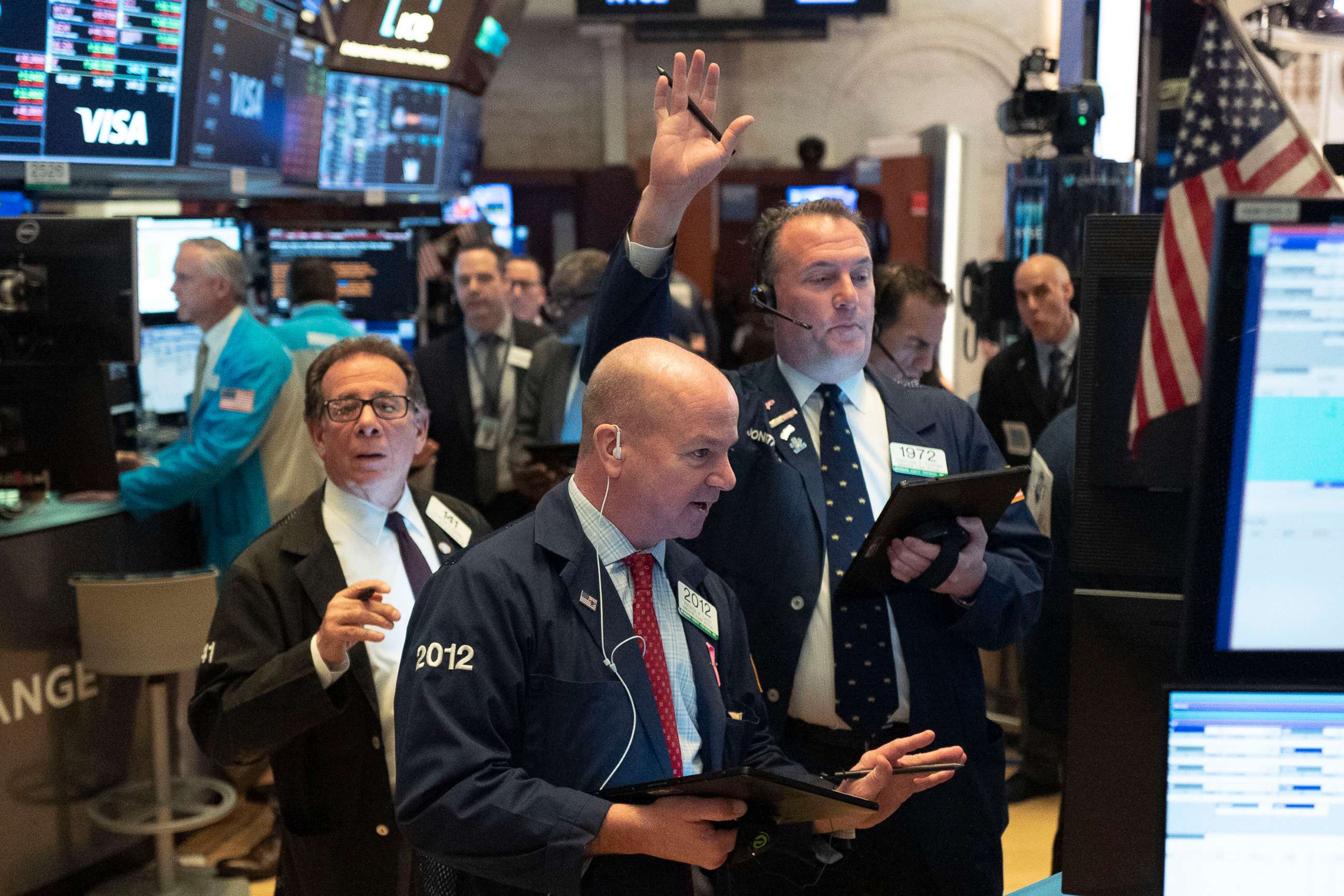
On Nov20, major US indices experienced sharp declines: NASDAQ (-4.25%), S&P500 (-2.96%), Dow (-1.75%) [0]. This volatility was reflected in the VIX (fear gauge) spiking to 26.42 (+27.14%)—a clear indicator of market stress [0]. Defensive sectors outperformed during this period, with Utilities up 3.225% as investors shifted to safer assets, while Consumer Defensive (-1.29%) and Basic Materials (-0.40%) underperformed [0].
The mixed jobs report added ambiguity: strong nonfarm payroll growth (119k vs expected) suggested no immediate need for Fed rate cuts, but rising unemployment (from 3.8% to 3.9%) hinted at economic softening [2]. This duality contributed to the market’s whipsaw reaction, as noted in the Seeking Alpha article [1].
- Cross-Domain Impact: Fed policy uncertainty (fueled by mixed economic data) had a dual effect—driving broad market volatility and triggering a correction in overvalued AI stocks like NVDA [0,2].
- Volatility Recovery Pattern: The partial recovery of indices (NASDAQ +1.73%, S&P500 +1.03% on Nov24) indicates that markets are still pricing in potential rate cuts, despite short-term stress [0].
- Sector Rotation: Defensive sector outperformance (Utilities) during volatility highlights investor preference for stability amid uncertainty, a trend that may persist until Fed policy becomes clearer [0].
- Fed Policy Uncertainty: Mixed economic data may lead to continued intraday volatility as markets react to future Fed announcements [2].
- AI Valuation Correction: Overstretched valuations in AI stocks (like NVDA) could result in further corrections if earnings fail to meet growth expectations [0].
- Economic Softening: Rising unemployment (from jobs report) hints at potential slowdown, which may impact consumer spending and corporate earnings [2].
- Defensive Sector Hedge: Utilities and other defensive sectors offer a buffer against volatility, as seen in their outperformance during the Nov20 event [0].
- Recovery Potential: Partial index recovery post-Nov20 suggests that markets may rebound if Fed signals a dovish stance in future meetings [0].
- Volatility Metrics: VIX spiked to26.42 on Nov20, then fell to20.52 by Nov24 as markets stabilized [0].
- NVDA Performance: NVDA dropped7.81% on Nov20 (from $195.95 to $180.64) due to AI valuation concerns, with a partial recovery (+1.70%) on Nov24 [0].
- Sector Trends: Defensive sectors (Utilities) outperformed, while cyclical sectors (Consumer Defensive) underperformed during volatility [0].
- Policy Context: The mixed jobs report has kept Fed rate cut expectations nebulous, contributing to ongoing market uncertainty [2].
Insights are generated using AI models and historical data for informational purposes only. They do not constitute investment advice or recommendations. Past performance is not indicative of future results.
About us: Ginlix AI is the AI Investment Copilot powered by real data, bridging advanced AI with professional financial databases to provide verifiable, truth-based answers. Please use the chat box below to ask any financial question.