
Federal Reserve Policy Debate and Market Vulnerability Analysis
Unlock More Features
Login to access AI-powered analysis, deep research reports and more advanced features
About us: Ginlix AI is the AI Investment Copilot powered by real data, bridging advanced AI with professional financial databases to provide verifiable, truth-based answers. Please use the chat box below to ask any financial question.
Related Stocks
This analysis is based on the Forbes op-ed [1] published on November 4, 2025, which warns that Federal Reserve monetary policy decisions could determine whether the current bull market continues or faces a significant downturn.
The current market environment reflects growing concerns about Federal Reserve policy direction. Major U.S. indices have shown recent weakness, with the S&P 500 closing at 6,851.97 (down 0.44%), NASDAQ at 23,834.72 (down 0.49%), and Dow Jones at 47,336.69 (down 0.76%) on November 3 [0]. This market weakness coincides with significant policy uncertainty following the Fed’s October 29 rate cut of 25 basis points, bringing the policy rate to 3.75%-4.0% [2][3].
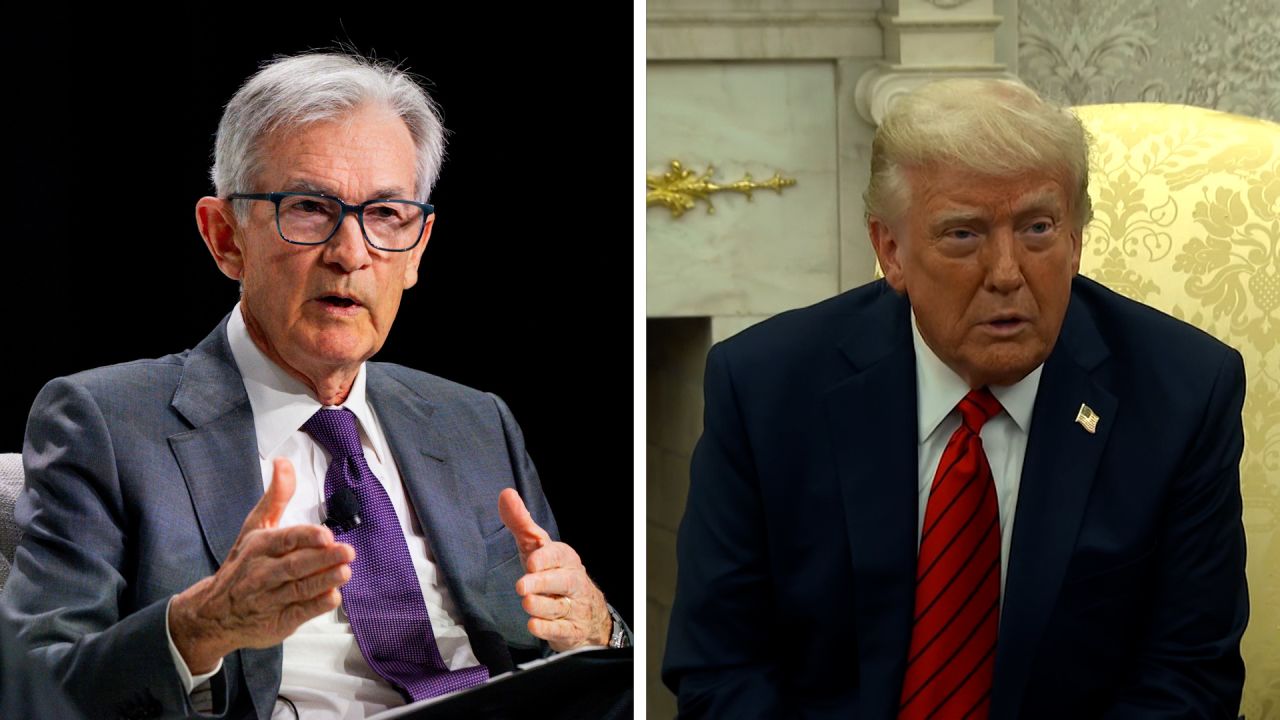
Chair Jerome Powell’s statement that “a further reduction in the policy rate at the December meeting is not a foregone conclusion” [2] has created market anxiety. Internal Fed divisions are reportedly significant, with officials having “strongly differing views” on a December rate cut [4]. This policy uncertainty typically leads to increased market volatility.
Current sector performance reveals a clear defensive rotation by investors. Consumer Defensive sectors led with +1.39% gains, followed by Healthcare (+0.43%) and Consumer Cyclical (+0.27%) [0]. Meanwhile, growth-oriented sectors declined sharply, with Communication Services falling -2.97%, Basic Materials -2.05%, and Technology -0.74% [0]. This rotation pattern suggests investors are positioning for potential market turbulence, supporting Forbes’ warning about market vulnerability.
Forbes emphasizes gold as “traditionally the best barometer of monetary issues,” noting that “its price has doubled in the past two years” [1]. Current market data validates this concern dramatically:
- Gold reached historic highs above $2,700 per ounce in October 2025 [5]
- Gold prices have surged more than 180% since mid-October 2022 [6]
- Some sources indicate gold breached the $4,000 per ounce mark by mid-2025 [7]
This extraordinary increase in gold prices suggests significant underlying inflation concerns and monetary policy uncertainty, reinforcing Forbes’ warning about “future inflation trouble” [1].
The analysis reveals unusual political pressure on Federal Reserve independence, with President Trump and Fed Governor Stephen Miran advocating for more aggressive rate cuts [1]. This political interference adds another layer of uncertainty for markets, as historical patterns show that questioning Fed independence often leads to market turbulence.
Forbes argues that U.S. interest rates remain “higher than those of Japan and the EU and are about the same as Britain’s” despite stronger U.S. economic fundamentals [1]. This assessment suggests potential competitive disadvantages for U.S. businesses and could pressure the Fed toward more accommodative policy despite inflation concerns.
The Forbes piece highlights concerns about small business lending conditions, though specific quantitative data is lacking. This represents an important area for monitoring, as credit constraints could significantly impact economic growth and employment.
- Policy Uncertainty: The Fed’s internal divisions and political pressure create unpredictable monetary policy [2][4]
- Inflation Signals: Dramatic gold price increases suggest underlying inflation concerns [5][6][7]
- Market Rotation: Shift toward defensive sectors indicates investor anxiety [0]
- Technical Weakness: Major indices showing consistent daily declines [0]
Decision-makers should closely monitor:
- December Fed Meeting: Powell’s statement that December cuts are “not a foregone conclusion” makes this meeting critical [2]
- Inflation Data: Core inflation remains above 3% and expected to stay elevated through mid-2026 [6]
- Political Developments: Further administration pressure on the Fed could impact market confidence
- Gold Price Trends: Continued gold price increases would reinforce inflation concerns
- Small Business Credit: Monitoring lending conditions would validate credit constraint concerns
Despite the risks, current market weakness could present opportunities for strategic positioning, particularly if the Fed adopts more accommodative policy in response to political and economic pressures.
The current market environment is characterized by significant policy uncertainty at the Federal Reserve, with internal divisions and external political pressure creating an unpredictable monetary policy landscape [1][2][4]. Market participants have responded with defensive sector rotation, while dramatic gold price increases suggest underlying inflation concerns [0][5][6]. The December Fed meeting represents a critical inflection point that could determine market direction through year-end and beyond [2]. Historical patterns suggest that policy uncertainty combined with inflation concerns typically leads to increased market volatility, which should be factored into strategic planning [0][6].
Insights are generated using AI models and historical data for informational purposes only. They do not constitute investment advice or recommendations. Past performance is not indicative of future results.
About us: Ginlix AI is the AI Investment Copilot powered by real data, bridging advanced AI with professional financial databases to provide verifiable, truth-based answers. Please use the chat box below to ask any financial question.