
Market Analysis: Large-Cap Growth Dominance Amid Fed Policy Uncertainty
Unlock More Features
Login to access AI-powered analysis, deep research reports and more advanced features
About us: Ginlix AI is the AI Investment Copilot powered by real data, bridging advanced AI with professional financial databases to provide verifiable, truth-based answers. Please use the chat box below to ask any financial question.
Related Stocks
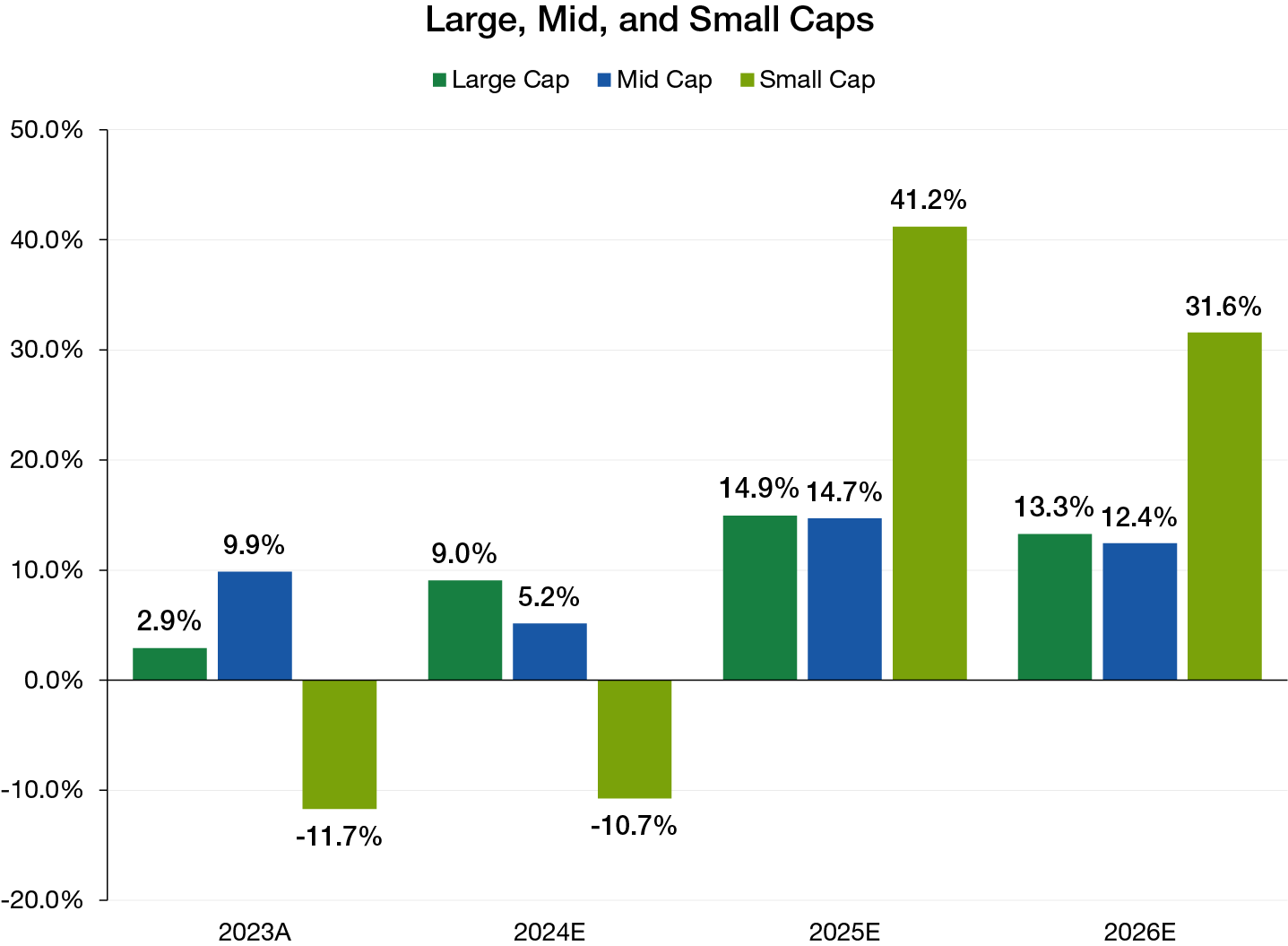
This analysis is based on the Seeking Alpha report [1] published on November 4, 2025, which highlighted US large-cap ETFs outperforming small-caps by a wider margin in October, with tech and growth sectors continuing to lead over value and defensive sectors.
The market landscape reflects a complex interplay of factors affecting investor sentiment and asset allocation. Recent performance data [0] shows the S&P 500 gaining 7.24% over 60 days to $6,851.97, while the NASDAQ Composite outperformed with an 11.07% increase to $23,834.72, demonstrating the continued dominance of large-cap technology stocks. The Russell 2000, despite showing strong gains of 11.22% to $2,471.24, exhibits higher volatility (1.22%) and is underperforming in pre-market trading [0].
Federal Reserve policy uncertainty has emerged as a primary market driver. Chair Jerome Powell’s statement that December rate cuts are “not a foregone conclusion” has significantly altered market expectations, reducing the probability of December easing to roughly two-to-one odds [2]. This uncertainty follows the recent 25-basis point cut to the 3.75%-4.00% range and reflects “strongly differing views” among policymakers [2].
The cryptocurrency market, particularly Bitcoin, serves as a key indicator of risk appetite. Bitcoin’s decline to two-week lows around $104,000, representing a 17% drop from all-time highs [4][5], signals broader risk aversion in the market. Technical analysts are monitoring the $99,000-$102,000 zone as critical support levels [4], with the cryptocurrency’s weakness potentially dragging related sentiment lower across speculative assets.
- Fed Policy Uncertainty: The December 9-10 Fed meeting remains a significant market wildcard, with Powell’s comments creating heightened volatility risk [2][3]
- Data Gaps: Government shutdown delays in economic data are creating an information vacuum that could lead to mispricing and increased volatility [2]
- Technical Corrections: Major indices trading near recent highs are vulnerable to pullbacks, particularly if risk sentiment deteriorates further [0]
- Cryptocurrency Contagion: Bitcoin’s decline below key support levels could trigger broader risk-off sentiment across asset classes [4][5]
- Defensive Sector Strength: Current rotation into Consumer Defensive and Healthcare sectors (+1.39% and +0.43% respectively) [0] may provide relative stability during uncertain periods
- Quality Growth Premium: Large-cap technology companies continue to demonstrate resilience, potentially benefiting from continued market preference for quality growth names [1]
- Data-Driven Positioning: Resolution of the government shutdown could provide clarity on economic fundamentals, creating opportunities for data-driven investment decisions
Current market conditions reflect large-cap growth dominance with the S&P 500 at $6,851.97 (+7.24% 60-day) and NASDAQ at $23,834.72 (+11.07% 60-day) [0]. Fed policy uncertainty has intensified following Chair Powell’s comments on December rate cuts not being a “foregone conclusion” [2][3], while Bitcoin’s decline to $104,000 (-17% from highs) [4][5] indicates broader risk aversion.
Sector performance shows defensive rotation with Consumer Defensive (+1.39%) and Healthcare (+0.43%) leading pre-market gains, while Communication Services (-2.97%) and Technology (-0.74%) lag [0]. The ongoing government shutdown continues to delay crucial economic data [2], creating an information vacuum that complicates investment decisions.
Technical analysis suggests key support levels for the S&P 500 at $6,744 (20-day MA) and Bitcoin at $99,000-$102,000 [0][4], with market vulnerability to corrections given current positioning near recent highs. Investors should monitor Fed commentary, government shutdown resolution, and risk appetite indicators for market direction signals.
Insights are generated using AI models and historical data for informational purposes only. They do not constitute investment advice or recommendations. Past performance is not indicative of future results.
About us: Ginlix AI is the AI Investment Copilot powered by real data, bridging advanced AI with professional financial databases to provide verifiable, truth-based answers. Please use the chat box below to ask any financial question.