
Market Concentration Analysis: Cramer's Defense and Tech Sector Dynamics
Unlock More Features
Login to access AI-powered analysis, deep research reports and more advanced features
About us: Ginlix AI is the AI Investment Copilot powered by real data, bridging advanced AI with professional financial databases to provide verifiable, truth-based answers. Please use the chat box below to ask any financial question.
Related Stocks
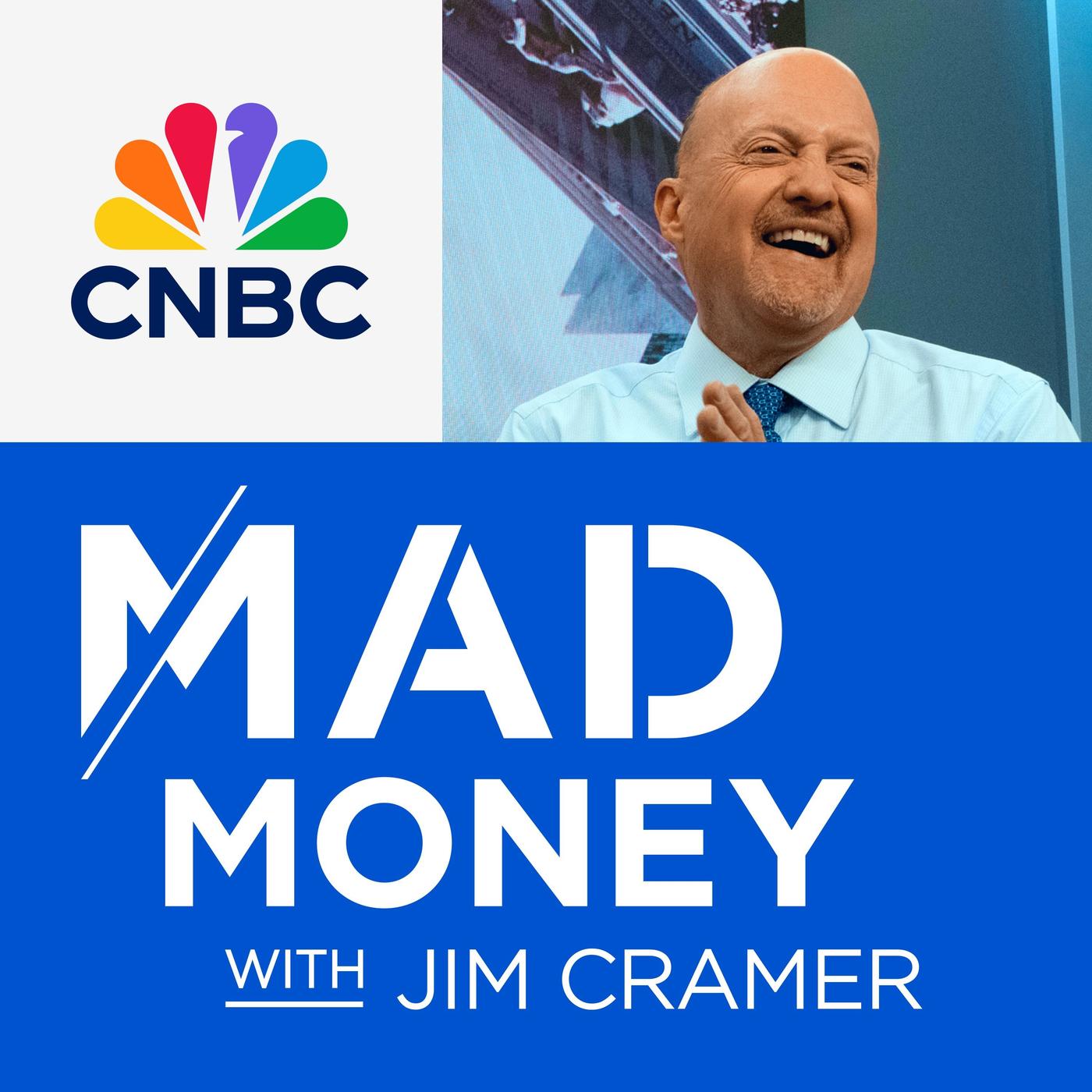
This analysis is based on Jim Cramer’s commentary on CNBC’s “Mad Money” [1] discussing current market concentration and its implications for investors, published on November 3, 2025. The session occurred amid mixed market performance, with major indices closing lower while defensive sectors showed relative strength [0].
The trading session on November 3, 2025, revealed cautious investor sentiment, with the S&P 500 declining 0.44% to 6,851.98, Nasdaq Composite falling 0.49% to 23,834.72, and the Dow Jones Industrial Average underperforming with a 0.76% loss to 47,336.69 [0]. Notably, defensive sectors outperformed significantly, with Consumer Defensive stocks gaining 1.39%, while Communication Services and Technology sectors lagged, declining 2.97% and 0.74% respectively [0].
Jim Cramer delivered a forceful defense of market concentration, specifically targeting criticism of the Magnificent Seven’s dominance [1][2]. He characterized concerns about concentration as a “money-losing narrative,” emphasizing that these technology giants are fundamentally connected through superior growth rates rather than merely their products or technologies [1]. Cramer stated, “It’s growth that matters to stock investors, not the data center, not accelerated computing, not even artificial intelligence” [1]. He dismissed comparisons to a Jenga tower, noting that concentration concerns have proven incorrect at every milestone since these stocks represented just 15% of the S&P 500 [2].
Despite Cramer’s optimistic stance, technology stocks faced pressure during the session. However, individual mega-cap tech companies demonstrated strong performance:
-
Amazon (AMZN): Surged 4.00% to $254.00, establishing a new record high [0][3]. The stock has gained 14% over the past week following strong earnings showing AWS growth accelerating to 20% [1]. Monday’s rally was fueled by Amazon’s announcement of a $38 billion deal with OpenAI for cloud services [1]. Trading volume was exceptionally high at 91.99 million shares, more than double the average of 45.58 million, indicating significant institutional interest [3].
-
Nvidia (NVDA): Advanced 2.17% to $206.88, adding nearly $100 billion in market cap over recent days [0][4]. The company recently became the first to reach a $5 trillion valuation as AI chip demand continues unabated [1][4]. Trading volume was robust at 177.33 million shares, above the average of 176.96 million [4].
The central insight from Cramer’s commentary is the reframing of the concentration debate around growth fundamentals rather than market weight concerns [1][2]. His argument suggests that as long as the Magnificent Seven deliver superior growth rates, their market dominance remains justified and potentially sustainable.
The strong performance of defensive sectors (+1.39% for Consumer Defensive) alongside technology weakness indicates growing investor caution [0]. This rotation suggests that despite Cramer’s growth narrative, market participants are increasingly hedging against potential concentration risks and macroeconomic uncertainties.
Amazon’s substantial OpenAI partnership and Nvidia’s continued rally highlight the ongoing massive capital deployment in AI infrastructure [1][3][4]. This validates Cramer’s emphasis on growth drivers, though it also raises questions about sustainability of such high levels of investment.
There appears to be a disconnect between Cramer’s bullish concentration defense and actual market behavior, as evidenced by defensive sector outperformance and technology sector weakness [0][1]. This suggests that institutional investors may be more concerned about concentration risks than Cramer’s analysis indicates.
- Concentration Vulnerability: Despite Cramer’s defense, any weakness in the Magnificent Seven could disproportionately impact broader market performance due to their significant index weight [0][1]
- Government Shutdown Impact: Ongoing delays in economic data releases are creating information uncertainty that could increase market volatility [1]
- Sector Rotation Sustainability: Continued defensive positioning could signal broader concerns about growth sustainability in technology sectors [0]
- AI Infrastructure Leaders: Companies like Amazon and Nvidia continue to benefit from massive AI investment cycles, with Amazon’s OpenAI deal representing a significant competitive advantage [1][3][4]
- Growth Premium Sustainability: If Cramer’s growth thesis proves correct, current concentration concerns may present buying opportunities in high-quality tech leaders [1][2]
- Defensive Sector Strength: The rotation to defensive stocks may provide stability amid market uncertainty [0]
Key technical levels to monitor include S&P 500 support at 6,820 and resistance at 6,880, with Nvidia’s 52-week high at $212.19 representing the next major resistance point [0][4].
The market dynamics on November 3, 2025, reflect a complex interplay between growth optimism driven by AI adoption and defensive positioning amid macro uncertainty. Jim Cramer’s defense of market concentration emphasizes the superior growth rates of the Magnificent Seven as the fundamental justification for their market dominance [1][2]. However, actual market behavior showed increased caution through defensive sector rotation and technology underperformance [0].
Amazon’s exceptional performance (+4% to new highs) on the OpenAI partnership and Nvidia’s continued approach toward $5 trillion valuation demonstrate that individual AI infrastructure leaders continue to deliver strong growth [0][3][4]. The elevated trading volumes in both stocks suggest institutional endorsement of Cramer’s growth narrative, despite broader market defensive positioning.
The ongoing government shutdown continues to delay key economic data releases, creating an information vacuum that may be contributing to increased market volatility and defensive positioning [1]. This macro uncertainty appears to be influencing investor behavior more than concentration concerns, suggesting that Cramer’s growth thesis may face near-term headwinds despite strong fundamental support from AI infrastructure investment.
Insights are generated using AI models and historical data for informational purposes only. They do not constitute investment advice or recommendations. Past performance is not indicative of future results.
About us: Ginlix AI is the AI Investment Copilot powered by real data, bridging advanced AI with professional financial databases to provide verifiable, truth-based answers. Please use the chat box below to ask any financial question.