
Motorola-Google Cloud AI Partnership: Strategic Analysis of RAZR 50 Ultra Launch
Unlock More Features
Login to access AI-powered analysis, deep research reports and more advanced features
About us: Ginlix AI is the AI Investment Copilot powered by real data, bridging advanced AI with professional financial databases to provide verifiable, truth-based answers. Please use the chat box below to ask any financial question.
Related Stocks
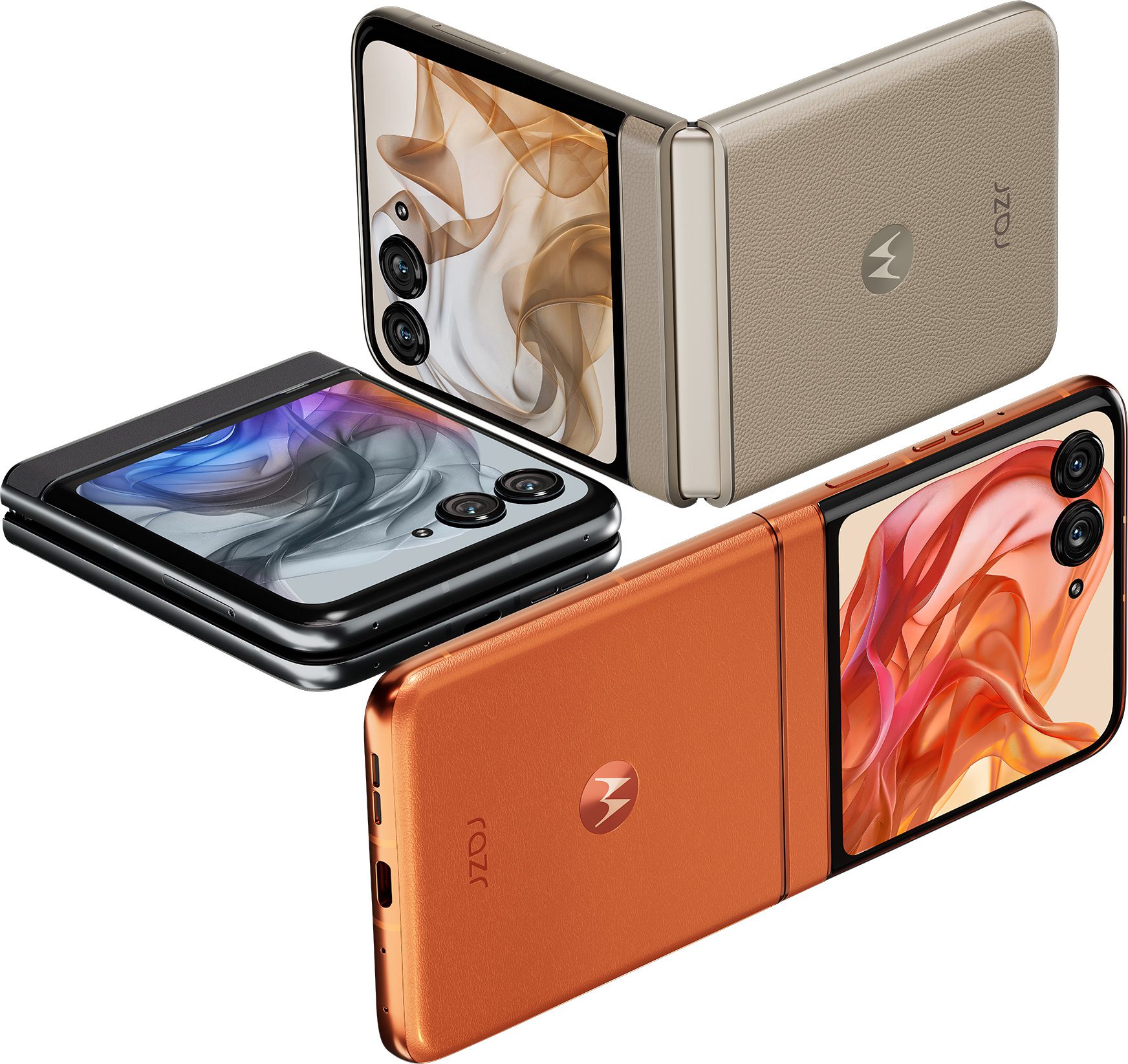
On June 25, 2024, Motorola and Google Cloud announced a landmark multi-year partnership to bring generative AI capabilities to Motorola’s RAZR smartphones, beginning with the flagship RAZR 50 Ultra. This collaboration leverages Google Cloud’s Vertex AI platform with Gemini and Imagen models to create what Motorola calls “Moto AI” technology. The strategic partnership has already delivered remarkable market results, with Motorola achieving 253% year-over-year sales growth in 2024 and doubling its global foldable smartphone market share from 14% to 28% in Q2 2025, overtaking Samsung to become the second-largest player behind Huawei.
The RAZR 50 Ultra combines cutting-edge hardware specifications with sophisticated AI integration, representing a significant shift in Motorola’s competitive strategy from hardware differentiation to AI-powered software innovation. With aggressive pricing at approximately $699 (36% cheaper than Samsung’s Galaxy Z Flip6 at $1,099) and superior AI capabilities, Motorola has successfully captured significant market share in the rapidly growing foldable segment, which is projected to reach $100 billion by 2035.
The RAZR 50 Ultra represents a convergence of premium hardware design and advanced AI capabilities. According to GSMArena specifications, the device features a 6.9-inch foldable pOLED display with 165Hz refresh rate, Snapdragon 8s Gen 3 processor, 12GB RAM, and dual 50MP cameras. However, the true innovation lies in the deep integration of Google Cloud’s Vertex AI platform with Gemini and Imagen models across native smartphone applications.
The Moto AI technology provides several key differentiators:
- Context-aware assistance: The AI becomes context-aware, personal, collaborative, and ubiquitous throughout the phone ecosystem
- Enhanced content creation: Powered by Imagen models for advanced image generation and editing
- Intelligent task completion: Ability to complete tasks, provide relevant suggestions and reminders, summarize and recall information
- Photo Enhancement Engine: Improves photos by preserving RAW image data when enhancing images after capture
This integration leverages Google Cloud’s enterprise-ready AI infrastructure, which provides access to over 200 foundation models and is described as “the only unified platform that lets customers discover and access models, tune and augment models, and create, ground, deploy, and manage AI agents and experiences.”
The partnership has yielded extraordinary market results. According to recent market data, Motorola’s Razr series achieved 253% YoY sales growth in 2024, dramatically outpacing competitors like Samsung (-33%) and Oppo (-72%). In Q2 2025, Motorola doubled its global foldable smartphone market share from 14% to 28%, overtaking Samsung to become the second-largest player behind Huawei, which maintains 45% market share.
This success is driven by a combination of factors:
- Aggressive pricing strategy: The RAZR 50 Ultra launched at approximately $699, significantly lower than premium competitors
- Superior AI integration: Deep integration with Google Cloud provides more sophisticated AI capabilities than competitors
- Iconic brand heritage: The RAZR brand carries strong nostalgic value and recognition
- Multi-year Google partnership: Ensures continuous AI innovation and feature updates
The financial impact has been substantial. Lenovo’s overall revenue grew 21% year-on-year to US$69.1 billion, with Motorola Mobility contributing significantly through its 27% year-on-year growth. The smartphone business reached record sales in Q3 2024, achieving Lenovo’s best ranking in over five years at No. 5 globally.
This partnership represents a fundamental strategic shift for Motorola and potentially for the smartphone industry. By leveraging Google Cloud’s enterprise AI platform, Motorola can:
- Accelerate AI feature development without massive R&D investment
- Differentiate through software capabilities rather than just hardware specifications
- Create recurring revenue opportunities through premium AI services
- Establish a competitive moat that is difficult for hardware-focused competitors to replicate
The foldable smartphone market is experiencing explosive growth, with market research indicating the global market was valued at $2.62 billion in 2024 and is projected to reach $100 billion by 2035, with a CAGR of 39.26% during the forecast period.
The success of the Motorola-Google Cloud partnership reveals several important correlations across different domains:
-
AI Integration and Market Share: The deep integration of Google Cloud’s AI capabilities directly correlates with Motorola’s market share gains, suggesting that AI features are becoming a primary purchase driver rather than just a differentiator.
-
Pricing Strategy and Volume Growth: The aggressive pricing strategy made possible through strategic cost-cutting measures (including the use of MediaTek processors in some models) has enabled significant volume growth without sacrificing premium positioning.
-
Partnership Leverage and R&D Efficiency: By leveraging Google’s existing AI infrastructure rather than building in-house capabilities, Motorola has achieved rapid innovation with lower R&D costs, demonstrating the value of strategic partnerships in the AI era.
The partnership has broader implications for the smartphone industry:
-
Shift from Hardware to Software Competition: Traditional smartphone competition focused on hardware specifications is evolving toward AI-powered software capabilities, potentially reshaping competitive dynamics.
-
New Partnership Models: The success of this collaboration may encourage other manufacturers to seek similar partnerships with AI platform providers, potentially leading to industry consolidation around major AI ecosystems.
-
Enterprise AI in Consumer Devices: The use of Google Cloud’s enterprise AI platform in consumer devices represents a convergence of enterprise and consumer AI technologies, potentially accelerating AI innovation in consumer products.
The Motorola RAZR 50 Ultra with Google Cloud AI integration represents a watershed moment in the smartphone industry, demonstrating the power of combining iconic brand heritage with cutting-edge AI innovation. The strategic partnership has already delivered impressive results, with Motorola achieving remarkable growth in the competitive foldable smartphone segment and fundamentally reshaping its competitive positioning.
The success of this collaboration highlights several key trends that will likely shape the future of the smartphone industry: the increasing importance of AI capabilities as a primary purchase driver, the value of strategic partnerships in accelerating AI innovation, and the potential for software differentiation to overcome hardware limitations.
While challenges remain in terms of competition, cost management, and technology dependence, the strategic foundation laid by this collaboration provides Motorola with a sustainable competitive advantage in the evolving smartphone landscape. As AI capabilities become increasingly central to mobile experiences, Motorola’s early mover advantage with Google Cloud positions it strongly for continued growth and market leadership in the AI-powered smartphone era.
The partnership’s success also serves as a blueprint for other manufacturers seeking to navigate the AI transformation, demonstrating that strategic collaborations with AI platform providers can accelerate innovation while managing costs and risks in an increasingly complex technological landscape.
Insights are generated using AI models and historical data for informational purposes only. They do not constitute investment advice or recommendations. Past performance is not indicative of future results.
About us: Ginlix AI is the AI Investment Copilot powered by real data, bridging advanced AI with professional financial databases to provide verifiable, truth-based answers. Please use the chat box below to ask any financial question.