
Eli Lilly Reaches $1 Trillion Market Cap: A Healthcare Industry Milestone
Unlock More Features
Login to access AI-powered analysis, deep research reports and more advanced features
About us: Ginlix AI is the AI Investment Copilot powered by real data, bridging advanced AI with professional financial databases to provide verifiable, truth-based answers. Please use the chat box below to ask any financial question.
Related Stocks
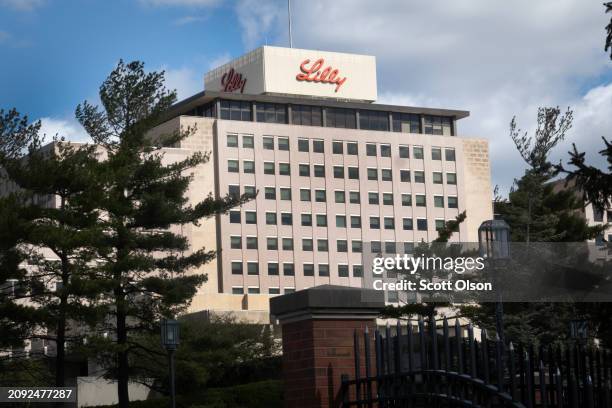
Eli Lilly (LLY) achieved a historic milestone on November 21, 2025, becoming the first healthcare company to reach a $1 trillion market capitalization [1][3]. This milestone was fueled by the exceptional performance of its GLP-1 receptor agonist drugs Zepbound (for obesity) and Mounjaro (for type 2 diabetes), which have driven a 36% year-to-date stock gain [0]. The obesity drug market is projected to exceed $150 billion by the early 2030s as demand expands with new indications and broader insurance coverage [1].
From a market impact perspective, LLY’s stock surged 22.29% over the 15 trading days ending November 21, contributing to the healthcare sector’s outperformance (1.73% gain on the event date) [0]. Financial metrics reveal a high P/E ratio of 51.62x, indicating investors are pricing in significant future growth, though the latest available market cap data stands at $951.91B (a minor post-milestone fluctuation) [0].
- Sector Valuation Shift: The $1 trillion milestone signals a paradigm shift in healthcare sector valuation, as investors increasingly recognize the long-term growth potential of metabolic disease treatments like GLP-1s.
- Market Growth Potential: The obesity drug market’s projected growth to $150 billion by the early 2030s underscores untapped demand for weight management therapies, with LLY well-positioned to capture a significant share [1].
- Data Gap: A critical information gap exists in the exact revenue contribution of Zepbound and Mounjaro, limiting a full assessment of their impact on LLY’s financial performance [0].
- Competitive Dynamics: Novo Nordisk’s upcoming Alzheimer’s data for its GLP-1 therapies poses a potential threat to LLY’s market share, highlighting evolving competitive pressures in the GLP-1 space [2].
- Risks:
- Valuation Risk: LLY’s P/E ratio of 51.62x is significantly higher than the average for large-cap healthcare companies, indicating potential overvaluation [0].
- Competitive Risk: Novo Nordisk’s Alzheimer’s data release could erode LLY’s market share if positive [2].
- Regulatory Risk: Changes in insurance coverage policies for obesity drugs may reduce demand for Zepbound [0].
- Opportunities:
- Market Expansion: The obesity drug market is expected to grow to over $150 billion by the early 2030s, offering substantial revenue growth opportunities [1].
- New Indications: Expanding GLP-1 drugs to treat additional conditions (e.g., cardiovascular disease) could drive further growth [0].
Eli Lilly’s $1 trillion market cap milestone is a landmark event for the healthcare sector, driven by the success of its GLP-1 drugs. The stock has risen 36% year-to-date, with a 22.29% gain over the past 15 trading days [0]. The company’s high P/E ratio (51.62x) reflects strong investor expectations but also raises concerns about overvaluation. Key factors to monitor include Novo Nordisk’s Alzheimer’s data, insurance coverage expansion for obesity drugs, and LLY’s production capacity to meet GLP-1 demand [0][2].
Insights are generated using AI models and historical data for informational purposes only. They do not constitute investment advice or recommendations. Past performance is not indicative of future results.
About us: Ginlix AI is the AI Investment Copilot powered by real data, bridging advanced AI with professional financial databases to provide verifiable, truth-based answers. Please use the chat box below to ask any financial question.