
Supreme Court Tariff Authority Case: Market Impact Analysis
Unlock More Features
Login to access AI-powered analysis, deep research reports and more advanced features
About us: Ginlix AI is the AI Investment Copilot powered by real data, bridging advanced AI with professional financial databases to provide verifiable, truth-based answers. Please use the chat box below to ask any financial question.
Related Stocks
This analysis is based on the Seeking Alpha report [1] published on November 3, 2025, which examines the upcoming Supreme Court case on presidential tariff authority.
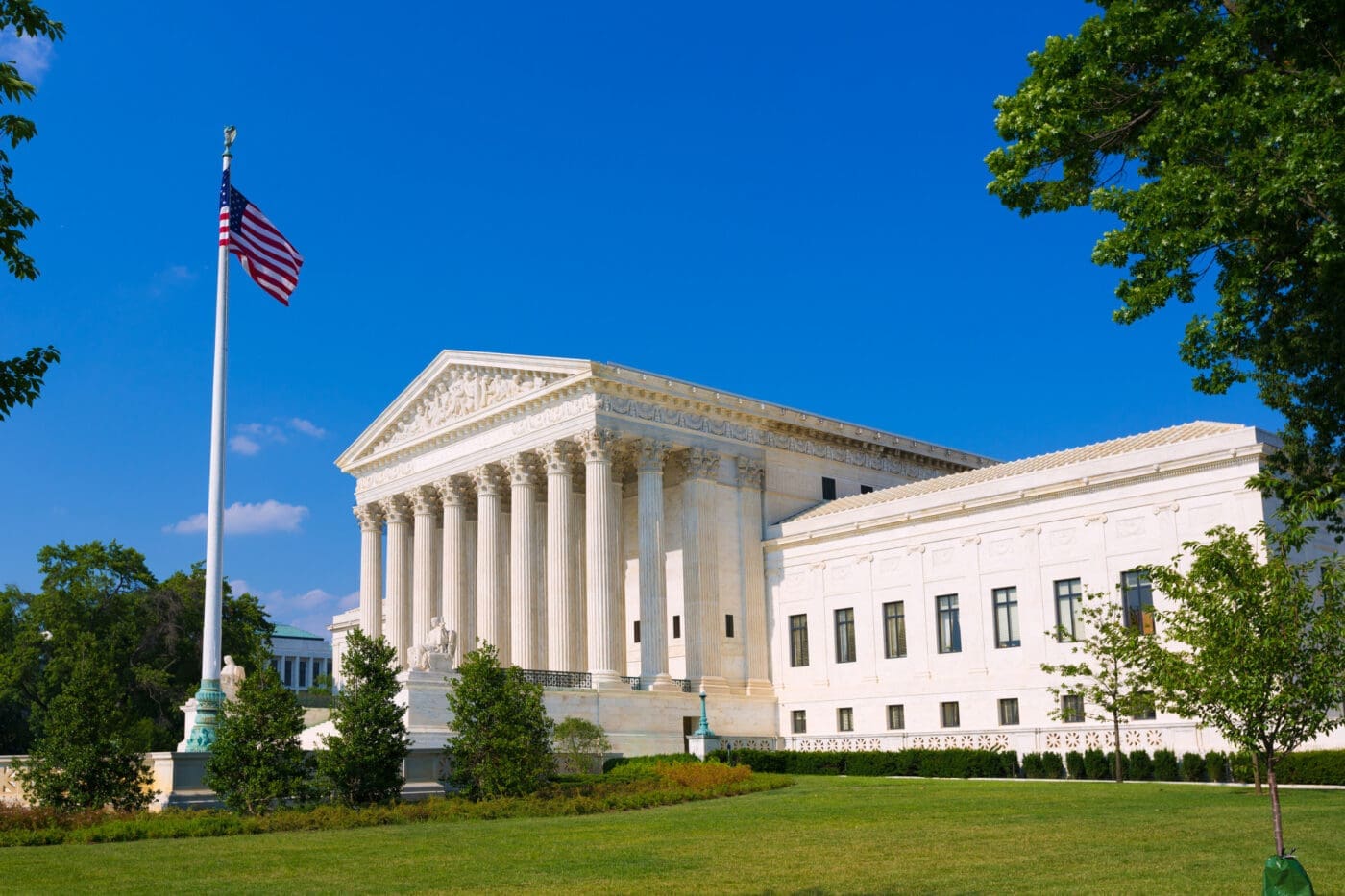
The Supreme Court case scheduled for November 5, 2025, represents a critical juncture in U.S. trade policy and constitutional law. The central question is whether President Trump exceeded constitutional authority by imposing tariffs on goods from over 100 nations under the International Emergency Economic Powers Act (IEEPA) without congressional approval [1][2]. This marks the first time in IEEPA’s nearly 50-year history that it has been used to impose sweeping tariffs, establishing a significant legal precedent regardless of outcome [2].
The economic stakes are substantial, with the tariffs generating over $100 billion in additional revenue annually [1]. The market’s reaction reflects this significance - recent data shows the S&P 500 (^GSPC) down 0.57% to 6,840.20, while the Nasdaq (^IXIC) declined more sharply by 0.91% to 23,724.96 [0]. The Dow Jones (^DJI) demonstrated relative resilience with only a 0.20% decline to 47,562.87 [0].
Sector performance reveals clear risk differentiation. Technology stocks (-1.74%) and Utilities (-1.99%) are underperforming, likely reflecting concerns about trade policy impacts on global supply chains and regulatory uncertainty [0]. Conversely, Energy (+2.81%) and Financial Services (+1.38%) are showing strength, potentially benefiting from inflation expectations and interest rate considerations [0].
-
Corporate Planning Uncertainty:Companies with international supply chains face potential disruption regardless of outcome, requiring contingency planning for both tariff continuation and removal scenarios [1].
-
Currency Market Volatility:The case outcome could trigger significant USD movements, particularly against currencies of countries heavily affected by the tariffs [0].
-
Sector-Specific Exposure:Technology, automotive, and consumer goods sectors may experience amplified volatility due to their global supply chain dependencies [0].
-
Timeline Uncertainty:While oral arguments are scheduled for November 5, 2025, the ruling timeline remains unclear, creating an extended period of market uncertainty [2].
-
Alternative Trade Authority:Treasury Secretary Bessent’s “Plan B” using other trade statutes could mitigate ruling impacts but creates additional uncertainty about scope and implementation [1].
-
International Reactions:Retaliatory measures from affected trading partners could compound market impacts beyond the direct tariff effects [1].
The Supreme Court case represents a landmark test of separation of powers with direct implications for over $100 billion in annual tariff revenue and broader questions about executive authority [1][2]. Current market positioning shows risk aversion with technology weakness (-1.74%) and defensive sector strength, reflecting uncertainty about trade policy impacts [0]. Companies with significant international exposure, particularly in manufacturing and consumer goods, face heightened planning uncertainty regardless of the Court’s decision [1]. The case outcome will likely influence market sentiment beyond immediate trade policy due to its implications for presidential emergency powers across multiple policy domains [2].
Insights are generated using AI models and historical data for informational purposes only. They do not constitute investment advice or recommendations. Past performance is not indicative of future results.
About us: Ginlix AI is the AI Investment Copilot powered by real data, bridging advanced AI with professional financial databases to provide verifiable, truth-based answers. Please use the chat box below to ask any financial question.