
Bank of America Analysis Reveals Tariffs Drive 30-50 Basis Points of Core PCE Inflation
Unlock More Features
Login to access AI-powered analysis, deep research reports and more advanced features
About us: Ginlix AI is the AI Investment Copilot powered by real data, bridging advanced AI with professional financial databases to provide verifiable, truth-based answers. Please use the chat box below to ask any financial question.
Related Stocks
This analysis is based on the Business Insider report [1] published on November 3, 2025, which detailed Bank of America’s findings on tariff impacts on consumer inflation.
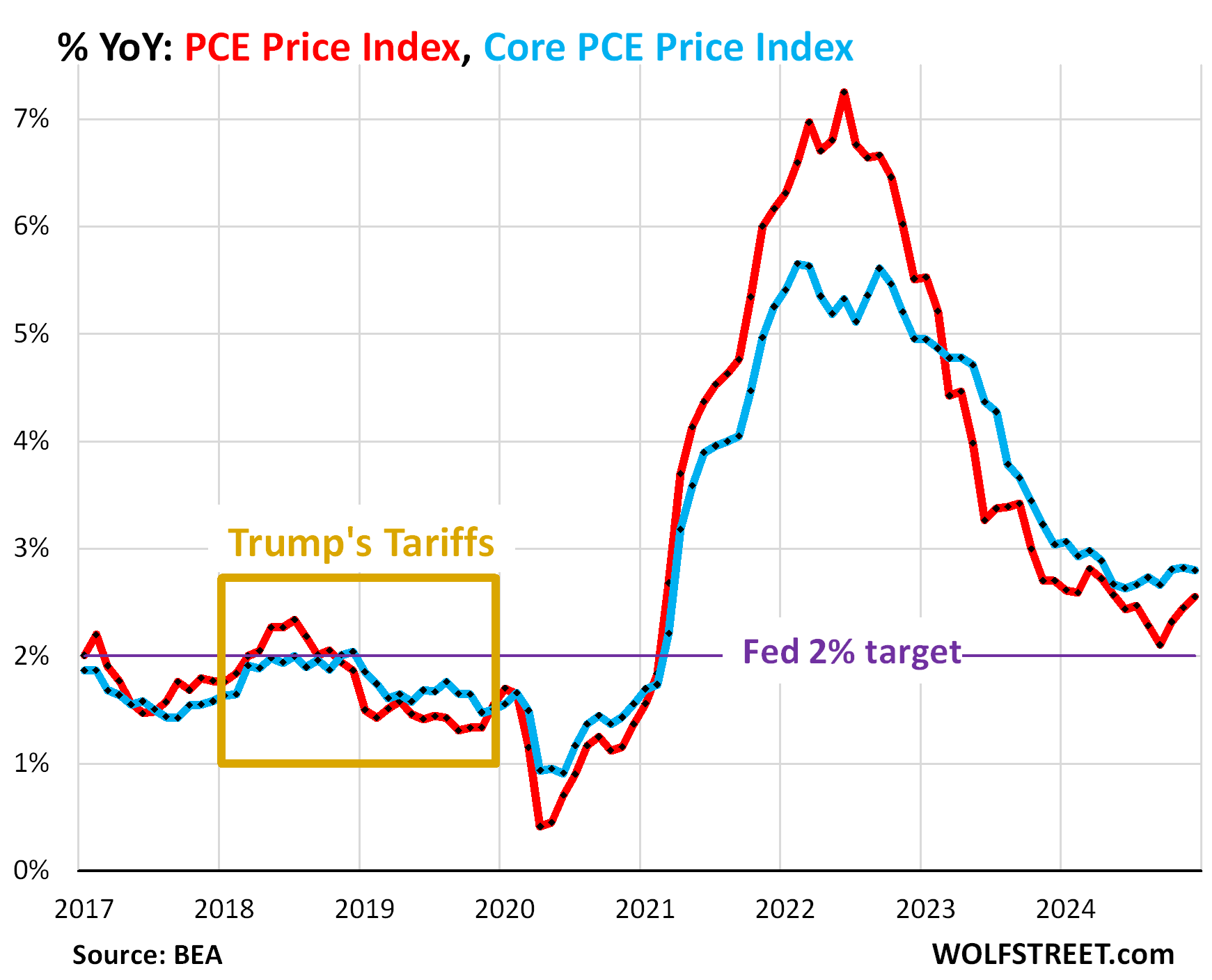
Bank of America analysts, led by Managing Director Aditya Bhave, have concluded there is “overwhelming evidence” that tariffs are driving consumer price increases [1]. The research indicates consumers have absorbed approximately 50-70% of tariff costs to date, with tariffs contributing 30-50 basis points to the core Personal Consumption Expenditures (PCE) inflation rate [1]. This finding aligns with broader economic research from the St. Louis Federal Reserve, which shows tariffs explain roughly 0.5 percentage points of headline PCE annualized inflation and around 0.4 percentage points of core PCE annualized inflation over the June-August 2025 period [3].
The tariff impact stems from President Trump’s “Liberation Day” tariffs unveiled on April 2, 2025, which have remained elevated on countries like China and Canada despite some trade deals with partners such as the UK and European Union [1]. This policy environment has created a structural shift in pricing dynamics, with PCE core goods prices rising 1.5% in the first six months of 2025 versus 0.3% in the same period of 2024 [4].
Bank of America’s analysis provides quantitative evidence that tariffs are a major driver of current inflation, accounting for 30-50 basis points of core PCE inflation [1]. The research shows consumers bear 50-70% of tariff costs [1], creating significant economic drag that affects household purchasing power across income levels.
Current market performance reflects these pressures, with major retailers showing divergent results based on their ability to manage tariff impacts [0]. Walmart has demonstrated relative resilience while Target has faced substantial challenges, indicating varying operational capabilities in response to trade policy changes.
The inflationary impact is supported by multiple research sources, with the St. Louis Fed finding tariffs account for 10.9% of headline PCE annual inflation for the 12-month period ending August 2025 [3]. This suggests tariff effects are widespread and measurable across economic indicators.
Looking forward, the effective tariff rate is expected to increase [1], potentially amplifying these impacts. The timing coincides with the holiday shopping season when consumer spending patterns will provide clear signals about how households are adjusting to higher prices. Companies with strong supply chain flexibility and pricing power may be better positioned to navigate this environment, while those heavily dependent on imported goods from tariffed countries face continued margin pressure.
Insights are generated using AI models and historical data for informational purposes only. They do not constitute investment advice or recommendations. Past performance is not indicative of future results.
About us: Ginlix AI is the AI Investment Copilot powered by real data, bridging advanced AI with professional financial databases to provide verifiable, truth-based answers. Please use the chat box below to ask any financial question.