
Analysis of the Development of China's Commercial Aerospace and 6G Satellite-Terrestrial Integration Industry Under the Aerospace Power Strategy
Unlock More Features
Login to access AI-powered analysis, deep research reports and more advanced features
About us: Ginlix AI is the AI Investment Copilot powered by real data, bridging advanced AI with professional financial databases to provide verifiable, truth-based answers. Please use the chat box below to ask any financial question.
Related Stocks
The 20th Central Committee’s Fourth Plenary Session for the first time listed “Aerospace Power” alongside Manufacturing Power and Quality Power, marking a significant rise in the strategic status of the aerospace industry. National policy dividends continue to be released, driving the industry from technological breakthroughs to large-scale applications.
In 2024, China’s commercial aerospace market size reached 2.3 trillion yuan, and it is expected to grow to 6.9 trillion yuan by 2030, with a compound annual growth rate of about 20%. The industry has entered an application explosion period, moving from technological breakthroughs to a new stage of performance realization.
China has completed the first phase of 6G technology trials, forming more than 300 key technology reserves. The number of 6G patent applications accounts for 40.3% of the global total, ranking first in the world. Beijing E-Town took the lead in releasing a special 6G policy, gathering more than 80 upstream and downstream enterprises, and building a full-factor guarantee system.
Satellite internet has been included in the national new infrastructure category. In 2025, it will show a high-intensity networking rhythm, and the normalization of low-orbit satellite networking will open up a 100-billion-level ground terminal market. The satellite-terrestrial integration network will bring three major systemic changes: user experience, emergency monitoring response, and satellite data processing.
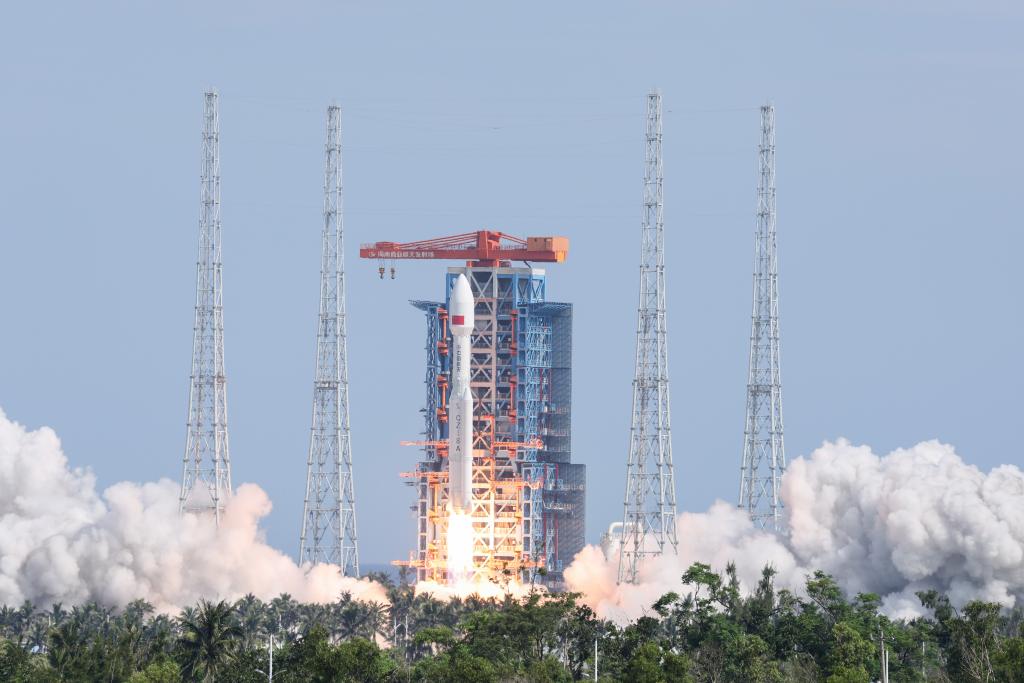
Launch vehicles are the core link in the industrial chain. Enterprises such as LandSpace and i-Space focus on liquid reusable rocket technology. New-generation rockets such as Zhuque-3 and Tianlong-3 will have intensive first launches soon, which are expected to ease the bottleneck of insufficient capacity.
The goal of achieving a manned lunar landing by 2030 remains unshaken. Various research and construction work is progressing smoothly, bringing huge market opportunities for commercial aerospace enterprises.
Insights are generated using AI models and historical data for informational purposes only. They do not constitute investment advice or recommendations. Past performance is not indicative of future results.
About us: Ginlix AI is the AI Investment Copilot powered by real data, bridging advanced AI with professional financial databases to provide verifiable, truth-based answers. Please use the chat box below to ask any financial question.