
AI Trade Frenzy Analysis: Virtuous Cycle Drives Market Momentum Amid Corporate Earnings
Unlock More Features
Login to access AI-powered analysis, deep research reports and more advanced features
About us: Ginlix AI is the AI Investment Copilot powered by real data, bridging advanced AI with professional financial databases to provide verifiable, truth-based answers. Please use the chat box below to ask any financial question.
Related Stocks
This analysis is based on the CNBC report [1] published on November 2, 2025, which highlighted significant developments in the AI sector and major corporate earnings.
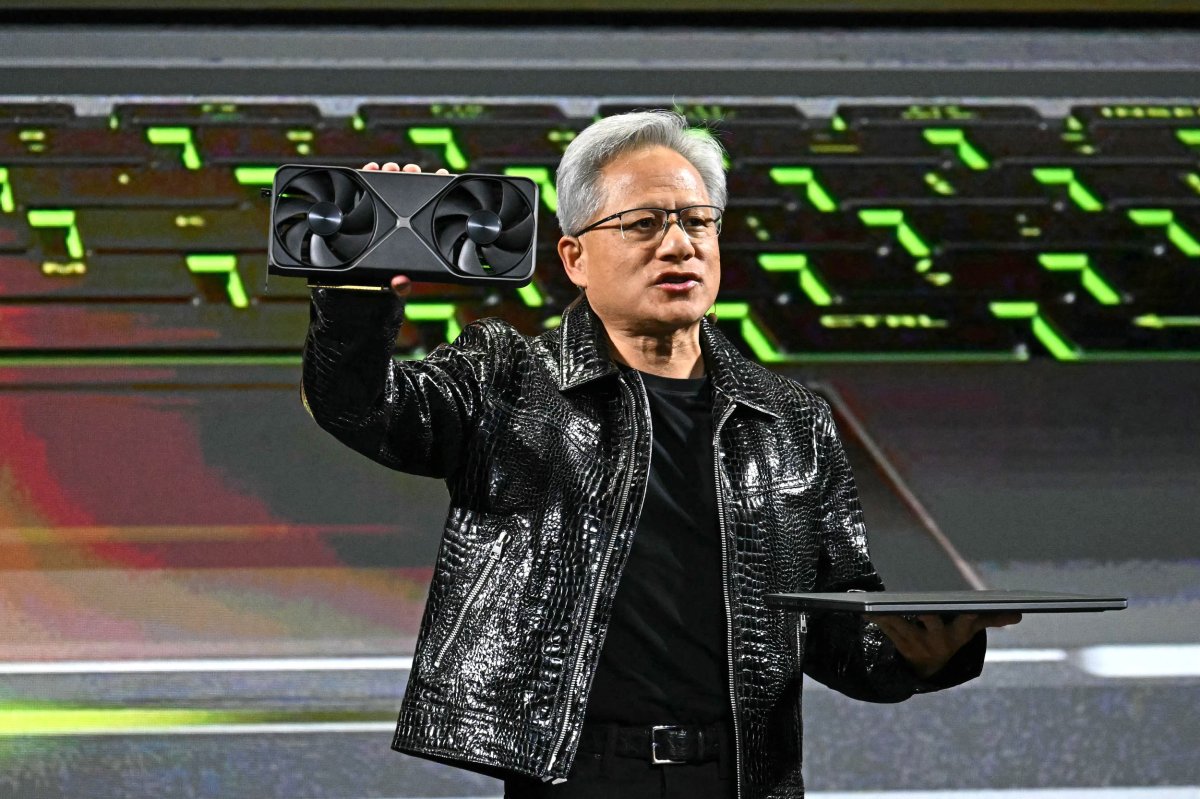
The AI trade frenzy appears to be driven by what Nvidia CEO Jensen Huang describes as a “virtuous cycle” - where increased AI usage drives investment, which improves AI technology, further boosting usage [1]. This cycle has propelled Nvidia to become the first company to reach a $5 trillion valuation in October 2025 [1]. The momentum has significantly influenced market performance, with the Nasdaq Composite outperforming major indices with a 4.7% gain in October, compared to the S&P 500’s 2.3% rise [0].
The AI investment thesis is supported by concrete capital expenditure increases from major technology companies [1]. Big Tech firms have announced “dizzying increases” in capital expenditure, primarily directed toward AI infrastructure. Additionally, online advertising businesses are gaining momentum, providing additional revenue streams to fund AI investments [1].
The broader market shows mixed signals. The S&P 500 ended October at 6,840.19, up 2.3% for the month [0]. However, sector performance reveals divergence, with Technology showing -1.74% change while Communication Services led gains at +1.15% [0]. European markets also showed divergence, with the STOXX 600 declining 0.51% [0].
Geopolitical developments include signs of easing tensions in the China-Netherlands chip dispute, with Beijing reportedly considering easing the Nexperia chip export ban [1], which could impact global semiconductor supply chains.
The “virtuous cycle” narrative appears to have strong fundamental support through actual capital expenditure commitments from major technology companies [1]. However, the sustainability of this cycle depends on several factors:
- Revenue Generation: The massive infrastructure investments need to translate into proportional revenue growth and profitability improvements.
- Competitive Landscape: Huang’s statement about China having “plenty of AI technology” [1] suggests increasing global competition that could impact market dynamics.
- Regulatory Environment: Potential regulatory responses to increased AI investment and market concentration could affect future growth trajectories.
Berkshire’s record cash accumulation of $381.6 billion [1] represents both strength and caution. While the operating performance demonstrates the conglomerate’s fundamental strength, the conservative capital allocation strategy suggests Buffett’s concerns about current market valuations, particularly in the technology sector.
The heavy reliance on AI theme and dominance of a few large technology companies creates systemic vulnerabilities. The market’s performance appears increasingly dependent on a narrow set of AI-focused stocks, which could lead to heightened volatility if the investment thesis faces challenges.
-
High Valuation Multiples: Nvidia’s P/E ratio of 56.98x and Palantir’s extreme P/E of 668.23x suggest elevated expectations that may be vulnerable to disappointment [0].
-
Geopolitical Tensions: Despite recent easing signals, the underlying U.S.-China technology competition remains a significant risk factor for semiconductor companies [1].
-
Concentration Risk: Heavy reliance on AI theme creates vulnerability if the “virtuous cycle” fails to materialize as expected.
-
Cloud Computing Growth: Amazon’s performance demonstrates continued strong demand in AI and core infrastructure [1], suggesting ongoing opportunities in cloud services.
-
Supply Chain Resolution: Potential easing of China-Netherlands chip disputes could create opportunities for semiconductor companies [1].
-
Capital Deployment: Berkshire’s substantial cash pile could be deployed strategically if market conditions become more favorable.
-
Earnings Validation: Upcoming earnings from AMD and Palantir will test the sustainability of AI-driven growth narratives [1].
-
Capital Efficiency: Monitor whether massive AI infrastructure investments translate into proportional revenue growth.
-
Regulatory Developments: Supreme Court case on Trump tariffs could impact trade policies affecting technology supply chains [1].
-
Interest Rate Environment: Changes in monetary policy could affect high-growth, high-valuation technology stocks disproportionately.
The AI sector continues to drive market momentum through a self-reinforcing investment cycle, with leading technology companies demonstrating strong performance. Nvidia’s $5 trillion valuation milestone [1] and Amazon’s 9.6% share price jump [0] reflect sustained investor enthusiasm for AI-related growth. However, valuation concerns remain significant, with many AI-focused stocks trading at premium multiples [0].
Berkshire Hathaway’s record cash accumulation of $381.6 billion [1] alongside strong operating performance suggests a cautious approach to current market conditions. The company’s conservative stance, despite strong fundamentals, may reflect concerns about market valuations and potential risks in the technology sector.
Geopolitical developments, particularly potential easing of China-Netherlands chip disputes [1], could impact global semiconductor supply chains and create new opportunities. The market’s increasing concentration in AI-focused stocks creates both opportunities and risks that require careful monitoring.
Insights are generated using AI models and historical data for informational purposes only. They do not constitute investment advice or recommendations. Past performance is not indicative of future results.
About us: Ginlix AI is the AI Investment Copilot powered by real data, bridging advanced AI with professional financial databases to provide verifiable, truth-based answers. Please use the chat box below to ask any financial question.