
China's US Soybean Purchase Post-Busan Pledge: Volume, Premium, and Market Impact Analysis
Unlock More Features
Login to access AI-powered analysis, deep research reports and more advanced features
About us: Ginlix AI is the AI Investment Copilot powered by real data, bridging advanced AI with professional financial databases to provide verifiable, truth-based answers. Please use the chat box below to ask any financial question.
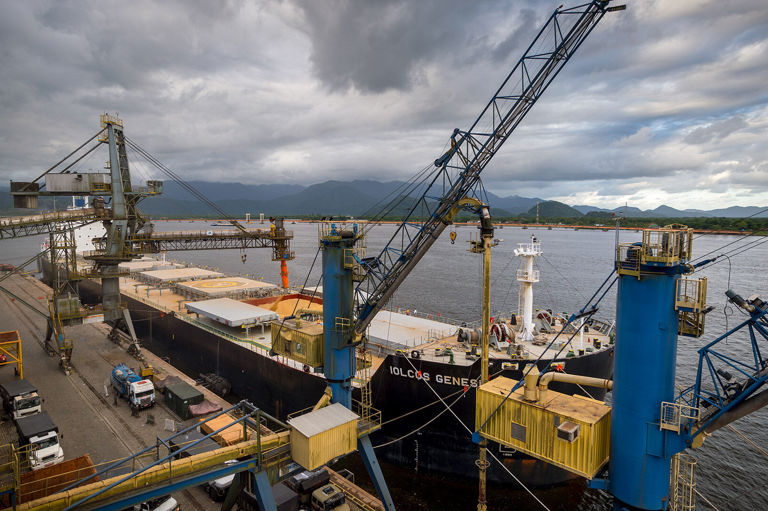
On November 17, 2025, China’s state-owned grain trader COFCO purchased at least 14 cargoes (840,000 metric tons) of U.S. soybeans—its largest U.S. soybean purchase since January 2025 and the most significant since the October 2025 Busan summit between U.S. President Donald Trump and Chinese President Xi Jinping. The purchase fulfills trade pledges made at the summit, though COFCO paid a substantial premium over rival Brazilian soybean prices. Chicago soybean futures rose nearly 3% to a 17-month high on the news, reflecting market optimism for restored U.S.-China agricultural trade.
- Purchase Details: COFCO bought 14 cargoes (840k tons) of U.S. soybeans—8 from the Gulf Coast (December-January) and 6 from the Pacific Northwest (January)—marking China’s largest U.S. soybean purchase since January 2025. [1]
- Premium Pricing: COFCO paid $2.35-$2.40/bu over the January Chicago Board of Trade (CBOT) contract for Gulf shipments and $2.15-$2.20/bu for Pacific Northwest shipments, vs. Brazilian new-crop soybeans at ~$1.25/bu over CBOT futures. [1]
- Market Reaction: Chicago soybean futures rallied ~3% to a 17-month high on November 17, 2025, due to trade optimism. [1]
- Pledge Context: China committed to buying 12 million metric tons (MMT) of U.S. soybeans in 2025 and 25 MMT annually through 2028 under the Busan summit agreement. [2]
- Stakeholder Reactions:
- U.S. Soybean Export Council CEO Jim Sutter praised the purchase as progress for U.S. farmers. [1]
- Iowa Soybean Association President Tom Adam noted the deal addresses market access concerns after months of stalled purchases. [3]
The purchase is a
As of November 17, China’s total known U.S. soybean purchases since October 2025 stood at ~1 MMT—only 8% of the 12 MMT 2025 target. [2] The delay in large-scale purchases prior to November 17 had raised concerns among U.S. farmers, who faced multi-year low prices and input cost pressures. [1]
The premium paid by COFCO (up to $2.40/bu over CBOT) indicates China’s willingness to prioritize trade relations over cost efficiency. Brazilian soybeans, the main alternative, were 45-50% cheaper at the time, reflecting China’s shift from market-driven sourcing to policy-driven compliance with the summit pledge. [1]
- Commodity Markets: Chicago soybean futures rose ~3% to a 17-month high, and cash premiums for Gulf/Pacific Northwest shipments jumped by 10 cents/bu, providing relief to U.S. farmers. [1]
- U.S. Agricultural Sector: The purchase signals a potential end to the U.S. soybean export drought, though China still needs to buy ~11 MMT more to meet the 2025 target. [2]
- U.S.-China Trade Relations: The purchase is a tangible step toward restoring agricultural trade, which was worth over $12 billion annually before tensions escalated. [1]
- Sector Performance: While U.S. stock sectors (e.g., Energy up 2.01%) showed mixed results on November 17, the commodity market reaction directly benefited agricultural stakeholders. [0]
- Purchase Volume: 840k tons (14 cargoes)
- Premium Range: $2.15-$2.40/bu over CBOT (vs. Brazil’s $1.25/bu)
- 2025 Pledge: 12 MMT (current progress: ~8%)
- Futures Reaction: ~3% rise to June 2024 high
- Stakeholder Alignment: U.S. agricultural groups (USSEC, Iowa Soybean Association) view the purchase positively.
- Official Confirmation: No public statement from COFCO or Chinese authorities confirming the purchase. [1]
- Cargo Breakdown: Exact volume per port (Gulf vs. Pacific Northwest) and shipment dates are not fully verified. [1]
- Remaining Pledge: No clarity on how China will meet the remaining ~11 MMT of 2025 purchases (e.g., timeline, additional buyers). [2]
- Brazilian Market Impact: No data on how China’s shift to U.S. soybeans affects Brazilian soybean prices or exports.
Insights are generated using AI models and historical data for informational purposes only. They do not constitute investment advice or recommendations. Past performance is not indicative of future results.
About us: Ginlix AI is the AI Investment Copilot powered by real data, bridging advanced AI with professional financial databases to provide verifiable, truth-based answers. Please use the chat box below to ask any financial question.